
Cultural Heritage Inspectorate – watchdog or threat to Serbian holy sites?
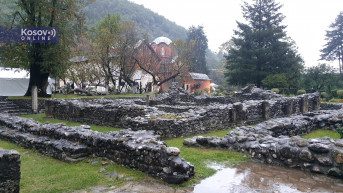
The Draft Law on the Central Inspectorate for Cultural Heritage, adopted at first reading by the Kosovo Assembly without prior consultations with the Serbian Orthodox Church, has raised a number of concerns in recent days. One is that inspectors could independently make decisions restricting the activities of the Serbian Orthodox Church in Kosovo. Kosovo Online’s interlocutors describe the legislation as an attempt to introduce a “supra-law” that would pave the way for everything to be transformed into “Kosovo” cultural heritage, while regarding the maintenance of holy sites under UNESCO protection, they point out that no UNESCO document provides for any authority to have powers superior to those of UNESCO itself.
Written by: Dusica Radeka Djordjevic
Merely a “procedural” law establishing one of the many agencies in Kosovo, or something more that should give Serbs in Kosovo cause for concern?
The disputed draft law states that the Central Inspectorate for Cultural Heritage (CICH) is responsible for monitoring and assessing the condition and state of preservation of cultural heritage and, where necessary, taking appropriate measures for its preservation and protection.
The executive agency would be established within the Ministry of Culture and Tourism and would have jurisdiction throughout Kosovo.
Its competences would also include ordering the immediate suspension of unauthorized works on cultural heritage properties and prohibiting conservation and restoration works where irregularities are identified during their execution.
Circumventing existing laws
The Diocese of Raska and Prizren, however, warned that such powers could jeopardize the legally guaranteed rights of the Serbian Orthodox Church and circumvent existing mechanisms for the protection of monasteries and churches in special protective zones.
“Our Diocese supports professional oversight that protects all cultural heritage sites, including our holy sites, from damage and unlawful construction. We are concerned, however, that the new powers could in practice be used to circumvent the protection already afforded to the Church by the Law on Special Protective Zones, the Law on Freedom of Religion and other applicable legislation. Although the Draft Law does not provide for any change of ownership, the Serbian Orthodox Church, as owner, could be directly restricted in its ability to properly and promptly maintain, restore and use its holy sites in accordance with their purpose and existing legal provisions. Moreover, the powers that this law would grant to the Inspectorate point to possible consequences that could be considerably more drastic than merely restricting activities,” the Diocese said.
Although the Serb List requested that the draft law be removed from the agenda of last Thursday’s Assembly session, it was adopted at first reading at 2 a.m., leaving amendments as the remaining avenue for modifying the text. The party’s MPs submitted such amendments yesterday.
According to Serb List parliamentary group leader Igor Simic, the amendments include proposals on how the draft law should be harmonized with other legislation guaranteeing the rights of the Serbian Orthodox Church.
The Serb List sees one of the main problems in the draft as its failure to explicitly stipulate compliance with the Law on Special Protective Zones established around Serbian monasteries, as well as its failure to specify that the Law on Freedom of Religion—which recognizes the autonomy of the Serbian Orthodox Church and confirms that the Diocese of Raska and Prizren is an integral part of the Serbian Orthodox Church—must be respected.
As a consequence, Simic explained, inspectors could, for example, halt repairs to monastery residential quarters.
“Tomorrow, that inspector could enter any of our monasteries or churches and say that oil lamps produce smoke that could damage the icons and prohibit the use of oil lamps,” Simic said, illustrating what he believed could happen if the proposed legislation were not amended.
Serb List MP Jovana Radosavljevic, who is also the only Serbian representative on the Committee on Culture, Tourism, Sports and Youth, said that the draft nowhere mentions the protection afforded to Visoki Decani, the Patriarchate of Pec, Gracanica Monastery and the Church of the Virgin of Ljevisa, which are on UNESCO’s List of World Heritage in Danger.
She also pointed out that legislation of this nature should be voted on in accordance with Article 81 of the Constitution, which also requires a majority of votes from MPs representing non-majority communities, which was not the case in this instance.
The Student List also expressed concern over the proposed legislation adopted at first reading, saying that the new inspection powers could affect the protection of Serbian cultural and religious heritage.
It called on representatives of the international community to closely monitor the process, taking into account existing international legal guarantees for the protection of the Serbian Orthodox Church, its property and cultural heritage in Kosovo. At the same time, it called on the institutions in Pristina to ensure, during the further legislative process, that the proposed provisions are fully aligned with those guarantees and protection mechanisms, as well as with the legally binding guarantees and obligations undertaken by Pristina in the process of normalizing relations with Belgrade.
Turning everything into “Kosovo” cultural heritage through repression
Writer Zivojin Rakocevic told Kosovo Online that pressure from the international community was necessary to have the law withdrawn from procedure. In his view, this was an attempt to introduce a “supra-law” that would override existing European-based legal arrangements and create scope for jeopardizing Serbian cultural heritage and the heritage of the Serbian Orthodox Church in Kosovo.
In his view, the concept of an “inspectorate in the field of culture” was paradoxical and sounded nonsensical.
“You cannot have an inspectorate for heritage, an inspectorate for culture, an inspectorate for the media, an inspectorate for public life. Things here are clearly delineated. There is Serbian, Ottoman and Albanian cultural heritage here. None of those three sides can assume primacy, nor can any policy or arrangement dictate to someone what their house should look like, what their church should look like, what should be done inside it or how. All the relevant professional services already exist, so the question is what this is supposed to lead to. This law is, in fact, intended to result in everything being turned into ‘Kosovo’ cultural heritage through force and repression,” he said.
Rakocevic explained that the law could prevent any initiative by Serbs concerning the restoration and maintenance of Serbian Orthodox Church properties.
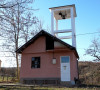
“This draft law also seeks to prevent initiatives by residents of a returnee village who want to do something in their small church. As things stand now, this law will determine who is allowed to replace a door handle and whether that handle meets the inspector’s aesthetic criteria, even though institutes and institutions for protection and restoration already exist, along with various bodies, including the Implementation Council, composed of representatives of the Serbian Orthodox Church, ministries and the international community. That Council should already be reacting and asking itself: ‘What are we here for?’” he said.
He stressed that it was extremely important for the Law on Special Protective Zones to remain in force, emphasizing that no one in Velika Hoca or Prizren should be allowed to move so much as a stone without the consent of the Serbian Orthodox Church.
“The essence of this law is actually to shift power away from European arrangements and from the solutions that emerged from the misfortunes of the past, so that everything can now be standardized to such an extent that it appears as though we do not exist. The essence of all these new arrangements is that we should not exist as Serbs, that Serbian cultural heritage should not exist, that we should be like the Incas, the Maya or the Vinca civilization, which disappeared long ago,” Rakocevic said.
UNESCO rules
Given that four Serbian holy sites in Kosovo are included on UNESCO’s List of World Heritage in Danger, President of the Serbian Commission for Cooperation with UNESCO Professor Goran Milasinovic said that if the disputed law were ultimately adopted and entered into force, any potential oversight by an inspector of maintenance work on these properties would conflict with UNESCO and its rules.
“That is against the rules. No UNESCO document provides for any additional authority with powers superior to those of UNESCO itself when it comes to the maintenance or restoration of heritage sites. That is absolutely impossible. If it does happen, because anything is possible in this world, we still have diplomatic mechanisms and UNESCO mechanisms at our disposal. UNESCO is the body that protects all of these heritage sites of ours. I would be concerned if these sites were not on the UNESCO List; since they are, I am less concerned,” Milasinovic told Kosovo Online.
Nevertheless, he said that the adoption of the Draft Law on the Central Inspectorate for Cultural Heritage was deeply troubling and represented yet another in a series of developments concerning Serbian cultural heritage coming from Pristina, which he described as various forms of cultural expropriation.
“One of the reasons why our three monasteries and one church remain on the List of World Heritage in Danger is that they are not being treated properly. Of the 1,248 properties on UNESCO’s World Heritage List, only around 50 are on the List of World Heritage in Danger, and our monasteries in Kosovo and Metohija are among them. I would recommend that the authorities in Pristina focus more on why these properties have remained in danger from 2006 to this day, when there are examples around the world of properties being removed from the List of World Heritage in Danger. Inadequate maintenance is precisely one of the six points UNESCO cited as grounds for placing our cultural heritage in Kosovo and Metohija on the List of World Heritage in Danger,” Milasinovic explained.
He added that if Pristina established a cultural heritage inspectorate, no restoration work, other works or supervision of works concerning the Patriarchate of Pec, Visoki Decani, the Church of the Virgin of Ljevisa and Gracanica Monastery could be carried out contrary to UNESCO rules.
“Only maintenance and essential works necessary when a property is at risk are permitted. We had the example of the Church of the Virgin of Ljevisa in Prizren, where the roof was leaking and the problem could not be resolved for years, while frescoes of global significance were deteriorating and no one was taking care of the issue. So, arbitrary works and restorations are out of the question. These properties are safeguarded not only by us, as the state that nominated them, but also by UNESCO’s Venice Office through its Antenna Office in Sarajevo, the Diocese of Raska and Prizren, and the branch office of our Republic Institute for the Protection of Cultural Monuments, established specifically for those monuments in Kosovo and Metohija,” the President of the Serbian Commission for Cooperation with UNESCO stressed.
The problem, he added, would concern heritage sites that are not on the UNESCO List.
“That is a serious problem, and that is why this news is concerning. Our state authorities, the Office for Kosovo and Metohija, the Ministry of Culture and all other competent authorities need to address it and use every available mechanism to protect these heritage sites of ours, first and foremost for the benefit of the Serbian Orthodox Church. These monasteries and properties on the World Heritage List are not Hagia Sophia; they are not museums, but living churches. Yet the faithful are being prevented from accessing these sites precisely because of the situation that persistently exists there—the continuing security risks faced by all those who come to them,” Milasinovic said.
Regarding the case as a whole, the OSCE Mission in Kosovo has called on all institutions and legislators to ensure a genuinely inclusive consultation process with all stakeholders affected by the draft law, particularly religious communities.
The Mission told Kosovo Online that, given the potential implications of the draft law for existing legal guarantees and the rights of religious communities, including the Serbian Orthodox Church, it was essential that their concerns be heard and, where appropriate, incorporated into the final text of the law.
0 comments