
Simic: Amendments to Cultural Heritage Inspectorate law submitted, we must all stand in defense of Serbian Orthodox Church
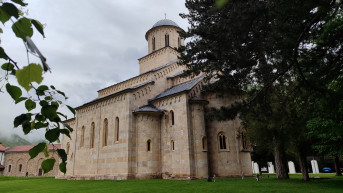
Serb List parliamentary group leader in the Kosovo Assembly Igor Simic said that the party had submitted amendments to the Draft Law on the Central Inspectorate for Cultural Heritage because, as he had previously warned, the legislation in its current form infringes upon the rights of the Serbian Orthodox Church.
“Today, Serb List MPs, including myself as parliamentary group leader, submitted amendments to this law with proposals on how it should be harmonized with other legislation guaranteeing the rights of the Serbian Orthodox Church,” Simic told RTS.
He called on the public, non-governmental organizations, the media and prominent individuals to join forces in protecting the rights of the Serbian Orthodox Church in Kosovo.
“We must all stand together in defense of the Serbian Orthodox Church, which is one of the pillars of the survival of the Serbian people in Kosovo and Metohija,” Simic stressed.
Student List MP in the Serbian Parliament Jugoslav Gasic announced that he would hold meetings with representatives of the international community tomorrow, at which he would raise the issue.
“As early as tomorrow, we will have several meetings with representatives of the international community at which we will raise this issue as a priority and explain what we see as the risks. We know this is not the first time they have received such information. I have been informed that representatives of the Serbian Orthodox Church sent letters on three occasions warning of the dangers. I believe we can succeed in having the law withdrawn or having amendments introduced to correct the provisions we consider risky and capable of affecting the status of the Serbian Orthodox Church,” Gasic said.
The statement comes after the Student List announced that it would not cooperate with the Serb List. Jugoslav Gasic recently said that there would be no cooperation with the Serb List and that representatives of the new authorities would review everything agreed under the Brussels Agreement and other international agreements so that they could act and rectify whatever negative consequences could still be corrected. He added that Serb List MPs “hold certain institutional positions that cannot be affected, but those positions will not shield them from potential criminal liability for acts they have committed.”
The Serb List holds nine seats in the Kosovo Assembly, while the tenth seat reserved for the Serbian community is held by an MP from Nenad Rasic’s Party for Freedom and Justice.
Serbian Orthodox Church’s concern understandable
The Draft Law on the Central Inspectorate provides for new and expanded powers for inspectors, ranging from oversight of works on cultural heritage sites to the possibility of suspending such works. Inspectors would also be able to review the legality of construction activities in protected areas, which, according to a warning from the Diocese of Raska and Prizren, could jeopardize the rights of owners of cultural heritage properties, including the Serbian Orthodox Church.
“Two recent examples involving the Gracanica and Draganac monasteries show that the special laws protecting the rights of the Serbian Orthodox Church were simply circumvented and general laws applied instead. If this law were adopted with all the new powers being granted to cultural heritage inspectors, it would not be unreasonable to expect situations in which they enter churches and monasteries without invitation, which is not permitted under the Law on Freedom of Religion. Nor is it unreasonable to expect that provisions safeguarding the rights of the Serbian Orthodox Church in special protective zones could be circumvented,” Aleksandar Radovanovic, chief legal adviser to the Diocese of Raska and Prizren, warned.
Former Serbian Ambassador to UNESCO Professor Darko Tanaskovic said that, if adopted, the disputed legislation could be applied despite the existing legal safeguards.
“It is entirely understandable that the Serbian Orthodox Church is concerned, because it is more aware than the rest of us outside Kosovo and Metohija of what it is systematically facing there. Even though these laws, if adopted, would run contrary to any legal logic and, of course, to morality, they could nevertheless be implemented given the international community’s favorable attitude toward the self-proclaimed state,” Tanaskovic said.
Regarding claims made during a session of the Pristina Assembly that Orthodox churches had served “as dungeons and bunkers for the elimination of Albanians,” as well as challenges to the Serbian identity of Orthodox holy sites, Tanaskovic said that such claims could not alter academically established conclusions regarding the historical and cultural affiliation of Serbian holy sites.
However, he warned of potentially harmful short-term consequences.
“This can be extremely damaging in the short term because certain decisions are made in accordance with the prevailing balance of power and circumstances at a given moment. When a lie is systematically repeated, it becomes the truth for some people,” Tanaskovic explained.


0 comments