
Demographic Crisis: How aging populations and the exodus of young people shape the region's future
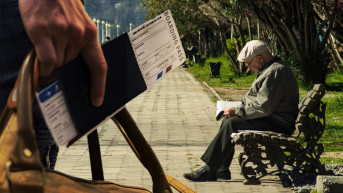
Aging populations and emigration are two key demographic challenges facing the Western Balkans. In recent decades, many countries in the region have experienced drastic changes in population structure, as more and more young people choose to leave in search of better life opportunities. This migration leads to population aging and depopulation, and experts from across the region warn for Kosovo Online that this undermines economic development, as human resources are the most important of all resources on the planet.
Written by: Petar Rosic
The World Bank's regular economic report for the Western Balkans states that currently, one in four people from the Western Balkans lives abroad.
According to the report, emigration can create clear opportunities related to leveraging migration for economic benefits.
"Remittances can improve the financial resources of migrants' families. Secondly, the return of skilled migrants can lead to a brain drain in their home countries, while the appeal of higher wages abroad can motivate education and training for those who choose to stay," the report states.
However, experts from Belgrade, Tirana, Pristina, and Skopje told Kosovo Online that so far, emigration has only brought challenges, the biggest of which is a labor shortage.
This concern is echoed by an analysis from the Republic Statistical Office (RZS), which last week published projections of the population for the period from 2022 to 2052. According to the medium scenario, out of a total of 32, the population in 2052 will be 5,224,762, representing a decline of around 1.5 million people compared to 2022.
The RZS noted that the smallest population loss is expected in the case of a high fertility scenario with no migration, where the population in 2052 would be 5,542,956.
In the case of a constant scenario, which assumes demographic conditions remain the same as at the start of the projection period, the population would fall below five million, totaling 4,755,444.
Similar projections already affect Albania, which is one of the countries in the world with the fastest shrinking population.
According to the 2011 census, Albania had a population of 2,800,138, as reported by the Albanian government's statistical agency, while by 2023, that number had dropped to 2,402,113.
A population decline of around 400,000 people represents a loss of more than 14% of the total population, one of the most drastic figures of its kind worldwide.
The Head of the Department of Pedagogy and Psychology at the Faculty of Social Sciences, University of Tirana, Professor Dr. Arjana Muçaj, warns for Kosovo Online that according to data from Albania's Institute of Statistics (INSTAT), the Albanian population is aging at a very fast rate, with emigration being the main problem.
“We have several key factors contributing to this. The first factor is the decline in birth rates, the second is the number of deaths, and the third is population emigration, meaning the departure of people of prime working age, between 24 and 39 years. This is the main problem, which has a very significant impact on population aging. The people leaving the country are in the age group when families are typically formed, but they no longer live in Albania. Their departure will also increase the percentage of elderly people in the country, relative to the total population, indicating that population aging is happening rapidly. This is not only happening in Albania but throughout our entire region,” Muçaj explained.
She points out that the emigration rate to foreign countries has been around 14-15% over the last 12 years, and the government has developed strategies to create favorable conditions for young people, aiming to encourage them not to leave the country.
However, incentives for families to have children, favorable conditions for families to purchase homes, and measures for the professional training of young people have not yielded sufficiently good results on their own.
One way to prevent young people from leaving, she suggests, is to provide jobs based on meritocracy. This would help them showcase their full potential gained through education.
“In Albania, we need to move away from the practice where many young people must become part of political organizations or political parties to get a job. I believe that the Albanian state needs to ensure that young people feel valued and secure. Although several measures have been taken, young people do not feel any significant change. They need healthcare services, security for the future, and substantial financial earnings. Individuals with good professional skills should be paid based on the value they bring to their jobs. This would increase the satisfaction of young people and encourage them to stay in the country,” said the professor from Tirana.
Economic expert from Pristina, Safet Grxhaliu, states that Kosovo is not exempt from this problem. He points out that in the Balkans, there is more talk about war than about prosperity, which is why young people in this region do not see a future for themselves.
“If you analyze the latest census, you’ll see that the population has simply decreased by about 200,000 people. And if you look at the population structure, you’ll see that the pillar of development, which used to be young people, is no longer what it once was. The population is aging, and there are fewer young people today,” he told Kosovo Online.
He emphasizes that the fact that the population is emigrating and young people are leaving must be a priority for the government to address.
“We cannot force young people to stay in the Balkans if we don’t have political stability. We cannot make young people build a future if they don’t have support. The fact is, in the Balkans, there’s far more talk about war and conflicts than about prosperity and economic development. So what else can be expected?” Grxhaliu said.
He added that, in order for young people to stay in Kosovo, the “lost hope for better days” must be restored.
“But unfortunately, what has been happening lately does not seem to provide any motivation for young people to stay here,” he concluded.
The National Coordinator for Demography, Youth, and Human Resources in the Government of North Macedonia, Vlatko Gjorcev, warns that depopulation has affected all aspects of society in his country. He stated for Kosovo Online that the reduction in the labor force causes a “cascade of negative consequences.”
"The fact is that all countries in the Balkans are experiencing depopulation, with a large number of people, mainly for socio-economic reasons, emigrating to Germany, Scandinavia, the Benelux countries, and some even moving to more distant countries like Canada, the USA, and Australia. The result of all this is a reduced labor force, fewer students in schools, fewer people available in the labor market, and fewer children in kindergartens... There is no area that these depopulation processes do not touch, because the fact is, without people, there is nothing,” said Gjorcev.
He explains that the reduction in the labor force also impacts the number of consumers, leading to lower consumption, which is why demography is one of the key issues.
“A spiral or cascade of negative consequences occurs—economic activity decreases, the productive portion of the population shrinks, and this inevitably affects taxes, the stability of the pension system, and everything else. I believe that demography is absolutely one of the most crucial and important issues, and it will remain so in the years and decades to come. All resources are important, but human resources are the most important. Without people, there is nothing,” Gjorcev warns.
Professor Danica Santic from the Faculty of Geography at the University of Belgrade agrees with Gjorcev. She pointed out to Kosovo Online that the aging of the population in the region is also driven by the emigration of young and working-age individuals, and that the aging process has now accelerated to the point where states are simply unprepared for it.
She emphasized that the average age in both the EU and Serbia is around 43 years, and compared to the previous census conducted in Serbia in 2011, the average age has increased by two years.
While this may not seem like a significant increase, when considering the share of elderly individuals, it now accounts for 23% of the total population in Central Serbia and Vojvodina, where the census was conducted.
On the other hand, she added, the share of individuals aged 0 to 14 is only 14%, indicating that Serbia is becoming a country of the elderly.
“This, I repeat, is a European trend. We’ve always referred to Europe as the 'old lady,' and now she truly is becoming the 'old lady.' We are somehow moving in the direction of countries that have already reached certain levels of aging. What should have been done earlier, but it’s not too late now, is to create some documents that address the growing number of elderly people in Serbia,” Santic concluded.
She observes that the consequences of an aging population primarily impact the economic outlook, specifically by placing pressure on the pension system.
"Given that the pension system, as we know it, was created in the 1960s in America, at that time, life expectancy was much shorter than it is today. The retirement age was determined based on that expected lifespan. However, as life expectancy in some countries has extended to 80 or even 90 years, as in the case of Japan, it has become clear that even the world's wealthiest economies cannot sustain such pressure on the pension system," she pointed out.
In this sense, she explains, Serbia faces a major challenge, which is that the working years, or career length, cannot end simply when the law prescribes.
She warned that emigration also significantly contributes to the aging of the population, particularly considering the age groups that most frequently emigrate.
People typically leave the country in their thirties, when they are at their most productive and fertile.
"When young, reproductive-age populations emigrate from a territory, it is clear that the remaining population consists mainly of older individuals who are less mobile, and children who are still in school. If we look at the current birth rates, they are the lowest compared to the 20th century and are insufficient to fill the gaps in the labor market, nor will they be enough in the next 15 years. This raises the question of how our pension system, labor market, and economy will function if we do not find urgent measures that will yield results," she warned.
Speaking about measures that could potentially mitigate the consequences of population aging, Professor Santic emphasized that Serbia should look to examples of good practices, such as those implemented in the United Kingdom.
She explained that the UK began working on creating healthy and active aging 20 years ago.
"Simply put, when people retire, we shouldn't forget about them. We should provide them with opportunities to continue actively contributing to society according to their abilities. The UK was the first to adopt this approach, followed by other Western European countries, and this trend is gradually making its way to our part of the world," said Santic.
She mentioned that it is quite common in Europe for elderly individuals to work in museums, cultural institutions, or on a part-time basis for four hours a day. On one hand, they feel better, and on the other, they continue contributing to society and the budget.
However, Santic pointed out that despite these examples of good practices, countries in the region, including Albania and Serbia, have not yet implemented similar measures that have proven successful in Europe.
“The emigration rate of young people from Albania is indeed very high. When young populations leave, no matter what the census might show in terms of numbers, the reality is that the aging process is extremely intense,” she explained.
She expressed her belief that countries in the region will attempt to respond to these challenges in a similar way.
“We need the elderly; they are not a burden in buses, as we often think, or in lines. They can truly be very valuable members of this society, and we should rely on them,” Santic concluded.




comments