
Different views on the CSM - Schism within Self-Determination or Kurti's pre-election performance?
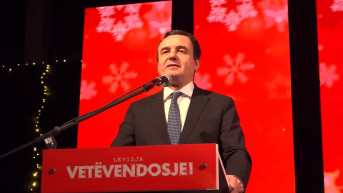
Formation of the CSM is one of the most important topics for both Albanians and Serbs in Kosovo. However, while the West waits for the Government of Kosovo to submit the draft of the statute to the Constitutional Court for review, different signals are coming from the Kosovo side. Just in the last few weeks, completely contradictory views on this issue have been presented to the public from the close circle of Prime Minister Albin Kurti. Kosovo Online interlocutors believe that disagreements regarding the obligations from the Brussels Agreement are just a part of Kurti's performance before the upcoming elections, but they note that it is quite clear that due to unfulfilled promises and pressure from the international community, a schism has occurred within the ruling party.
Kosovo's Deputy Prime Minister Emilija Rexhepi in early February criticized the draft of the CSM statute drafted by the international community, stating that it created opportunities for the creation of a Serbian republic similar to the one existing in Bosnia and Herzegovina. She then stated that the Government would wait for the Constitutional Court's opinion "before drafting a new statute for the Community."
In early March, Kosovo Assembly President Glauk Konjufca said that it was not within the EU's jurisdiction to propose a draft of the CSM to Kosovo, and just three days later contradicted the Deputy Prime Minister, adding that it should not be sent to the Constitutional Court.
"When the time comes, the Government will propose the draft itself, and I will participate in the preparation of that draft, so this is not a rejection. No, I don't think the EU draft should be sent to the Constitutional Court. According to the 2013 agreement, this issue is entirely an internal matter for Kosovo," Konjufca said.
Shortly after, the head of the parliamentary group of the Self-Determination Movement, Mimoza Kusari-Lila, stated that the draft of the CSM statute proposed by international diplomats had not been sent to the Constitutional Court because they were waiting for the comments that Kosovo addressed to the dialogue mediator, Miroslav Lajcak, to be adopted.
Political analyst Uros Nikolic stated for Kosovo Online that the differing views emerging from Self-Determination regarding the CSM pointed to a rift within the party. However, he does not exclude the possibility that Albin Kurti is acting out these disagreements to delay the CSM as much as possible due to the upcoming elections.
"The Self-Determination Movement has shown itself to be somewhat incoherent in recent months, not to mention years, with some discordant tones and fractures within the party. One of Kurti's closest associates, Haki Abazi, left the Self-Determination Movement and turned against Kurti, becoming one of his fiercest critics," Nikolic emphasized.
He adds that it is still possible that Kurti and his associates are feigning this game and acting out disagreements about the CSM to prolong the process.
"Kurti is playing these cunning games, and it's not excluded that this applies to the discordant views within Self-Determination and the different options regarding whether to go to the Constitutional Court or not. This could be a game where they play good cop bad cop within the movement to obstruct these processes, and let's not forget that Kosovo is nearing elections," Nikolic said.
According to him, Kurti has proven to be a resilient politician and a tough opponent of Serbia, and he seizes every opportunity to maneuver and gain maximum advantage for himself.
"When pressured by Western partners, he simply implemented the Constitutional Court's decision from 2016 and, after eight years, returned the land to the Visoki Decani monastery. Now, based on that, he may succeed in bargaining for Kosovo to gain membership in the Council of Europe. We forget that the CSM was signed 11 years ago, and none of what was supposed to benefit Serbia has been implemented," our interlocutor emphasized.
Regarding the CSM, after the decision on Decani, Nikolic emphasizes that this process has been going on for so long, so various traps can be expected.
"We had situations where certain German foundations offered to draft it, and then the Temporary Institutions in Pristina claimed they would create their own CSM draft, which is in complete opposition to what was originally signed in the Brussels agreement. All options are on the table. It's all a kind of game aimed at psychological pressure on Serbs living in constant uncertainty, never knowing what the new day will bring. Every new situation leads to a silent exodus. That is clearly Kurti's strategy," the political analyst believes.
Nikolic reminds us that Self-Determination has extremists with rigid views who do not budge on any issue, which can also lead to conflicts within the party.
"Against them, they put forward some people with slightly softened views who would accept less than what Serbia agreed to in the Brussels agreement regarding the CSM. In Kurti's maneuvering with Western partners, he uses this tactic of aggressively pursuing maximalist goals, then, if he can't achieve them, he backs down. By raising the bar and abandoning the maximalist goals that were unrealistic from the start, he manages to achieve what he wanted from the beginning, making it look like a compromise. I see everything happening in Self-Determination as a performance, and whether there will be real conflicts, we will see during the election period. If one of the significant functionaries who have been giving discordant tones does leave or actually exits the movement, that would mean a real conflict. But if they continue to send diametrically opposite messages internally while everyone remains in the party, that would mean it's staged. No one can convince me that someone like Albin Kurti, an Enverist, is a great democrat who allows a thousand flowers to bloom in his Self-Determination. Whatever he is like in Kosovo, he is the same in his party. There's no intra-party democracy there," Nikolic concluded.
Shkelzen Maliqi, a political analyst from Pristina, tells Kosovo Online that Kosovo Prime Minister Albin Kurti is delaying the formation of the CSM out of fear of losing voters. He sees the differing views coming from Self-Determination regarding the CSM draft as a "smokescreen for concessions that are inevitable."
"They fear entering into that process. They are afraid because it's not clear when the elections will be held. Since they have already made some concessions, now they are measuring the consequences. They constantly gauge public opinion. Kurti fears for his position, whether he will remain prime minister or not. For a while, he was in the lead, but now that's crumbling; he's no longer sure if he will win. His party may win, but certainly not as convincingly as last time if he doesn't have the voters brought in by Vjosa Osmani, and it seems he will lose some of his traditional voters, to whom he promised unification with Albania and so on," Maliqi says.
He states that Kurti has "almost exhausted all his credits" and that only "demagoguery" remains for him.
"There is also that faction, those who attack people who do not support Kurti on social media and every other occasion," an analyst from Pristina says.
Asked whether there had been a split within the Self-Determination Movement over the draft of the CSM, he explains that there are certainly different opinions within the party, but he believes that they "share roles" among themselves.
"Kurti says one thing, Kusari says another, Konjufca says something else, and so on, and then they have these attackers in the media who say one thing one time and another thing another time. A smokescreen is created for these inevitable concessions," Maliqi assesses.
He says the Ohrid Agreement is full of compromises that are painful for both Pristina and Belgrade, but it must be respected. If that doesn't happen by summer, Maliqi believes, it might take another two or three years.
"The CSM draft is somewhat agreed upon, it has been nationally adopted, it's just a matter of seeing to what extent they will go. Whether it will move towards some autonomy, not quite formal, or there won't be a new level of authority, but just some powers will be greater. That is the crucial question, and that's what the struggle is about. But for Kurti and for the Kosovo side, they don't want to create that community until the entirety or important elements of the agreement are implemented, so it doesn't seem like the community is won, and then they constantly condition each other. That's why a process of intensive diplomacy would be better, but it seems time is running out for that. If it's not resolved by June, then we might wait another two or three years for some agreements," Maliqi says.
Dusan Radakovic, Executive Director of the NGO Advocacy Center of Democratic Culture from North Mitrovica, is convinced that ultranationalist rhetoric, unfulfilled promises, and pressure from the international community have led to a split within Albin Kurti's party.
"There is definitely a gap emerging within Self-Determination itself. It started with Haki Abazi, and before that, we remember the departure of Visar Ymeri from the party before the last and penultimate elections, then the former mayor of Pristina, and so on... I think that slowly this ultranationalistic rhetoric is reaching its epilogue, that people within the party, people of a social democratic orientation, have realized that this way of pressure, EU sanctions, and everything that is happening, generally the pressure towards the Serbian community, base, expropriation, arrests... affects people's orientation away from the ideology of ultranationalism and hatred towards a nation and a community," Radakovic says.
He explains that an excellent example of the rift that exists is that the Assembly cannot adopt numerous decisions, but they go through administrative instructions and sub-legal acts.
"There is no law in the Assembly that can pass; a large number of laws regarding the international community are on hold because the necessary 61 votes are lacking. And it's not just five or six in total; some data I have indicates that nine or ten members of the Self-Determination parliamentary group are no longer as committed to the party as they were in the previous period, so I say laws are struggling to pass," our interlocutor states.
He adds that people are also influenced by the fact that many things promised during the 2021 and 2022 campaigns have not been fulfilled, as well as increasing pressure from the international community.
"It's not just pressure on the Serbian population, the lack of dialogue, sanctions, every day increasing pressure from the international community, primarily the US, that things must move, the lack of that famous internal dialogue with the Serbian community... All these things affect people within the party to turn more towards a different rhetoric, a different view generally on democracy compared to the current state," Radakovic believes.
Commenting on the different views on the CSM draft within Self-Determination, he assesses that there are disagreements about how it should be implemented.
"The fact is that the international community is pressuring that it is one of the conditions to be accepted by the Council of Europe. The second is the return of land to Visoki Decani, and maybe as a third, the withdrawal of four mayors from northern Kosovo, or the organization of elections. All of this contributes to the rift, primarily due to the different views on how the Community of Serb-majority Municipalities should be implemented," he notes.
As well as other Kosovo Online interlocutors, he adds that this year he does not expect anything concrete regarding the CSM, primarily due to this split and the upcoming elections.
"There is now great pressure because of the Council of Europe, but I don't expect anything concrete because of the elections. They are waiting for a new four-year mandate, I think in some coalition, maybe with Ramush Haradinaj's party or possibly with Pacolli to gain that majority, around 70 MPs. So I don't expect anything concrete this year, maybe towards the end or possibly the beginning of next year," Radakovic says.


0 comments