
Edi Rama’s victory – A regional perspective: Continued partnerships, but also frustrations
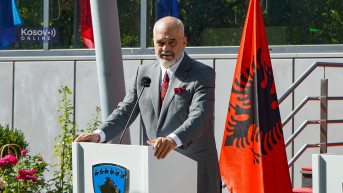
Edi Rama, a professor of painting, former basketball national team player, and leader of the Socialist Party, will serve as Albania’s prime minister for the fourth time, according to preliminary results of yesterday’s parliamentary elections. Analysts believe that his expected victory is due to his commitment to systemic reform, the fight against corruption, a weak opposition, and evidently strong ties with the U.S. administration and European capitals.
Written by: Dusica Radeka Djordjevic
According to the latest data released by Albania’s Central Election Commission, results have been processed from 2,707 out of 5,225 polling stations. Rama’s Socialist Party has won 52.78% of the vote, while Sali Berisha’s Democratic Party received 33.91%. The Socialist Party is also currently leading in votes cast by the diaspora.
As promised during the campaign, Rama’s next four years in government will be dedicated to making Albania a member of the European Union by 2030.
“Today, the Albanian people will decide to move forward with great strength and give us all the support needed for Albania to become the next European member state,” Rama said yesterday.
Analyst Petar Arsovski from Skopje believes that the EU’s willingness to expand will ensure Albania’s progress on its European path, but this could also trigger frustration in Kosovo and North Macedonia, especially among ethnic Albanians.
“Their fellow Albanians from Albania will be moving toward the EU, while these countries remain stuck on that path for various reasons. Certain frustrations among other Albanians in the region can be expected as a repercussion of this election result,” Arsovski told Kosovo Online.
He added that it would be bad news for Albania if it’s confirmed that Rama’s Socialist Party will hold more than 80 parliamentary seats.
“First, because the opposition appears completely devastated. Second, because there will no longer be any political alternative to confront Mr. Rama. Meanwhile, we don’t really know what his true vision for the future is,” he said.
Due to Rama’s entrenched position in power and Albin Kurti’s limited influence in Kosovo, analyst Ben Andoni does not expect relations between Albania and Kosovo to improve any time soon.
“During the election campaign in Albania, Kosovo held no significance. There is widespread indifference from both the Socialist and Democratic parties, as well as other parties, toward Kosovo. Kosovo was barely mentioned in the campaign. Neither Rama nor Kurti can offer each other space for cooperation. However, the connection between Albania and Kosovo is maintained by second- and third-tier bureaucrats,” Andoni noted.
Rama’s decisive victory does not surprise political analyst Shkëlzen Maliqi from Pristina. He says Sali Berisha tried to return to politics but ended up dividing the Democratic Party, while Rama has proven to be the most successful politician in the region over the past decade.
Maliqi says Rama has a vision and knows how to invest, which has contributed to Albania’s revival — not only in tourism but also in its rapid approach toward the European Union. Along with Montenegro, Albania is now the frontrunner for EU accession, having surpassed all others, including Serbia.
Maliqi, who served as Rama’s regional advisor during his first term, told Kosovo Online that Rama’s strategy was to improve relations with all neighbors, prioritizing Serbia and the former Yugoslav states. He says Rama seeks good relations with everyone but cannot have them with Kosovo because Kurti “goes his own way.”
“Or maybe he’s just jealous of him — I honestly don’t understand. Although he once supported unification with Albania, he has since changed his rhetoric. As for Rama, he is on the right track across the board. He is decisive and supported a radical system reform, especially in the fight against corruption, which I believe was the most comprehensive in the region. Many of his ministers ended up in prison, including the former deputy prime minister and even a former president... Rama himself may face the same fate. Many expect he could end up like Hashim Thaçi. He established a special court, and it’s possible he may eventually be indicted. Nevertheless, Rama continues his work on multiple fronts. Tirana has now become the regional center, hosting international conferences that used to be held in Sarajevo or Belgrade,” Maliqi concluded.
From Belgrade’s perspective, analyst Predrag Rajic says that Rama’s victory and continued leadership are good for Serbian interests.
He told Kosovo Online that Rama, as Albania’s prime minister, has been a fair partner to Serbia — as much as possible considering the situation with Kosovo.
“Relations have essentially been fair. The ‘Open Balkan’ initiative showed that he views the situation differently from others — including his opposition and the authorities in Pristina. Of all Albanian political figures, he may be the only one with whom we can engage in meaningful discussions on topics where mutual understanding might be found. Perhaps not on the issue of Kosovo and Metohija, but certainly on other matters of interest to citizens of both Albania and Serbia. From this perspective, I believe it’s good for Serbian interests that he won and will remain in power,” Rajic said.
Rajic also considers Rama’s victory unsurprising, noting that the overwhelmingly pro-American Albanian electorate sensed his strong ties with the Trump administration, which influenced even the undecided voters to support him — a pragmatic choice for part of the electorate.
“We’ll see what the final results are once all the diaspora votes are counted, but it’s clear Rama will have a convincing majority in parliament and will be able to form a new government,” Rajic added.
He describes Rama as an extremely capable man who gained momentum thanks to Trump’s victory in the U.S., as Rama connected with him in time.
“Two years ago, Trump’s daughter and Richard Grenell vacationed in Albania, and Rama visited and hosted them. Even European partners — including those from the European People’s Party who nominally supported Berisha — signaled their support for Rama by scheduling the European Political Community summit in Tirana. Rama is a welcome guest in many capitals, even where center-right parties are in power in the EU. Overall, I think this outcome is a combination of his strong party organization within Albania and favorable geopolitical circumstances,” said Rajic.
Regarding relations with Kosovo, Rajic reminds that Rama is a rival to Kurti, but at the same time, they appear to have a form of coexistence on issues of broad Albanian interest where joint positions are established.
“This time, Kurti didn’t interfere in the Albanian elections as he did four years ago, which suggests he realized that Rama is too strong and that he doesn’t have the resources to overextend himself politically. Kosovo and Metohija will likely see new elections, and Kurti didn’t want to open another political front in Albania while being politically vulnerable, especially knowing he would surely lose. That would only provoke Rama to respond even more harshly. In recent months, their relationship has been more neutral, without the intense clashes we saw in previous years,” Rajic observed.



0 comments