
EULEX’s turn: How many Serbs were arrested without a court order and with excessive use of force?
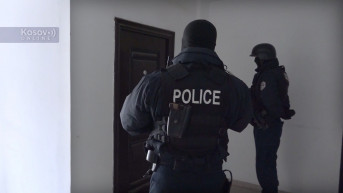
The European Union Mission for the Rule of Law in Kosovo (EULEX) would have to act more within its mandate and protect the democratic and human rights of the Kosovo Serbs, especially in the cases of the latest arrests, which were carried out based on vague and unfounded indictments, and on the claims of certain Albanian politicians even without court orders, and often with excessive use of force, the interlocutors of Kosovo Online, lawyer Ljubomir Pantovic, and lawyer Milan Antonijevic agree.
Since the outbreak of the crisis in the north of Kosovo due to the incursion of Kosovo Special Forces into municipal buildings and the imposition of illegitimate Albanian mayors elected in elections with a turnout of about 3.5 percent, eight Serbs have been arrested, on charges of participating in protests, but also for alleged terrorism and war crimes. All of them were given two-month detentions, and some of them were brutally beaten and mistreated during their arrest, which was reported to the EU diplomat Josep Borrell and Serbian President Aleksandar Vucic.
In the report of liaison officer Dejan Pavicevic, it is stated that on June 20, he had found the Serbs detained in detention units in Grdovac near Podujevo and Gnjilan in a serious condition, with hands in wounds from tying, hematomas on the head and body, as well as visible scars from beating. Milun Lune Milenkovic, an athlete from North Mitrovica, and Dusan Obrenovic, a young man from Zvecan, were particularly seriously injured.
A video from the interrogation of Serb Nenad Orlovic, father of four, who was arrested by Kosovo Special Forces on June 23 in North Mitrovica, appeared on social networks, and in which he is seen without clothes up to the waist, but with a black bag over his head and face, while hands tied behind the back.
However, according to President Vucic's claims, there is none of that in the EULEX report on the monitoring of the process and treatment of the Serbs.
"In it, they wrote to us what is written in the four articles of the so-called laws of Pristina and nothing. They have no idea, they don't know anything. What would we ignorantly say, they complied with the bureaucratic form and they don't care. They don't care about the Serbs, they can do what they want and how they want,” the President of Serbia said.
So far, EULEX has issued a statement stating that the mission is "monitoring 108 cases related to the Serbs in Kosovo, or which may affect inter-ethnic relations", including cases of the latest arrests of the Serbs. They also stated that their observers attended 1,940 court hearings in 330 active criminal and civil cases from June 15, 2018, to June 14, 2023.
The former head of EULEX, who ended his mandate a few days ago, has so far mostly spoken out to condemn the "attacks on KFOR soldiers and journalists" in the incidents that occurred during the Serb protests in the municipalities in the north. He did not mention the arrests of the Serbs. His successor, Giovanni Pietro Barbano said that "EULEX will ensure equal treatment for everyone, regardless of religion and ethnicity".
Lawyer Ljubomir Pantovic, who defends numerous Kosovo Serbs, tells Kosovo Online that the EULEX mission, since four years ago it stopped participating in Kosovo's judiciary, i.e. in trials, has an absolutely marginal role, regardless of what they say and what statements they make.
"Absolutely their role is minor, as far as I know, their role, when it comes to Kosovo's judiciary, is reduced to monitoring, to observe those trials and to report on it to Brussels or maybe someone else," he says.
He states that in those four years, he was able to obtain only one EULEX document concerning the Kosovo judiciary - "Report on the monitoring of the judiciary, findings and recommendations", for the period from March 2020 to October 2021.
"I have three adjudicated cases in the last few years and several more that are ongoing, I expected that report to be really substantive, critically written, because the trials were far from fair and just. And to contain the true state, assessment, and image of the judiciary in Kosovo. Especially when it comes to war crimes and other inter-ethnic criminal acts. Nothing! In the report, the trials are listed chronologically, who was tried, what the punishments were... That's how I have big objections, and I also see my fellow EULEX defenders, in terms of that they really don't exercise real and strong control and that those reports are published," Pantovic says.
Regarding EULEX's announcement that they are monitoring 108 cases related to the Serbs in Kosovo, Pantovic says that we have not received anything more than that information.
"They are monitoring and then what? From that monitoring, especially the people who have been arrested and charged, do not see any benefit. It is as if EULEX is also doing something secretly. It is to be expected that, if they are doing something, it will be seen. Especially that those people whose work is monitored, and others who are interested in the work of those organs and who directly have some negative consequences from it, see what the results are - what they found, determined, and if everything is great and perfect, maybe it is... But, unfortunately, it is not. That is a huge complaint against EULEX and experts, lawyers, people who participate in criminal proceedings, and all citizens. EULEX is invisible!", the lawyer points out.
Regarding the latest arrests of the Serbs, Pantovic says that he has been a lawyer for 28 years, that before that he was in the judiciary, and that nothing like this has ever happened.
"It is truly unheard of for the Prime Minister of the temporary institutions in Pristina to go to the parliamentary rostrum and dictate publicly the names of people, accusing them of having committed criminal acts. EULEX had to react there, and we did not see that reaction. This is unacceptable, arrests are made arbitrarily, without evidence, without reasonable doubt, and maybe without a warrant. People are scared," our interlocutor says.
He says that the Kosovo Serbs, when it comes to justice, cannot really trust the Kosovo judiciary, EULEX, and other international missions.
"The trials before UNMIK and EULEX, while they were in charge, were essentially fair and correct. I have repeatedly warned that with the departure of EULEX from the judiciary, we will return to the period after 1999 when Kosovo's courts and prosecutors' offices began to file the first indictments and lead trials against the Serbs, and when everyone was convicted with a list, just like now, regardless of the evidence. UNMIK then saw that there would be no independent judiciary and honest and fair trials, so they passed the so-called Decree 64, which referred to trials for war and inter-ethnic crimes. That decree stipulated that for such trials in the court panels, the majority had to be foreigners. During that period, we had fair trials and the majority of verdicts were acquittals, and earlier verdicts for genocide were canceled or changed. That all lasted until four years ago when EULEX left the judiciary. Now, with the departure of foreign judges, we have returned to 1999 and 2000, to a dark period when it comes to justice for the Serbs in Kosovo," Pantovic says.
He believes that before the United Nations Security Council, in regular reports on the situation in Kosovo, the question of the role, competencies, and mandate of EULEX should be raised again.
"The trials that are being held against the Serbs here today before the Kosovo judicial authorities are far from fair and honest, and if something is not done about it, I don't know how far it can take us. When UNMIK and EULEX led the trials in Kosovo, from 2000 to 2019, only four Serbs were legally convicted of a war crime. In the last four years, eight were legally convicted. And about as many trials are still underway," Pantovic says.
He points out that three indictments for war crimes were also brought in absentia.
"Unfortunately, we will have a real avalanche of trials in absentia. I am afraid that we are expecting trials for war crimes against the Serbs and non-Albanians and a large number of convictions. They talk a lot about war crimes and genocide, they have few convicts and they need as many as possible to spread that story corroborated," Pantovic concludes.
Lawyer Milan Antonijevic believes that EULEX is not agile enough in protecting the human and democratic rights of the Serbs, and that much more could be done in this regard.
He points out that there are competencies of EULEX that are much greater than what the mission uses.
"We should also appeal to the international community to use all the powers they have. The position in Kosovo is specific; no territory in Europe has been conceived in such a way, so I think it is up to EULEX to use all those rights precisely in the protection of minority rights, of the Serbian community, and the torture that was recorded in the recent arrests. I think that this is one of the things EULEX should deal with," Antonijevic told Kosovo Online.
When asked why EULEX was not more agile, Antonijevic did not know the real reason but stated that things were changing both in KFOR and EULEX and that the time the mandate lasted might be short for understanding that it was necessary to react on a daily level.
"There are many different challenges in the cities of Kosovo, and from a European perspective, a period of adjustment is needed, and by the time they realize that it is necessary to react daily and very harshly, their mandate will pass," he says.
Commenting on the statement from EULEX that they are monitoring the cases of 108 arrested Serbs, Antonijevic says that it is probably also about some "regular" crimes.
"Kosovo is not isolated from reality and there are some criminal acts and everything that is happening there, and in the latest arrests we are saying that there is a political part, and if there is, it must be investigated by EULEX and it is up to Kosovo to investigate it, as well as the international community," Antonijevic says.
Recalling that the head of the European diplomacy, Josep Borrell, stated that Europe was losing patience, Antonijevic says that he believes that it could be possible to "slightly accelerate the loss of patience for the situation in Kosovo" and thus finally get out of this crisis.
"It is necessary that people in Kosovo do not fear, that criminal groups are dealt with in the way they are dealt with normally, and these are things that must be separated. I think that everything is mixed up in Belgrade and that we do not have enough information to be able to say something clearly," Antonijevic said.



0 comments