
Expectations ahead of the UN Security Council – What will the new UNMIK report bring?
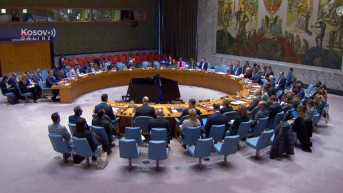
The new head of United Nations Interim Administration Mission in Kosovo, Peter Due, will today present for the first time to the United Nations Security Council the regular six-month report of the UN Secretary-General on Kosovo. Interlocutors of Kosovo Online expect the focus to be on the political crisis in Pristina and the position of Serbs in Kosovo, including the agreement and consequences related to the implementation of the Law on Foreigners. While some believe the report will not bring significant changes, pointing to the declining influence of the UN globally, others emphasize that for Serbia it is crucial that the mandates of UNMIK, Kosovo Force, and United Nations Security Council Resolution 1244 be reaffirmed.
Written by: Jelena Novakov
In the preview published by “Security Council Report” ahead of the session, it is noted, among other things, that no progress has yet been made in the EU-mediated dialogue on the normalization of relations between Belgrade and Pristina. It also recalls the call by Peter Sorensen for inclusiveness and respect for dialogue obligations in the context of attempts to integrate Serbian health and education institutions.
It is proposed that the UNSC consider adopting a presidential statement that “expresses support for Sorensen, calls on Belgrade and Pristina to engage in good faith and implement remaining obligations without preconditions.” It is also emphasized that all measures affecting the Serbian community in Kosovo should avoid disrupting essential services and encourage “inclusive implementation in line with previous dialogue commitments.”
The preview further states that “maintaining stability in Kosovo and promoting de-escalation of tensions in the north remains a key priority for the Council,” and raises the question of whether the UNSC can assist “in sustaining momentum behind the EU-facilitated dialogue and the implementation of existing commitments.”
Divisions among the permanent members of the UNSC are also highlighted: the United States, the United Kingdom, and France support Kosovo’s independence, while China and Russia uphold Serbia’s sovereignty and territorial integrity. Additionally, the withdrawal of UNMIK remains another contentious issue among permanent members, with the United States in particular advocating the gradual phasing out of the mission.
It is also expected that the report will place emphasis on the prolonged political instability in Pristina.
Serbia’s Priorities
Former diplomat Zoran Milivojevic told Kosovo Online that he does not expect anything new in the report itself.
“As for the report and the address by the new UNMIK representative, I do not expect anything particularly new, because essentially nothing significant has happened, except that the instability of the regime in Pristina has been confirmed, along with the continued political agony and the attempt by Self-Determination to maintain its dominant position at all costs,” Milivojevic said.
According to him, the report will address political instability in Kosovo, the Law on Foreigners, and the continuation of dialogue.
“I believe the report will reflect that, with references to elections, their results, and a call for the formation of a government. There will certainly be a call to continue dialogue and a reference to the Law on Foreigners and the agreement reached regarding its implementation,” he assessed, adding that there will also be attempts to affirm Kosovo’s statehood and insist on the implementation of the Ohrid Agreement, i.e. de facto recognition.
Nevertheless, Milivojevic does not expect a critical stance toward Albin Kurti and his policies, which is why he believes this report will also contain shortcomings that will not satisfy the Serbian side. On the other hand, he expects that Kosovo’s representative at the session will attempt to discredit Serbia by pointing to alleged threats from Serbia, its armament, and its ties with Russia.
Regarding UNSC member states, Milivojevic believes that Russia and China will insist on Resolution 1244, in the context of a broader global focus on respect for international law due to the situation in the Middle East.
“At the same time, I expect the British and Americans to maintain their positions and insist that UNMIK’s mandate should gradually be brought to an end, with the assessment that a sufficient level of security has been achieved, while also insisting on the formation of a government. For us, it is very important that the UNSC reaffirm the mandates of UNMIK and KFOR and Resolution 1244, the status of Kosovo and Metohija within that mandate and as part of the state of Serbia, and that it insist on the full respect and implementation of that mandate,” Milivojevic concluded.
Impact of the Report
Historian Vukan Markovic told Kosovo Online that he does not expect the conclusions of the report to bring changes. He pointed to the diminished influence of the UN, emphasizing that it still remains a guarantor of international law and legitimacy through which UNMIK operates.
“I assume that the Serbian side will raise the issue of the stability of institutions and the regime in Pristina, that is, the political crisis that has been ongoing for years,” he added.
He expects that statements and positions from previous years will be repeated at the session, including the U.S. demand to abolish UNMIK and Russia’s opposition to that proposal. He also believes that the non-implementation of key provisions of the Brussels Agreement will be mentioned, while the Kosovo side will again accuse Serbia of being an “aggressor.”
“Every six months we see the same story, with additions of the latest topics, such as the highly controversial Law on Foreigners. Unfortunately, the UN has lost the mediating role it once had, but it suits Serbia and Serbs in Kosovo that the UN remains at least formally present, as it is still a pledge and guarantor of international law and legitimacy through which UNMIK operates in Kosovo,” Markovic noted.
Speaking about possible conclusions of the UNMIK chief, Markovic expressed hope that Due would rationally assess the situation in which the most basic human rights of Serbs in Kosovo are endangered.
“That he will recognize the significance of the deep political crisis Kosovo has been facing over the past two years. However, I am not sure how important his conclusions will be, or how much impact they will have on relations between Belgrade and Pristina, on the regime in Pristina, and above all on the position of Serbs in Kosovo,” Markovic concluded.
The Role of UNMIK
Analyst Artan Muhaxhiri stated that UNMIK has no real influence on Kosovo’s politics or on informing the international community, and that the report is merely a formality.
“We know that UNMIK functions through inertia and has no factual impact on Kosovo’s politics and institutions, nor as a reference for the international community, since all of them have embassies here (in Kosovo) and do not wait for UNMIK’s report to understand the situation,” he said.
According to him, there have been no significant changes regarding minority communities in the past six months, so the report will merely represent a formality.
“I think it will be just a formality, because the situation has not changed at all, especially when it comes to minorities. We had a year of institutional blockage last year, and this year there are also many problems with the Assembly and the election of a new president, so I do not think anything more will happen beyond a simple, routine identification of events,” Muhaxhiri concluded.
0 comments