
Sefa: Tourism remains the pillar of Albania's economy, but labor productivity must increase
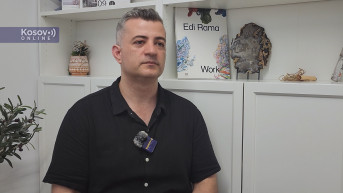
Albanian expert on EU financing and venture capital Ergis Sefa stated that international financial institutions recognize Albania and Montenegro as the two countries that have made the greatest progress in the region in terms of reforms and economic growth, but stressed that Albania must increase labor productivity in order to accelerate its development.
"In general, if we look at the region, international institutions such as the International Monetary Fund and the World Bank assess that Albania and Montenegro are the two countries that have advanced the fastest, both in implementing reforms and in achieving economic growth, and they are expected to continue on that path," Sefa told Kosovo Online.
He assessed that it is a positive sign that Albania's economy continues to grow at a rate exceeding three percent, with inflation expected to remain under control despite being affected by external crises.
However, he emphasized that more efficient management of natural resources and a significant increase in labor productivity are essential to further accelerate the country's development.
"We must also increase labor productivity, and in this respect we need to do much more to improve it, and to do so at a rapid pace," Sefa said.
Speaking about the structure of the economy, he stressed that tourism remains the key pillar of Albania's economy, but that its further development should focus on quality rather than quantity.
In addition to coastal tourism, he pointed to the potential of mountain and cultural tourism, emphasizing the need to develop a distinctive and authentic tourism offering.
The key prerequisite for achieving this, he said, is investment in human capital through education and vocational training, in order to ensure a high standard of services and competitiveness with established tourist destinations such as Croatia, Greece, Italy, and Türkiye.
"In absolute terms, tourism remains the pillar of Albania's economy. Its impact extends beyond sun-and-sea tourism to the entire tourism package offered throughout the country's interior. We have mountain tourism, cultural tourism, and many other forms. It is important to understand one thing if we want to move to a higher-quality model of tourism that will generate greater revenue and economic growth. The human capital employed in this sector must be professionally qualified, not only through specialized training courses but also through schools and dedicated educational programs, so that it can provide services of the highest quality. This is because our region includes many countries offering mass tourism and endowed with natural beauty—such as Croatia, Greece, Italy, and Türkiye—that have developed tourism into a major industry. We must offer our own uniqueness and authenticity, where we can create our comparative advantages," Sefa said.
He also pointed to the significant, though underutilized, potential of agriculture, which, he said, could develop in synergy with tourism.
According to Sefa, growing demand for locally produced food and agricultural products resulting from the expansion of the tourism sector could stimulate the development of small farms and agribusinesses.
However, he believes that this process has only just begun and requires stronger government support and accelerated reforms to enable agriculture to keep pace with the development of tourism.
"There are undoubtedly other sectors of Albania's economy that should perform better and have the capacity to do so. Agriculture is one of the sectors with enormous potential, yet only a small portion of that potential is being utilized—not even half of what is available. There is a great opportunity because tourism can have a positive impact on agriculture, as tourists will need to eat, and they should be consuming locally produced food. We are already seeing tourism begin to benefit small farms and certain branches of agriculture. The government and the agribusiness sector must accelerate this process so that agriculture can gradually catch up with the pace of tourism development," Sefa said.
He also warned of the high level of social inequality across the Western Balkans, noting that the Gini coefficient remains high in all countries of the region and that inequality is still considerably greater than in the rest of Europe.
"Social inequality is, in fact, high throughout our region. The Gini coefficient, which measures inequality, is very high across the Balkans—I am referring to all six of our countries—and the level of inequality is a matter of concern. Albania is actually performing somewhat better in this regard than countries such as Serbia, North Macedonia, or Kosovo, which have slightly higher levels of inequality. Nevertheless, we are more or less at the same level. Compared with the rest of Europe, inequality in our region is significantly higher," Sefa concluded.
0 comments