
Djuric: Serbia is gaining a new and stronger position in Washington
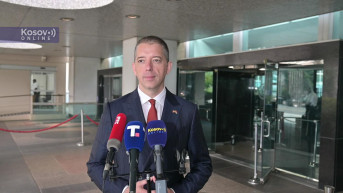
The strategic dialogue with the United States marks a turning point in bilateral relations and represents a synergy of diplomatic, political, economic, and security cooperation, encompassing a broad range of areas—from strengthening regional peace, stability, and security, to expanding economic, trade, energy, educational, scientific, and technological cooperation, as well as collaboration in infrastructure, telecommunications, and digitalization, all the way to building a more prosperous future together, Serbian Foreign Minister Marko Djuric has said.
In an interview with Politika, Djuric stated that the extensive list of meetings held over the past one to two years, both abroad and in Serbia, by President Aleksandar Vucic, Speaker of the National Assembly Ana Brnabic, Prime Minister Djuro Macut, himself, and other Serbian ministers with the world's most influential statesmen demonstrates that Serbia pursues a balanced foreign policy that may not always please everyone, but is first and foremost aligned with Serbia's national interests.
"Despite being a small country with limited resources, we have succeeded, in exceptionally complex, difficult, and challenging times, in diplomatically and politically engaging with the entire world," Djuric said.
How do you assess Serbia's foreign policy, which seeks to maintain partnership relations with all major global powers?
It should be emphasized that we have an ironclad friendship and strategic partnership with China, we continue to cultivate our relations with Russia, and just last week, on July 17, we launched a strategic dialogue with the United States, which is of exceptional importance for our country because it elevates bilateral relations to the level of a strategic partnership. In doing so, U.S. institutions are sending a message that Serbia is regarded as both a partner and a friendly country. We seek to maintain good relations with all relevant international actors, as well as with our traditional friends. As can be seen, we have succeeded in fostering strong relations with the world's major powers while avoiding the principle that "those who are not with us are against us," a principle that has caused significant harm to certain countries. Therefore, I believe that this multi-vector foreign policy, based on independence, sovereignty, and military neutrality, represents the most appropriate course for our country. I would also like to reiterate that Serbia's strategic commitment remains full membership in the European Union and that we are firmly committed to strengthening stability and cooperation in the region while overcoming unresolved issues from the past that continue to burden mutual relations.
What can Serbia expect from the strategic dialogue with the United States? What political and economic benefits will it bring?
The strategic dialogue, on which we worked for a long time and with particular intensity over the past year, marks the beginning of a new era in Serbia-U.S. relations, bringing substantial deepening, expansion, and intensification of our existing cooperation. This turning point represents a synergy of diplomatic, political, economic, and security cooperation covering an exceptionally broad spectrum—from strengthening regional peace, stability, and security, to enhanced economic, commercial, energy, educational, scientific, and technological cooperation, as well as collaboration in infrastructure, telecommunications, and digitalization, ultimately leading to the creation of a more prosperous future for both countries.
Together with our American partners, we are planning, among other initiatives, the implementation of a major and strategically important energy project—the construction of the Djerdap 3 reversible hydropower plant.
The launch of the strategic dialogue also creates an even stronger foundation for attracting new large-scale investments to Serbia. It is well known, but worth emphasizing once again, that the United States is the largest purchaser of Serbian information and communications technology (ICT) services, and we expect this trend to continue and further develop. From a political perspective, Serbia is gaining a new and stronger position in Washington, while opening an even broader channel of communication and cooperation with the world's most powerful and influential country.
How would you assess your meeting with Secretary of State Marco Rubio?
It may sound immodest, but it is easy to verify that the results of my several-day visit to Washington represent the most significant development in Serbia-U.S. relations over the past three decades. We are all aware that our bilateral relations have long been overshadowed by the legacy of the 1990s and that our approaches differ on certain issues. Every meeting and discussion with Mr. Rubio, whether brief or extended, is extremely important as an opportunity to present Serbia's positions.
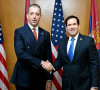
During last week's working visit, I also met with U.S. Deputy Secretary of State Christopher Landau to discuss strengthening political and economic cooperation, as well as the next steps within the strategic dialogue. On the margins of the Conference on Political Extremism, I also exchanged views with my counterparts from Romania, Albania, Israel, Georgia, Jamaica, and several other countries.
Serbia has officially joined NASA's Artemis Program, becoming one of the signatory countries.
You signed the agreement yourself, opening the door for Serbian institutions and companies to participate in international peaceful space exploration. What concrete benefits can Serbia expect from the agreement with NASA?
Serbia's accession to the international cooperation program for the exploration of the Moon, Mars, and other celestial bodies, launched six years ago by the National Aeronautics and Space Administration (NASA) and the U.S. Department of State, represents an important step for our country, which is building its future on knowledge, innovation, and international cooperation.This step is even more significant for Serbian universities, research institutes, companies, engineers, technicians, and scientists, as it enables them to participate in international scientific research projects.
What other benefits do you expect?
The Artemis Accords also provide an opportunity for a major strengthening of Serbia's scientific and technological cooperation not only with the United States but also with the other signatories to the agreement. At the same time, they represent a political signal in support of international cooperation in the peaceful exploration of outer space, the exchange of scientific data, responsible management of space objects and debris, and respect for international space law.
The Serbian nation has produced brilliant minds such as Nikola Tesla, Milutin Milankovic, Mihajlo Pupin, and many others, for whom even Europe proved too small to fully realize their talent, knowledge, and vision.
I hope that, in the foreseeable future, we will once again have individuals—perhaps not quite like Tesla or Pupin, but at least like the members of the "Serbian Apollo Seven"—Milojko (Mike) Vucelic, Danilo Bojic, Pavle (Paul) Duic, Slavoljub (Sam) Vujic, Petar (Peter) Galovic, and David Vujic—who participated in the Apollo 11 mission and program, and whose names will likewise be remembered by future generations of Serbs and Americans.
Is Serbia prepared for the ongoing geopolitical realignments taking place around the world?
The Ministry of Foreign Affairs, in cooperation with other state institutions, continuously monitors and analyzes developments on the global geopolitical stage, where current and future security, economic, and energy trends intersect, as well as emerging threats and influences that may have direct or indirect consequences for Serbia. Based on these analyses and assessments, we have adopted appropriate decisions. Taking into account our overall economic, political, military, and other capacities, I believe we have successfully preserved the country's stability despite various factors working in the opposite direction.
We have maintained economic growth, preserved a favorable credit rating, ensured the continuous increase of wages and pensions, improved living standards, and embarked on preparations for EXPO 2027, which will generate significant economic benefits and further enhance Serbia's international standing. So far, Serbia has avoided many of the problems affecting an increasing number of countries...
The resilience and stability of Serbia's economic, healthcare, political, and other systems have been demonstrated over the past decade through our successful mitigation of the consequences of the global pandemic, as well as severe natural disasters.
Unlike some other countries, Serbia has not experienced prolonged nationwide collapses of its electricity grid. We increased our strategic reserves of essential commodities, including oil, gasoline, and kerosene, in a timely manner. Despite the global consequences of the Russia-Ukraine conflict and the conflict in the Middle East, Serbia has avoided high inflation, shortages, and queues for fuel.
We have also preserved domestic stability despite a prolonged wave of largely unregistered and occasionally violent protests.
I am convinced that Serbia, as a state, is well prepared for the dynamic changes taking place in a world that is transitioning from a unipolar to a multipolar international order.
0 comments