
Forming the Assembly at the eleventh hour: Greater chances of agreement on all institutions or Self-Determination's tactical maneuver?
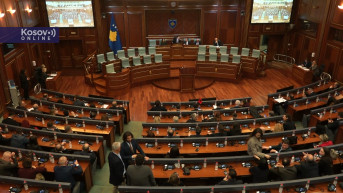
Had Kosovo's Assembly been constituted immediately after the certification of the final election results, the newly elected MPs might already have been debating numerous draft laws that have remained on hold. Some members of Kosovo's expert community view the decision to convene the constitutive session of the Assembly at the eleventh hour as irresponsible, while others believe it was justified because it allowed political parties the maximum amount of time to reach an agreement on forming the government and electing the president. Analysts interviewed by Kosovo Online assess that, as time passes, the prospect of new elections is becoming increasingly likely and that the balance of power remains in the hands of the Self-Determination Movement (Vetevendosje): if it wants to establish the institutions, it will do so. If not, it can continue to delay the process.
Written by: Dusica Radeka Djordjevic
Following the certification of the final election results on July 8, the constitutional 30-day deadline for constituting the new Assembly began to run. However, Kosovo's Acting President Albulena Haxhiu scheduled the Assembly's constitutive session for August 6, the day before the deadline expires.
Haxhiu stated that, until that date, political parties remain institutionally obliged to continue dialogue on the formation of Kosovo's institutions.
Given the publicly known positions of the political parties—with the exception of the Democratic League of Kosovo (LDK)—the Democratic Party of Kosovo (PDK) has maintained that it will remain in opposition and will not support any presidential candidate unilaterally proposed by Self-Determination. The Alliance for the Future of Kosovo (AAK) has conditioned its MPs' participation in the vote for the Assembly Speaker on the fulfillment of six previously announced demands. As a result, Self-Determination has faced accusations that it is deliberately delaying the constitution of the Assembly.
Few believe that agreements which have not already been reached will suddenly materialize within the remaining seven days.
Nevertheless, attention is now focused on today's party congress of the Democratic League of Kosovo, which many view as a possible lifeline for avoiding another parliamentary election.
Political analyst Artan Alijaj, who believes that the constitutive session has not been delayed because it falls within the constitutional deadline, links the chosen date directly to the LDK's internal electoral process.
"The LDK requested that negotiations be suspended until the completion of its internal party congress. It remains to be seen how that congress will unfold and whether an agreement on a joint government with the LDK can be reached within a week afterward. If no agreement is reached, Self-Determination will have to find another solution for forming the government and subsequently resolving the issue of electing the president," Alijaj said.
Timing possible new elections?
Milos Pavkovic, Director of Strategy at the Centre for European Policy, sees two key reasons why the Assembly's constitution has been postponed until the last possible moment.
The first, he says, is that Self-Determination is buying time to reach a potential agreement with the opposition. By scheduling the session for August 6, the party has gained additional time to find a coalition partner or secure support for both the election of the president and the formation of the government, although there is currently little political appetite for such cooperation.
"The second reason concerns the worst-case scenario—that no agreement is reached with the opposition parties, which, judging by current developments, appears increasingly likely. In that case, the aim is to postpone potential new parliamentary elections for as long as possible. This benefits Self-Determination because it could once again capitalize on votes from the diaspora, whose members return to Kosovo at certain times of the year. The elections could then be scheduled around a holiday period when more members of the diaspora are present, increasing voter turnout in its favor," Pavkovic told Kosovo Online.
Under such a scenario, he added, Self-Determination's objective would once again be to shift responsibility onto the opposition while seeking an outright parliamentary majority.
According to Pavkovic, an agreement between the opposition and Self-Determination is possible in two ways.
The first would be a formal coalition agreement with either the LDK or another party capable of providing enough parliamentary seats.
"The second possibility is a less transparent one—attempting to win over individual MPs. The divisions currently taking place within the LDK could potentially encourage some MPs to side with Self-Determination. However, when it comes to electing the president, where a two-thirds majority is required to secure a quorum, the same problem remains. As time passes, it seems to me that we are moving closer to another parliamentary election because there is no agreement among the political parties, and Self-Determination has been unable to secure enough MPs to support its candidates," Pavkovic said.
Although meetings between political parties were held after the certification of the June 7 election results, Aleksandar Rapajic, Program Director of the NGO Center for the Advocacy of Democratic Culture in North Mitrovica, believes that the fact the constitutive session was postponed until the very last moment indicates that no agreement has been reached on the presidency and that no broader political agreement exists among the parties in Pristina.
"I believe that the real power lies with Self-Determination. If Self-Determination wants to establish the institutions, it will do so. If it does not, it will delay the process for as long as possible. If it proposes a candidate from academia or another field who is not directly affiliated with Self-Determination, then there is a possibility that such a candidate could be elected president. The opposition parties have already stated that they will not support a candidate from Self-Determination because that would give the party control over all levers of power in Kosovo, something the opposition is unwilling to accept," Rapajic told Kosovo Online.
What happens after August 6?
Since the party that won the elections has the right to nominate the candidate for Speaker of the Assembly, opposition circles regard the session scheduled for August 6 as largely procedural.
Self-Determination has already announced that Albulena Haxhiu will once again be its candidate for Speaker, and with its 53 parliamentary seats, together with the votes of non-Serb minority representatives, the party is expected to secure her election.
Political analyst Ejup Gojnovci believes that political tensions in Kosovo will intensify after that date.
"From August 6 onward, we will have 60 days to elect the president. Political tensions will increase after that date," he said.
Rapajic, however, warns that further delays are likely and that the Constitutional Court could once again be drawn into the process if its opinion is requested on how to proceed.
He argues that, once the Assembly is constituted, Kosovo will enter territory not clearly regulated by either the Constitution or existing legislation. While the legal framework provides for repeat elections if a president is not elected, it does not specify what should happen after those repeat elections.
"Logically, once the Assembly is constituted, the election of the president should be the first priority because the previous Assembly was dissolved precisely because it failed to elect one. Therefore, it would be logical for the first task of the new Assembly to be completing what the previous legislature was unable to accomplish. However, given the existing legal vacuum, virtually anything is possible. It is conceivable that a government could be formed before a president is elected, or that the presidential election could be postponed for some time. There is even the possibility that the acting Speaker of the Assembly could request an opinion from the Constitutional Court on how the procedure should continue, leading to further delays in forming the institutions and prolonging the legal vacuum in which we have already been living for quite some time," Rapajic concluded.



0 comments