
European Commission warning to Kosovo: Will all crossings be opened to Serbian goods?
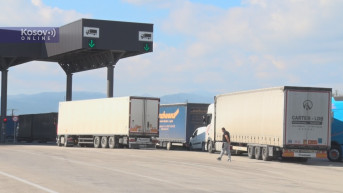
The observation that restrictions remain at other crossing points despite the opening of Merdare to Serbian goods entering Kosovo, along with a call on Pristina to ensure their free movement through all crossings, was included in this year’s European Commission Report on Kosovo. Kosovo Online’s interlocutors differ in their assessments of whether the Commission’s warning will have an effect. According to one view, warnings from Brussels may be followed by sanctions, while others believe there is no willingness to exert pressure on the Pristina authorities. What they agree on is that there is demand for Serbian goods in the Kosovo market.
Written by: Dusica Radeka Djordjevic
“The full operationalisation of the cargo scanner at Merdare during the summer of 2026 facilitated the movement of Serbian goods and significantly reduced waiting times. However, restrictions on Serbian goods through other control points remain. Kosovo should ensure the free movement of goods through all designated border crossing points, in line with its Dialogue obligations,” the section of the European Commission’s Kosovo Report dealing with the normalization of relations with Belgrade states.
The report notes that Kosovo continued to apply enhanced controls on imports of goods originating from Serbia, which are currently permitted only through the Merdare crossing.
“Combined with disproportionately frequent inspections and enforcement actions, this practice continued to affect economic activity in Serb-majority areas in Kosovo, disrupting supply chains and local access to certain goods,” the European Commission document states.
After the ban on Serbian goods entering Kosovo was introduced in June 2023 and subsequently lifted in October 2024, but only at the Merdare crossing, residents of Serb-majority areas say that Serbian products are now generally available on store shelves.
“Serbian goods are available in some places and unavailable in others. It all depends on where you are, but I think there are fewer Serbian products and more foreign goods. We buy what is available, and what we cannot get, we simply do without,” one Gracanica resident told Kosovo Online reporters.
A resident of Leposavic said that some Serbian products were occasionally unavailable and that, in his view, freer movement of goods would also mean lower prices for consumers.
“Goods would be cheaper. When I go to Raska to shop, things are much cheaper there. For our slava celebrations, we buy drinks, but they only allow us to bring across one or two crates of beer or soft drinks at a time. So we have to make several trips by car,” he said.
Serbian goods currently enter Kosovo exclusively through the Merdare crossing, where a mobile X-ray scanner provided by the United States was installed in January this year. The Pristina Government has made the installation of scanners at other crossings a condition for allowing Serbian goods to enter through them as well.
A month ago, Kosovo Customs awarded a contract for the construction of a facility to house a scanner for inspecting customs goods at the Jarinje crossing. It is still unknown when Serbian goods will be permitted to enter Kosovo through that crossing.
President of the Kosovo Business Alliance Agim Shahini, however, believes that the scanners are merely an excuse used by the Kosovo Government.
“Their justification is that there are insufficient resources to inspect goods, but there are plenty of customs officers working there, and I believe these crossings should be opened,” Shahini told Kosovo Online.
Commenting on the criticism contained in the European Commission’s 2026 Report, which states that Pristina should ensure the free movement of Serbian goods through all crossings, Shahini said it should be understood that when the European Commission issues warnings, sanctions can follow if the required measures are not implemented.
“For almost two years, we were subject to European Union sanctions because of our stubbornness, because we did not listen to them. The Kosovo Government should now consider the fact that all border crossings should indeed be opened to goods arriving in Kosovo from the direction of Serbia, which includes goods coming from across Europe. There is so much congestion, particularly during the summer at Merdare, that trucks carrying goods wait in line for five or six days to enter Kosovo,” Shahini said.
In his view, crossings toward Mitrovica and Presevo could also be opened for the commercial entry of goods.
He said that the Kosovo Business Alliance had repeatedly pointed out that it was unacceptable for trucks to wait for days, generating additional costs that were ultimately reflected in the prices paid by consumers.
“The longer the trucks remain there, the higher the transportation costs become, and in the end we are the ones who have to pay for it,” he noted.
There are customers for Serbian goods
Speaking about the extent to which Serbian goods have returned to Kosovo following the import ban introduced in 2023, which was subsequently eased by opening only the Merdare crossing, Shahini said that Serbian producers should be more persistent and not allow politics to influence their business decisions.
“In 2023, Kosovo imported around €370 million worth of goods from Serbia on an annual basis, but imports subsequently fell to less than €200 million following that restriction. Now, during the first nine months of this year, we have imported almost €200 million worth of goods from Serbia. This means that Serbian goods have begun returning to Kosovo. I think Serbian producers should be more persistent in securing a share of the Kosovo market rather than focusing on politics or obstacles. Anyone who wants to sell goods in Kosovo has a market and has customers,” Shahini said.
Bojan Stanic of the Serbian Chamber of Commerce also confirms that Serbian goods are returning to the Kosovo market.
However, when asked whether the Kosovo Government could be expected to work toward opening all crossings following the European Commission’s report, Stanic said that the Pristina authorities could not be described as a reliable partner.
“Given our experience over the past five or six years, when we talk specifically about the Pristina authorities, we cannot say that they are a reliable partner. Their business community, however, is a reliable partner. They genuinely seek goods from Serbia and, in a way, very quickly reopen and restore channels of cooperation as soon as the political circumstances improve,” Stanic told Kosovo Online.
According to him, a comparison of the first nine months of 2026 with the same period in 2022—before the Pristina authorities introduced unilateral measures and the blockade on Serbian goods in 2023—shows that trade has recovered to around 80 percent of its previous level in value terms and 74 percent in volume terms.
“This means that it is close to the pre-crisis level, and in that respect this is genuinely a good result, given all the restrictions the Serbian economy has faced in the Kosovo and Metohija market over the past three years,” he stressed.
He also pointed out that recovery levels varied across product categories, as some products had not returned to their pre-blockade levels, while others had performed even better than before. This was the case, for example, with cars, pharmaceutical shipments, clothing and aluminum, which are now being sold in greater quantities than previously.
Exports of beverages, particularly mineral water, certain iron and steel products and cereals, however, have not returned to their previous levels and remain significantly below the average recovery rate of around 80 percent in the Kosovo market, Stanic said. Dairy and confectionery products, meanwhile, are broadly in line with that average.
Partial blockade remains in place
“It is important to emphasize, however, that although the blockade has been lifted, a partial blockade remains in place—not only because not all administrative crossings are operational, but also because the capacity of the Merdare crossing is relatively limited in view of the Serbian economy’s overall need to place goods on the Kosovo and Metohija market. In addition to the European Commission, CEFTA also warned Pristina, yet the blockade lasted for a long time. It was as though there was insufficient willingness to put pressure on Pristina to lift the restriction, or to ensure that what has now been lifted is implemented at 100 percent capacity. If all those administrative crossings were opened, businesses would no longer lose revenue. It is estimated that the introduction of the blockade and all of its subsequent consequences, including the limited capacity of the administrative crossings, have cost our economy around €325 million in unrealized business,” Stanic said.
Asked whether opening other crossings in addition to Merdare would enable Serbian goods to regain their pre-ban market position, or whether some businesses had permanently withdrawn from the Kosovo market, Stanic said that opening all crossings would result in exports exceeding pre-blockade levels, given the strong competitiveness of the Serbian economy in that market.
“But if your truck has to wait at the border for several hours, and sometimes even several days, that simply discourages producers from returning to the extent they were present before, particularly when there is a risk that Pristina could introduce another unilateral blockade at any time, outside the framework of CEFTA agreements and contrary not only to recommendations but also to the obligations arising from the European integration process of the entire region,” Stanic noted.


0 comments