
Governing without accountability: Is a technical mandate advantageous for Kurti?
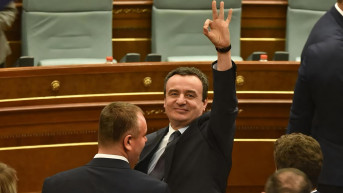
The “fate” of the Kosovo government also hinges on the Constitutional Court’s decision regarding the decree of Kosovo President Vjosa Osmani. Should the Court decide by the end of this month that Kosovo will proceed to early parliamentary elections, the “Kurti 3” government will enter a caretaker (technical) mandate until such elections are held. Opinions among interlocutors differ as to whether limited executive authority would suit Kosovo Prime Minister Albin Kurti. While some believe such a scenario would be beneficial for him—allowing him to avoid obligations in the dialogue with Belgrade and the establishment of the Association of Serb-Majority Municipalities (CSM)—others argue that a caretaker government would ultimately work to his detriment in the long term.
Written by: Milena Miladinovic
The issue of electing the President of Kosovo has once again unsettled the political scene in Pristina, at a moment when Prime Minister Albin Kurti, having secured 51 percent of the vote and a stable parliamentary majority, formed a government and assumed his third mandate.
During a brief period of “stability,” the budget for this year—amounting to nearly four billion euros—was adopted, and international agreements related to financing under the EU Growth Plan for the Western Balkans were ratified.
Soon thereafter, new turbulence followed. No consensus was reached on the election of the President of Kosovo. While the opposition called for a cross-party agreement, Kurti sought to appoint “his own candidate,” although until the last moment the name remained unknown. Various figures were mentioned in the media—from Murat Jashari, Andin Hoti, and Veton Surroi—before Glauk Konjufca ultimately emerged as the candidate.
“Political maneuvering” continued until the final day, when Speaker of the Assembly of Kosovo Albulena Haxhiu stated that she could not convene a session to elect the president due to the absence of a second candidate besides Konjufca, even though Self-Determination, with 66 secured votes in parliament, could have proposed another candidate, given that 30 MPs’ signatures are required for candidacy.
According to the “parliamentary calendar,” it turned out that one additional day remained for the election, and just three hours before the deadline, Self-Determination proposed a second candidate—Fatmire Kollçaku.
At the unsuccessful Assembly session held that evening, a new president was not elected. This was followed by President Vjosa Osmani calling elections, as well as an appeal by Self-Determination and an inquiry by Albulena Haxhiu. The Constitutional Court is expected to decide on these matters by 31 March.
Two scenarios may emerge after that date: either the presidential election process is reset, or early elections are called.
If new elections are held, the Kosovo government will operate in a caretaker mandate until they take place. This raises the question of whether Kurti effectively “brought down” his own government in order to install a party loyalist as president—and whether it suits him to serve as prime minister in a caretaker capacity, where he can manage budgetary funds, projects, and tenders, but avoid making difficult decisions such as establishing the CSM and fulfilling other obligations arising from the dialogue with Serbia.
Opinions among interlocutors are divided.
A Caretaker Mandate Without Obligations or Accountability
Dušan Radakovic of the NGO Center for Advocacy of Democratic Culture (ACDC) told Kosovo Online that a caretaker government suits Kurti, as it entails neither accountability nor engagement in dialogue with Belgrade, in which—he argues—Kurti would have to “swallow some bitter pills.”
Radakovic notes that, in recent times, all matters concerning Serbs in Kosovo have been addressed through administrative instructions.
According to him, had the government been operating under a full mandate, pressure on Kurti would have been significantly greater.
“If he had a full government, the dialogue would certainly have resumed; he would have had to send the draft statute of the Association of Serb-Majority Municipalities to the Constitutional Court; the pressure on him and the entire government would have been much stronger. He had a functioning government for ten days, adopted laws required for the European Union, had sanctions lifted, and now continues to operate—and will continue to do so,” Radakovic said.
He further believes that Kurti is preparing the ground for elections to be held during the summer period, when the diaspora will again be present in large numbers in Kosovo. However, he adds that by failing to support President Vjosa Osmani for another term, Kurti may have lost diaspora support.
“I believe the groundwork is being laid for elections to be held again during the summer—hence the repeated requests to the Constitutional Court—so that elections take place in late June or early July, when the diaspora is present. Until then, he remains in office, governs, appoints ministers and deputy ministers as he sees fit—whether in accordance with the law or not. For two years, Kurti has governed through administrative instructions and within a caretaker framework. I think his stance on the president may cost him, as she enjoys considerable support in Switzerland, Austria, Germany, and elsewhere, so it remains to be seen how much support he will retain,” Radakovic added.
Until then, Radakovic notes, Kurti bears no responsibility in the dialogue with Serbia, which he considers the most important issue for the Kosovo prime minister.
“In the Brussels dialogue, certain matters will certainly not be unilateral—he will have to accept some difficult compromises for agreements that will need to be signed. In this way, he has a caretaker government, no dialogue, and governs as he wishes. He is preparing the ground for new elections, after which the pressure on him will certainly be much greater,” Radakovic emphasized.
The CSM Does Not Depend on the Government’s Mandate
On the other hand, analyst Nexhmedin Spahiu stated that a caretaker government would work to Kurti’s detriment, and that the establishment of the Community of Serb-Majority Municipalities does not depend on whether the government operates under a full or technical mandate.
Spahiu told Kosovo Online that the issue of establishing the CSM is governed by the Brussels Agreement.
“The Association of Serb-Majority Municipalities does not depend on whether Kurti is in a caretaker or full mandate. He did not resolve this issue even when he had a full mandate. It relates to the Brussels Agreement, and Kurti is waiting for the establishment of the CSM to coincide with the opening of permanent diplomatic missions of Kosovo in Belgrade and Serbia in Pristina—which would imply both de facto and de jure recognition of Kosovo,” he said.
Spahiu further noted that Kurti has not used the caretaker mandate in a regular manner in the past, as there was no reaction from opposition parties.
“He used that vacuum to implement measures he needed, although he should not have done so,” he added.
According to Spahiu, Kurti assumed the opposition would fear new elections and therefore sought, at all costs, to appoint someone from his party as president.
“It suits him to complete a full mandate, as he won the elections with 51 percent of the vote. He was bluffing—he thought the opposition would be afraid of elections and wanted to install his own candidate as president. However, the opposition did not fall for it.
Now, in all likelihood, elections will follow, and he will probably not achieve the same result as on 28 December,” Spahiu concluded.
A Caretaker Government on Difficult Terrain
Miloš Pavkovic, Director of Strategy at the Center for European Policies in Belgrade, emphasized that a caretaker government would place the dialogue with Serbia outside the immediate agenda, but that such an arrangement would not be advantageous for Kurti in the long run.
Pavkovic told Kosovo Online that if, following the Constitutional Court’s decision, the government enters a caretaker mandate until early elections are held, this would provide Kurti with a convenient pretext to avoid addressing the dialogue and the CSM.
“Kurti is not currently in a caretaker mandate, given the Constitutional Court’s decision to suspend the entire process until the end of March. This means there is a possibility that he may enter a caretaker mandate if early elections are called. However, if that does not occur, he will continue as prime minister with a full mandate. If a caretaker mandate is introduced, it would offer him a convenient excuse not to deal with dialogue, normalization of relations, and the establishment of the Serbian community,” Pavkovic stated.
Nevertheless, he adds, such a scenario would place Kurti in a highly uncertain political environment.
“Every election carries a degree of uncertainty. I believe he will ultimately seek to remain in a full mandate and avoid early elections and a caretaker arrangement, which he has also indicated in certain statements. A caretaker mandate would certainly mean that all issues related to the dialogue are set aside, which would suit Kurti in the short term. However, overall, it would not work in his favor in the long term,” Pavkovic concluded.


0 comments