
Hot summer in Kosovo: Will the political deadlock be resolved only in the autumn?
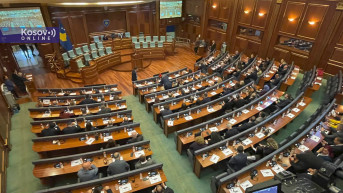
The 30-day deadline for the constitution of the Kosovo Assembly has begun, and the legislature must be constituted by 7 August, after which the procedures for electing the Government and the President of Kosovo are to follow. The first rounds of talks have already taken place, but without any concrete results. Although there is still sufficient time for negotiations and agreements, analysts remain pessimistic, telling Kosovo Online that a repeat of the familiar political stalemate is the more likely scenario, as they see no willingness among political leaders to engage in substantive dialogue or reach meaningful compromises.
Written by: Zoran Mirkovic
Following the official completion of the electoral process through the certification of the final results, the 30-day constitutional deadline for convening the inaugural session of the Kosovo Assembly began to run. The session is to be convened by the Speaker of the previous Assembly. Albulena Haxhiu has already announced that she will convene the session within the constitutional deadline.
According to Eugen Cakolli of the Kosovo Democratic Institute, the 30-day period expires on 7 August, and only after the Assembly has been fully constituted do two separate constitutional procedures begin—one for the formation of the Kosovo Government and the other for the election of the President of Kosovo.
There are differing views as to which process should come first—the election of the Government or the President—and how the Constitution should be interpreted on this issue. However, beyond the legal considerations, analysts have argued that an agreement on the presidency should be reached first, since that issue was precisely the stumbling block that led Kosovo to another snap parliamentary election.
Asked what could be expected over the next 30 days, Kosovo Online's interlocutors agreed that there is no willingness to engage in substantive negotiations or compromises and that the most likely outcome is a repetition of the situation following the parliamentary elections held on 9 February last year.
In the meantime, the first meetings have already taken place, but without tangible results.
Self-Determination Movement leader Albin Kurti held separate meetings with the leaders of the Democratic Party of Kosovo (PDK) and the Democratic League of Kosovo (LDK), Bedri Hamza and Lumir Abdixhiku. Following the meetings, Kurti said it was too early to speak about concrete outcomes but added that he "remains optimistic about the way forward."
Hamza stated after the meeting that the PDK would remain in opposition, while Abdixhiku said the two sides had agreed to continue discussions in an effort to avoid new elections.
A Sense of Déjà Vu
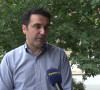
Even before the meeting between the leaders of the three parties, political analyst Artan Muhaxhiri said that the only way to overcome the current political crisis would be for the parties to make significant compromises—but that there was no willingness to do so.
"I believe we are heading toward a kind of déjà vu, because everything indicates that the situation will repeat itself and that the crisis will continue. The balance of power among the parties has remained unchanged. There are no signs whatsoever that any political leaders or parties are prepared to take a meaningful step toward finding a solution," Muhaxhiri told Kosovo Online.
He said he was pessimistic about the current political situation and did not believe the problems would be resolved quickly. Instead, he expects politicians to wait until the very last deadlines before doing what they do best—creating new blockages and additional problems.
Muhaxhiri stressed that cooperation would only be possible if the parties were willing to make major compromises, but added that no such willingness exists.
According to him, Kurti's announcement that he intends first to elect the Speaker of Parliament, then form the Government, and only afterward address the issue of electing the President is exactly the same approach that was attempted previously, which is why he does not believe it will succeed.
He assessed that cooperation between Self-Determination and the PDK is impossible because the differences between the two parties are too great and political animosity runs deep. Support from the LDK, he added, remains uncertain due to the party's internal problems, and even if all 18 of its MPs were to back the process, there would still not be enough votes to elect the President of Kosovo.
"That is why I expect many problems in the near future," Muhaxhiri concluded.
A Hot Summer Ahead in Kosovo
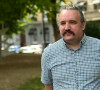
Security studies researcher Nikola Vujinovic said that "a hot summer lies ahead for Kosovo and Metohija," adding that without an agreement on the election of the President, there can be no talk of stabilizing Kosovo's institutions, but only of preparing for another election.
"I believe we will see a great deal of public speculation and claims about negotiations, but I do not expect any substantive talks. I think we will witness a situation similar to the one after last February's elections, with Kurti delaying the constitution of the Assembly, which he has the means to do. He can nominate a candidate who is unacceptable to the other parliamentary parties," Vujinovic told Kosovo Online.
He explained that constituting the Assembly is problematic because, once the institution is formally established, the constitutional deadlines for electing the President begin to run. Without an agreement on the presidency, he argued, there can be no discussion of institutional stability—only preparations for another election.
He is convinced that this is also the objective of the Self-Determination Movement.
"I expect continued institutional instability and only the appearance of dialogue. I do not see any genuine willingness to negotiate on the part of the opposition either. Not to mention the Serbian community, which has been completely sidelined," Vujinovic said.
He also pointed out that the coming 30 days will show whether there will be an attempt to nominate Nenad Rasic as Deputy Speaker of the Kosovo Assembly, despite the Constitutional Court having ruled that such a move would be unconstitutional.
"I believe a hot summer awaits Kosovo and Metohija—not only because the weather will literally be hot, or because the institutions are unable even to ensure a regular electricity supply. The world is undergoing profound geopolitical upheavals. I think we are once again heading into a waiting game," Vujinovic concluded.
0 comments