
Entry ban on ethnic Albanian MPs from North Macedonia: An isolated incident or a sign of deeper political divisions?
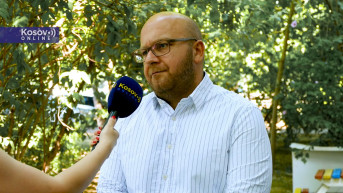
Political analyst Blagojce Atanasoski from Skopje believes it is unusual that ethnic Albanian members of parliament from North Macedonia were barred from entering Albania, but he does not consider the incident serious enough to significantly damage bilateral relations between the two countries. Former North Macedonian ambassador to Albania Risto Nikovski, however, argues that the episode is an indication of a much deeper rift within the Albanian political bloc in the Balkans.
Speaking to Kosovo Online, Atanasoski said that Wednesday's incident, in which three officials from the Albanian political party VLEN, along with a group of other North Macedonian citizens, were denied entry into Albania, was highly unusual from the perspective of the North Macedonian public.
"I believe there is a broader political strategy or a larger political influence behind this, related to the concentration of power among Albanian political figures in North Macedonia and their relationship with the ruling structures in official Tirana and the ruling party led by Prime Minister Edi Rama," he said.
Asked whether the incident could undermine diplomatic relations between North Macedonia and Albania, Atanasoski said he did not expect any significant deterioration.
"To be fair, over the past 35 years North Macedonia and Albania have maintained fairly good and correct diplomatic relations compared to many other neighboring countries. We live in the Balkans, and we know how problematic relations among neighbors can be. North Macedonia and Albania have always maintained a normal level of diplomatic communication in their bilateral relations," Atanasoski added.
He stressed that the incident was not serious enough to cause a profound deterioration in bilateral ties.
"It could ultimately be resolved through a diplomatic note," Atanasoski said.
Former North Macedonian ambassador to Albania Risto Nikovski told Kosovo Online that the incident was merely one indication of something much more serious taking place within the Albanian political bloc in the Balkans—namely, the growing political differences between Pristina and Tirana.
"There is already a certain rivalry between them, and in one way or another that rivalry and division have also affected the Albanian population in North Macedonia. What happened at the border the other day was simply the culmination of that process. Tirana tolerated the demonstrations in North Macedonia, and there was no problem when buses arrived en masse to act against the interests of the Macedonian state. Now, however, this has become an issue for them, and Edi Rama has made no secret of it—he said so publicly," Nikovski stated.
Nikovski noted that this was not the first time such incidents had occurred.
"When the Albanian state decided that all Albanians, regardless of where they lived in the world, could enter Albania without visas, that also applied to Albanians from North Macedonia. If a mixed Macedonian-Albanian delegation arrived at the border, ethnic Macedonians were required to have visas, while Albanians were not. These double standards are therefore nothing new. What is new is that they demonstrate the existence of serious divisions within the Albanian political bloc in the Balkans, although these divisions have not yet spilled over into the broader national issue," Nikovski said.
He does not believe the incident will damage relations between North Macedonia and Albania, but argues that North Macedonia's policy toward Albania has been fundamentally misguided.
"Our top political leaders have consistently claimed—and are repeating once again—that relations with Albania are excellent. That is simply not true. Albania has continuously pursued policies that negatively affect North Macedonia through ethnic Albanians in our country, while we have chosen to ignore it. There are numerous unresolved issues, including the situation of ethnic Macedonians in Albania, who enjoy virtually no rights, yet the Macedonian state has done absolutely nothing to protect them," Nikovski said.
He added that North Macedonia's policy has been one of excessive tolerance toward unacceptable developments, which Tirana has exploited to its advantage.
"We should also not forget that Edi Rama has become one of the leading political figures in the Balkans. Albania is being increasingly promoted, and as we have already heard, the next NATO summit will be held in Tirana. Years ago, Belgrade occupied that position. It is no coincidence that the international community has shifted its focus and major regional events to Tirana," Nikovski said.
Albanian authorities recently barred dozens of people from North Macedonia from entering the country. According to some Albanian media outlets, they had planned to attend anti-government protests in Tirana. Reports also indicate that more than 60 individuals linked to the VLEN party, which is part of North Macedonia's governing coalition, have been placed on Albania's so-called "blacklist."
According to media reports, those denied entry include VLEN MP Adnan Azizi, the party's parliamentary group leader Bekim Qoku, who is affiliated with the Self-Determination Movement, North Macedonia's Deputy Secretary-General of the Government and former Minister for European Affairs Hasim Murtezani, as well as municipal councillors and other public figures.
Albanian Prime Minister Edi Rama previously stated that "mercenaries" from Kosovo and North Macedonia had joined the country's anti-government protests, although he did not identify any individuals by name.

0 comments