
Is it enough for Kosovo to only fulfill the obligations it has been ignoring for years in order to join the Council of Europe?
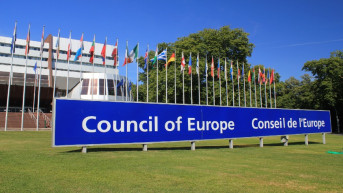
Diplomatic pressure on Pristina to finally implement the decision of the Constitutional Court of Kosovo from 2016 regarding the return of ownership of 24 hectares of land to the Visoki Decani Monastery has been intensifying in recent days. This issue is highlighted as one of the three main unresolved issues regarding Kosovo's membership request in the Council of Europe by the rapporteur for Kosovo in the CoE, Dora Bakoyannis, in front of the Political Committee of the Parliamentary Assembly of the CoE on Tuesday.
Firstly, the head of EULEX, Giovanni Pietro Barbano, last week stated that the court's decision from 2016 bound all individuals and institutions without exception. Ambassador of Germany to Kosovo, Jorn Rohde, added to Barbano's statement with a message that all friends and partners were calling on Kosovo to implement the Constitutional Court's decision regarding the monastery. Following Rohde's statement, the Visoki Decani Monastery was visited by the Special Envoy of Germany for the Western Balkans, Manuel Sarrazin.
Is it really important for diplomats that the rule of law is consistently respected in Kosovo, or is this "offensive" linked to Kosovo's request to become a member of the Council of Europe? Nonetheless, in the Information Note of the rapporteur for Kosovo in the CoE, Dora Bakoyannis, who visited Kosovo in November, it is stated that the ruling on the monastery's land is a rule of law issue and must be implemented. Bakoyannis also points out two other unresolved issues which she categorizes as main concerns regarding Kosovo's membership request in the CoE - effective protection of the Serbian community in the northern municipalities, i.e., the formation of the Community of Serb-majority Municipalities, and the expropriation of land in municipalities with a Serb majority.
Before the final decision of the Council of Europe member states on whether to admit Kosovo into their ranks, several procedural steps remain. However, the question certainly arises - is it sufficient for membership in an organization dedicated to the protection and promotion of human rights, democracy, and the rule of law for Kosovo to fulfill several obligations it has been ignoring for years?
As for further steps regarding Kosovo's application for membership in the Council of Europe, the PACE Information Service stated for Kosovo Online that the next meeting of the Committee on Political Affairs was expected to take place during the April session of the Assembly, from April 15th to 19th, but the agenda was not yet available.
"According to the usual procedure, after the Committee on Political Affairs approves the draft opinion, two other committees - the Parliamentary Committee on Legal Affairs and the Committee on Equality - provide their views on it. The work of the three committees is then discussed by the plenary assembly, leading to the adoption of the Assembly's opinion for the Committee of Ministers of the Council of Europe. The final decision on Kosovo's membership application is made by the Committee of Ministers," the Information Service of the PACE stated, marking Kosovo with an asterisk in its response to our editorial team.
Lawyer Milan Antonijevic tells Kosovo Online that within the upcoming debate within the Parliamentary Assembly of the Council of Europe regarding Kosovo's request to become a member of the Council of Europe, not only the three points singled out by Kosovo rapporteur Dora Bakoyannis as "major unresolved issues" will be considered, and that it is necessary to take into account a broader framework of rule of law and human rights, meaning a broader set of standards must be met if Kosovo wishes to proceed further in this membership process.
Even if Kosovo were to fulfill its obligations regarding these three issues in the foreseeable future, Antonijevic says that membership in the Council of Europe is not solely tied to these topics.
"Kosovo's membership in the Council of Europe is not only and exclusively related to the implementation of their international obligations such as the obligation to form the Community of Serb-majority Municipalities, the obligation to implement decisions of the Constitutional Court, or the issue of expropriation, but it concerns a much broader rule of law, human rights, or other issues that are currently open. Promptness in problem-solving must be demonstrated, rather than fulfilling something in crisis situations to achieve some international steps towards independence," Antonijevic says.
He adds that it should not be forgotten that Kosovo is still under certain forms of sanctions or measures from the European Union.
"A broader set of standards is expected from Kosovo if they want to proceed further in this membership process. Of course, there are also political questions, whether they can obtain a two-thirds majority in the PACE with these quite numerous incidents happening on a daily basis, so I think all this is much further than Kosovo authorities might perceive," Antonijevic says.
When asked whether Kosovo's recognizing countries in the Council of Europe will take into account the reality that ethnic incidents in Kosovo are daily and human rights are not respected, Antonijevic says it's a question for Serbian diplomacy.
"It depends on how successful it will be to establish sufficient contact and clear cooperation with each member of the Council of Europe, where we will argue that Kosovo's membership in the Council of Europe is something that should demonstrate Kosovo's ability to enforce laws and consistently fulfill obligations it undertakes internationally, rather than waiting for it for so many years," Antonijevic says.
Senior Researcher at the Institute for International Politics and Economics, Dusan Prorokovic, states that currently within the Council of Europe, "there is no consensus regarding the admission of the so-called Republic of Kosovo to full membership," and that, as he notes, Albin Kurti is aware of this, which is why he delays fulfilling the conditions set before Pristina until a general stance is formed within the CoE.
Prorokovic points out that international organizations dislike being overruled, therefore, in cases where there is no consensus, "criteria and conditions are made up that the candidate must fulfill to acquire full membership status." In the case of Kosovo, they've limited it to three things – the return of land to the Visoki Decani Monastery, the Community of Serb-majority Municipalities, and the issue of land expropriation in the north.
"Is that enough? It isn't. When you mention Kosovo in the CoE, the first association is Dick Marty and his report on organ trafficking. So, Kosovo has been extensively discussed within the PACE, many topics have been examined over the past 20 years, there are things demanded to be implemented by various international organizations and Albanian authorities, and I'm not sure if everything has been implemented, and now we've come to these three. Albin Kurti understands this, that there is no consensus. Even if he fulfills those three conditions, a fourth or fifth would probably emerge until a general stance is formed in the CoE that the so-called Kosovo state should be admitted, and that is why he is delaying this," Prorokovic says for Kosovo Online.
However, our interlocutor believes that Kosovo is on the right track to be admitted to the CoE, and Serbia should already be thinking about how it will position itself in a year, two, or three.
"They have a formal majority for admission there, meaning it's not a matter of formality but a political decision. As political decisions are reconciled under different pressures and trades, we will have to decide as well. However, this doesn't concern me much because the CoE has largely lost the function it had, let's say, in the first decade of the 21st century. That organization was primarily dedicated to Russia and the post-Soviet space, where it was supposed to implement certain rules and principles. Russia stepped out, as did Belarus, and I doubt Turkey will stay in that organization for long. The CoE is not an international organization that exists because of the Balkans. The moment they let go of the post-Soviet space, they no longer have a purpose for their existence, and it will be very difficult for them to regain it," Prorokovic says.
Although admission to the CoE is desired in Pristina because it is considered an "asset" that would ease their way to membership in other organizations, Prorokovic does not think that is the case.
"The potential admission of the so-called Kosovo state to the CoE is not pleasant for us, but I don't see that it is particularly spectacular and that it would open doors for them to be admitted to other international organizations, regardless of how it is argued. In Pristina, they see the CoE as the first step towards admission to UNESCO. I doubt it would play out that way. They don't even have that formal majority in UNESCO, not to mention political issues," Prorokovic emphasizes.
The Council of Europe currently has 46 member states. The members of the CoE include all European Union member states, as well as Great Britain, Turkey, Norway, Switzerland, Serbia, Bosnia and Herzegovina, North Macedonia, Montenegro...

comments