
Jovanovic: Lajcak confirms that Kosovo cannot join UN without Serbia's consent; Spahiu: Not everything is in the West's hands
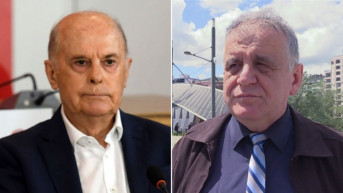
Regarding the statement of the European representative for dialogue, Miroslav Lajcak, that "Kosovo's membership in the United Nations is a much bigger issue than the relations between Serbia and Kosovo and that the Security Council has its role in that," interlocutors of Kosovo Online, experienced diplomat Vladislav Jovanovic and political analyst Nexhmedin Spahiu, agree that there is no chance for Kosovo's admission to the UN without recognition by Serbia.
The former head of diplomacy, Vladislav Jovanovic, says for Kosovo Online that the procedure for the admission of a new country is clearly defined by international law, the UN Charter, and practice and that the first step is the consent of a state whose part of the territory inhabited by a national minority separates itself and wants to get a seat at the East River, which in this case is Serbia's consent.
"In any case, skipping over the mother country, i.e., Serbia, is unfeasible. Lajcak's statement, on the one hand, aims to push this issue over the line but also to diminish Serbia's insistence on sovereignty, overlooking that Serbia is the mother country and that it is not only the struggle for the return of the seized territory but something that is at the base of everything. On the other hand, what Lajcak said can be interpreted as an acknowledgment that the West's hands are quite tied on this issue because even if Serbia agrees to Kosovo's entry into the UN, it must first be approved by five permanent members of the Security Council, including Russia and China, and then by a two-thirds majority in the General Assembly of the United Nations. Even if Serbia agreed to Kosovo's entry into the UN, which I think is unlikely, it is not certain that Moscow and Beijing would immediately vote for Pristina to become a member. They would probably try to trade their vote to secure the support of the Western permanent SC members – the US, Great Britain, and France – for an issue between Russia and China," Jovanovic says.
In case there is an attempt to push the issue of Kosovo's membership in the UN, Jovanovic believes that this would be opposed not only by individual members of the Security Council but also by many countries with a multinational composition that will not want to formalize the so-called sui generis case because it could backfire on them like a boomerang.

"Our unfortunate friends in the West have become entangled in their own problems. And now, since they have a problem with Russia, which they want to nail to the wall as a violator of international law, they are in a hurry and want us to help them as soon as possible, to give up Kosovo so that they can attack Russia again as righteous people under international law," Jovanovic says.
The professor of political science from Pristina, Nexhmedin Spahiu, tells Kosovo Online that he sees Lajcak's statement that "membership in the UN is a much bigger issue than the relations between Serbia and Kosovo, and the Security Council also has its role there" as an acknowledgment by the European emissary that not everything is in the hands of western countries.
"Recognition by Serbia is important because it might solve the doubts of countries that do not recognize Kosovo. However, some countries may also have their reasons for not recognizing Kosovo, for example, Russia or China. They do this not only because of the good relations they have with Serbia but also because of their interests and relations with the US, which they consider to have created the Kosovo state," Spahiu explains.
He further states that the problem is also the moves that Kosovo's leaders are making toward Russia and their attacks on Putin and Moscow.
"For example, Kosovo President Vjosa Osmani points out that she accused Putin of being a criminal a week before American President Biden. Such statements are completely inappropriate and unnecessary. I do not think Kosovo should support Russian aggression against Ukraine, but it does not have to be in the first line of attack on Moscow and make so much noise about it. Kosovo is on the back burner, not to mention the fact that even Ukraine has not recognized Kosovo. Therefore, Kosovo should not deal with that problem at all because it cannot influence establishing peace between Ukraine and Russia or stop Russian aggression. That is why it would be wiser for Kosovo's leaders to remain silent, because what they say could close Kosovo's path to UN membership. Namely, for this to happen, even though we have the necessary number of votes from the UN member states, it is necessary that Russia or China do not veto it in the Security Council," Spahiu says.
Our interlocutor also indicates that the "Franco-German" plan does not even guarantee that the five EU member states that do not recognize Kosovo will do so, but he believes that it is possible for it to happen.
"Spain, Slovakia, Romania, Greece, and Cyprus do not recognize Kosovo because of their problems because they think that separatist movements in those countries could take off. If Serbia were to recognize Kosovo, then Spain could tell the Catalans, for example, "They have seceded, but they were recognized by Serbia, and we do not recognize you, therefore you cannot secede.' I expect that, if the "Franco-German" plan of the five EU countries is implemented, Kosovo will be recognized and will enter NATO and other international organizations. But the chances are slim for Kosovo's entry into the UN, even if Serbia recognizes it," Spahiu points out.


0 comments