
Kosovo or Serbia, who has more support in the Islamic world?
Despite the increasingly intense lobbying of Kosovo officials aimed at Islamic countries with the aim of gaining new recognition, the interlocutors of Kosovo Online assess that we should not expect a change in the attitude of these countries, primarily because many of them have a problem with separatism in their territories, but also because Serbia enjoys a great reputation among Islamic countries.
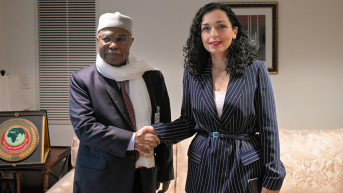
Pristina's lobbying among Arab and Islamic countries was particularly visible last week during the session of the United Nations General Assembly in New York, where the President of Kosovo had meetings with the officials of Lebanon, Jordan, the Secretary General of the Organization of Islamic Cooperation (OIC)... She openly stated her expectation that the OIC member states that did not recognize Kosovo's independence would do so in the near future, while she asked the Jordanian King Abdullah II for continued support for Kosovo's membership in international organizations and for recognition from Arab countries.
For these ambitions, Pristina has a strong "back" in Ankara ever since independence was declared in 2008, and the President of Turkey, Recep Tayyip Erdogan, has repeatedly promised to support Kosovo in joining the Council of Europe, the European Union and NATO, as well as in obtaining new recognitions. .
And yet, Islamic states that respect Belgrade's positions and international law firmly hold to those positions.
Islamologist and former Serbian ambassador to Turkey and the Vatican, Darko Tanaskovic, tells for Kosovo Online that in the Muslim world, Serbia has a great reputation and countries that support it, as well as that it manages to develop all kinds of relations with some countries that have recognized Kosovo's independence.
"That is important because then those countries do not have so much motivation to fight actively in lobbying for the recognition of Kosovo's independence," says Tanaskovic, who cites as an exception Turkey, which on the one hand is developing very good relations with Serbia, and which is also one of the countries that lobbies most persistently for the recognition of Kosovo's independence.
According to Tanaskovic, the situation among Islamic countries after Kosovo is not particularly positive.
Commenting on the meetings that Kosovo President Vjosa Osmani had with representatives of Islamic countries last week in New York, in which she sought support for new recognitions, Tanaskovic assesses that Osmani does not have much reason for optimism after those consultations.
"Just like last year, during the session of the UN General Assembly, the president of the so-called Kosova's Vjosa Osmani lobbied very intensively in the corridors of the UN building on the East River. As for Jordan, he is an old ally of Kosovo. When I was the permanent representative of Serbia to UNESCO in 2015 and when the battle was being fought against the admission of Kosovo to UNESCO, if we exclude Albania, which basically led the entire action and which made the request, Jordan was among the most active countries in supporting Kosovo and there is nothing new there. The Secretary General of the OIK is from Chad, a country that recognized Kosovo in 2012, but he does not have too much influence in this organization, with the fact that he can influence the agenda of the conference and the fact that there is a draft Resolution on inviting all OIK countries to recognize Kosovo. It is not difficult for them to vote for such a resolution because they have among their members the majority of countries that have recognized Kosovo, but such resolutions have already been passed and did not give any particular results," says Tanaskovic.
He indicates that out of 57 members of the OIC, about thirty have recognized the independence of Kosovo and that this percentage is lower compared to the countries of the European Union, which, he says, might not be expected.
"On the other hand, from the very beginning, there was a distinct tendency to portray, by inertia with the events of more than two decades ago in Bosnia and Herzegovina, that the conflict in Kosovo and Metohija is essentially a conflict between Islam and Christianity and that Muslims are threatened there , so that from the point of view of Islamic solidarity, Muslim countries express their support for Kosovo, including the recognition of its independence. That story, however, did not pass because for many reasons it became clear that this is not about any inter-religious conflict, but that it is purely political, territorial and other reasons. Because of this, Pristina has long been dissatisfied with the response of the Muslim world to their requests to be internationally recognized and to support their international affirmation," explains Tanaskovic.
In the Muslim world, he adds, countries that have not recognized Kosovo's independence have strong reasons for doing so.
"Whether they are of a principled nature - adherence to international law, or what is much more common, which is that these countries themselves have certain problems of separatism and experience with this type of attempt to achieve the independence of their territories, so they will certainly not change that attitude ", says our interlocutor.
Overall, in the world, according to Tanaskovic, the situation today is less favorable than it was ten years ago in terms of the readiness of countries that did not recognize Kosovo to recognize it now.
"Since the beginning of the war in Ukraine, in the Muslim world, a greater affection towards Russia has been felt and a certain anti-Americanism is strengthening, which was otherwise strong in that world, and since it is known that in the background is the war of the collective West, i.e. the USA against the Russian Federation, I think that a factor that globally also does not contribute to the fact that a greater number of Muslim countries would recognize the independence of Kosovo at this moment because it is known that it is an American project. All in all, I wouldn't say that there are many reasons for optimism of Mrs. Osmani after her consultations," concludes Tanaskovic.
As some of the countries in the Islamic world where Serbia has support for its views, our interlocutor points out Morocco, Algeria, Indonesia, Iran...
"There is also Egypt, which actually froze relations with Kosovo, that is, it never developed them even though in special circumstances it formally recognized Kosovo in the last days of President Morsi's rule," says Tanaskovic.
Speaking about the possibility of Kosovo receiving some new recognition within the body of Islamic states, bearing in mind the meetings of Kosovo officials seeking support for this, political analyst from Pristina, Alen Meta, tells for Kosovo Online that since the declaration of independence, there has been an invitation from the OIC for recognition of Kosovo as an independent country, but that this did not bring changes in many countries.
"International relations do not function only through invitations and occasional lobbying of governments and presidents, on the contrary, it has not brought results or there have been few. Since the declaration of independence, there has been a call by the OIC fir recognition of Kosovo as an independent state, but this has not brought changes in many countries. This is connected with the previously established relations with Serbia, and even with the close ties these countries have with Russia and its politics. I believe that the relations between countries with a Muslim majority and Serbia, which have been established for years, since the time of Tito, and even before him, have influenced that there are no changes in the relationship towards Kosovo. The lack of information, various campaigns, even from the official Belgrade, have a great effect on that," says Meta.
Regarding whether the positions of Islamic countries on the issue of Kosovo are firm or whether there is room for Pristina or Belgrade to convince them that their position is the correct one, Meta says that it is problematic to define whether the approach of Belgrade or Pristina is correct or incorrect, because here we are talking about two completely opposite realities.
"In international relations, strategies and approaches do not change in the short term, especially in countries that have influence or are influenced by major policies", concludes Meta.
Dr. Slobodan Jankovic, a researcher from Belgrade, tells for Kosovo Online that the attitudes towards Kosovo and its recognition among Islamic countries are mainly the result of American lobbying and assesses that the meetings of Vjosa Osmani in New York can change the attitude of some Islamic countries if, as he says, "they are offered some material compensation".
"Recognition of the so-called Kosovo by many countries, and when it comes to countries with a Muslim majority, is mainly the result of American and British lobbying and lobbying by Turkey, which has been one of the main proponents of the recognition of Albanian Kosovo as a state from the very beginning. I say "Albanian" in the secessionist sense government which is made up of Kosovo Albanians themselves. Vjosa Osmani's lobbying can change something in the sense that some countries are offered a certain type of material compensation or that they, with the support of the main promoters, which are the USA and Great Britain, and then the key EU member states with the exception of Spain, they change their attitude. Only in this connection can they achieve something. One of the reasons why these countries do not recognize Kosovo is that many countries are not interested in recognizing such behavior where part of the territory is seceded on ethnic or other grounds, because many people have similar problems themselves. That's why they don't allow it," says Jankovic.
He emphasizes that it is in the interest of small and medium-sized countries to preserve international law.
"But in times of war, and we are certainly witnessing a world war, international law is annulled. It does not disappear completely, but it is up to each state, in this case up to our state, to protect its people and its Constitution, thus territorial integrity and sovereignty", points out Jankovic, who critically examines the policy of the Serbian authorities on this matter.
He also believes that some countries are guided by the policy of the great powers that do not recognize Kosovo.
"Some countries do not come into contact with the top of our authorities, but hear from certain politicians our nominal policy or come into contact with the Russian Federation or China, which are against the recognition of Kosovo and under this influence do not recognize Kosovo as a state," says Jankovic.
The last country to recognize Kosovo was Israel in 2020, and due to Pristina's decision to open a representative office in Jerusalem, Kosovo was strongly condemned by Palestine, which then asked all OIC members to freeze relations with Kosovo.
0 comments