
Kurti's six conditions are a sign that he is reacting to US pressure
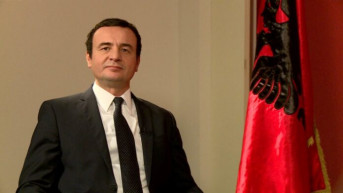
The West says that the "Community of Serb-majority Municipalities must be formed", and the European Union reminds that Kosovo has committed itself to its establishment, but Kosovo's Prime Minister Albin Kurti has not cared so far, Blic reports.
At first, he presented the views that would make him unwilling to form it, but then Washington practically sent him the message “If you don’t want to do it there are those who will". Kurti then delivered six conditions for the CSM, upon which he received a cold shower and comments that he was creating a political circus, so the question is whether he persists in his policy with these demands or, in his own way, sends signals that EU and US pressure has borne fruit?
Since coming to power, Kurti opposes the CSM and looks for excuses to avoid it. He calls it the "cancer of Kosovo", and demands that it be in accordance with the Kosovo constitution and laws, conditions that it cannot be mono-national.
And then, two days ago, at the session of the Assembly of Kosovo in Pristina, he set six conditions for the formation of the Community of Serb-majority Municipalities.
Symptomatically, he appeared like this after a series of warnings from the West and only two days after a meeting on the CSM was held in the US embassy building in Pristina, to which Kurti was not invited, but he was the head of his cabinet.
The two arguments he constantly mentions are now listed as the first two conditions, and among the other four are requests that the CSM change its name and that the President of Serbia, Aleksandar Vucic, withdraw the letters sent to the officials of the five EU member states that do not recognize Kosovo, in which he asks them not to accept the Pristina application for EU membership.
The reaction from Kosovo was not waited long, which practically ridiculed him. The executive director of the "Epik" Institute, Demush Shasha, immediately objected and said that it had all been a momentary "political sensation" and a political circus.
The vice president of the PDK, Vlora Citaku, did not spare him either, she said that the conditions should be presented to Serbia and the delegates, not to the Assembly of Kosovo.
There was a reaction from Belgrade, and the State Secretary in the Ministry of Defense of the Government of Serbia, Nemanja Starovic, indicated that they had actually represented his rejection of the new European initiative.
Kurti reacted to the pressure
What's in between? Does Kurti persists in his politics, or does he send indications that he might start forming the CSM?
This is exactly what Dragisa Mijacic, the president of the National Convention on the European Union for Chapter 35, interprets for Blic.
"The fact that Kurti felt the need to present the conditions for the formation of the CSM shows that he is reacting to the pressures coming from the international community, primarily from America. As for the conditions themselves, their structure does not represent a logical whole, but the proposed steps are aimed at complicating conditions, the process of formation of the CSM initiated by the American Embassy in Kosovo," Mijacic assesses.
The American administration, he reminds, took it upon itself to create the conditions for the formation of the CSM, and its high officials stood behind that process.
"The success of this process will show the real power of America in Kosovo, but also its determination and ability to solve regional issues in the Western Balkans in the context of the new geopolitical circumstances caused by the war in Ukraine. The lack of constructiveness during the formation of the CSM will also show to what extent Kurti will be allowed to lead independent policy and makes moves that are not coordinated with America and other international partners since in the previous period there was a dose of tolerance of international actors for Kurti's soloing," Mijacic says.
"Demands on the edge of common sense"
This tolerance lasts for ten years, as long as it takes for the formation of the CSM. In recent months, the whole process has been accelerated by putting the Franco-German agreement on the solution to the Kosovo issue on the table. Belgrade and Pristina are asked to sign it, and Pristina has been given an ultimatum to finally enter the process of forming the CSM.
By setting the conditions, the Kosovo prime minister is obviously trying to get back into the game, in his own way, Dusan Janjic, director of the Forum for Ethnic Relations, says for "Blic".
"The conditions he set are on the edge of common sense; how can unilateral acts, such as letters, be withdrawn? These are hastily made arguments, all to cover the fact that the discussion in parliament is a step towards the implementation of the agreement. The US sent a message to Kurti 'you won't, it's okay there are those who will!' If everything goes according to plan, at the end of February we can expect the first meeting on the CSM in Brussels and a discussion on how to return the Serbs to the institutions," Janjic assesses.
Kurti's action is at the same time unblocking the dialogue process, but also a correction of his policy and negation of the effects of the Serbs coming to power.
"At the same time, it is a serious blow to his ideology, he will lose many followers because the most radical supporters will no longer see him as a collaborator, but will turn away from him,” Janjic says.
The mistake was, as he assesses because he built his entire policy on the illusion that Serbia would be forced to recognize Kosovo in exchange for Kosovo.
"That is no more, and it will not happen. Now Kurti is trying to ensure that there are no quick springs, and to maintain the illusion of policy consistency," Janjic says.
Kurti's six demands
- CSM must be in accordance with the Kosovo constitution and laws
- CSM cannot be uninational; it must change its name and serve only for horizontal cooperation between municipalities
- Minority rights to strengthen the principle of reciprocity between the two states
- Before establishing the CSM, the "illegal structures of Serbia in the north" must be shut down and all illegal weapons handed over
- CSM to be part of the final agreement and to be implemented after "mutual recognition"
- That the President of Serbia withdraws the letters sent to the highest officials of the five EU member states that do not recognize the self-proclaimed independence of Kosovo, in which he requests that those states should not accept Pristina's application for EU membership
What is disputed about the CSM?
On April 19, 2013, the former Prime Ministers of Serbia, Ivica Dacic, and Kosovo, Hashim Thaci, signed the Brussels Agreement under the auspices of the EU, which foresees the formation of the CSM. Out of a total of 15 items, the first six refer to the Community of Serb-majority Municipalities.
Two years later, principles on the formation of the Community were agreed upon in Brussels, which the Constitutional Court of Kosovo found in December 2015 to be not fully in line with the spirit of the Constitution, but, as they added, it could be harmonized by a legal act of the Government of Kosovo and the statute.
Based on that decision of the Constitutional Court, it is disputed that the Community is not based on multi-ethnicity, but gathers municipalities where one ethnic community is the majority.


0 comments