
The (lack of) communication between Kosovo and Serbian institutions: Why is Svecla addressing the issue of the functioning of educational and healthcare institutions?
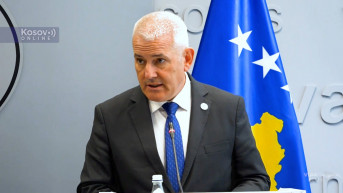
Kosovo's Minister of Interior, Xhelal Sveçla, recently stated that healthcare institutions in Serbian-majority areas of Kosovo are in communication with Kosovo's Ministry of Health regarding the regulation of their status. However, these claims have been denied by the directors of the clinical centers in Gracanica and North Mitrovica, Bratislav Lazic and Zlatan Elek. They also raised the question of whether it is appropriate for a Minister of Interior to address healthcare issues, or if Sveçla’s statements might hint at another action from Pristina that, like previous ones, will not benefit the Serbian community in Kosovo.
Written by: Milena Miladinovic
"Through municipal authorities, the Serbian community in Kosovo has additional rights and privileges in the areas of education and healthcare, and these will be treated differently compared to other institutions," said Sveçla in an interview with Radio Free Europe. According to him, these "privileged" institutions will no longer operate under the Serbian system.
"Their activities will be defined within the laws of Kosovo," Sveçla added.
These two specific areas—education and healthcare—require a specific approach, according to Sveçla, who claims discussions are already taking place with the healthcare system operating in Serbian-majority municipalities.
"The Ministry of Health of Kosovo is already in communication with the healthcare system in municipalities where Serbs are the majority. I believe only enhanced coordination between both sides is needed to ensure everything operates within the law. The same should apply to the education system," Sveçla noted.
Denials
Claims of communication between healthcare institutions operating under the Republic of Serbia's system and Kosovo’s institutions were denied today by Bratislav Lazic, Director of the Clinical Hospital Center (KBC) Pristina, with its temporary headquarters in Gracanica, and Zlatan Elek, Director of the KBC in North Mitrovica.
Lazic told Kosovo Online that the institution he leads has no contact with the Kosovo Ministry of Health or the Kosovo government.
"We operate within the healthcare system of the Republic of Serbia. There are no contacts with anyone from the Ministry of Health in Pristina, nor do we have any contact with representatives of the so-called government in Pristina," Lazic stated.
He further emphasized that healthcare is not a sector the Minister of Interior should be involved in, questioning whether Sveçla's statement should be interpreted as a sign of upcoming actions from Pristina that would negatively affect the Serbian community.
"It’s also intriguing that statements related to healthcare in Kosovo and Metohija are coming from the Minister of Interior in Pristina. I don't know how to interpret that. Healthcare is not under the jurisdiction of the Minister of Interior, and I’m not sure if this should be seen as a hint of certain actions that will not be positive for the Serbian community," Lazic added.
Zlatan Elek, Director of the KBC in North Mitrovica, expressed surprise at the statement made by Kosovo’s Minister of Interior, Xhelal Sveçla.
"I was surprised to read Minister Sveçla’s statement, in which he claims that healthcare institutions operating within the Republic of Serbia’s system are communicating with Kosovo’s healthcare institutions. So far, there has been no communication between these two systems," Elek said.
He was further astonished that it was the Minister of Interior who made such statements about healthcare.
"What is even more surprising to all of us is that statements regarding the healthcare system in Kosovo and Metohija are being made by the Minister of Interior, who has almost no connection to the healthcare system in which we operate," Elek remarked.
It Won’t Be That Easy
Serbian President Aleksandar Vucic also addressed the statement made by Xhelal Sveçla. Speaking from New York, in response to a question from Kosovo Online regarding Sveçla's claim that education and healthcare should operate under Kosovo’s laws, Vucic firmly stated that this will not happen.
"That will not happen. They can come, the police can close schools and kindergartens, but the other part won't happen. We will continue paying teachers' salaries, we will continue working with the children. It won’t be so easy for them. It seems that he has now changed course—since he cannot occupy the bridge, he is switching to something else," Vucic remarked.
Serbian President Aleksandar Vucic emphasized that Serbia will always find solutions, which is causing frustration in Pristina.
"Let them do their thing; we have our own measures and are working on them. Through direct conversations with our people, we will always find a solution. This shows the level of their nervousness and hysteria. They have nothing to talk about except Serbs, Serbia, and Belgrade—they have no other topic. What else could they talk about? That they have the most widespread internet in the world, just because one person has ten of his most widely connected relatives abroad... And they say there are four percent Serbs. No, at this moment, even though the numbers are small due to persecution, we have eight percent Serbs because there are no Albanians. They like to count Serbs but don't like to count Albanians... If they can't do the counting, they should ask for help. We've done our work and know exactly how many residents there are," Vucic remarked.
Message to Serbs Through a Repressive Police Element
Commentators on Kosovo Online describe Sveçla's statement as indicative, emphasizing that the Brussels dialogue is the only place to resolve the functioning of the healthcare and education systems.
Dragiša Mijacic, Coordinator of the Working Group of the National Convention on the EU for Chapter 35, responded to Sveçla's statement that the education and healthcare sectors will no longer operate under the Serbian system but will be integrated into Kosovo's legal framework. He stated that this reflects how the Kosovo government operates.
Mijacic also linked such statements to the ongoing election campaign.
"We are in the middle of an election campaign, so we can expect to see different statements like the one made by Mr. Sveçla," Mijacic noted.
Mijacic adds that the issue of the education and healthcare systems in Kosovo should be resolved within the framework of the Brussels dialogue, but that the Kosovo government, through statements like Sveçla’s, is sending a message to Serbs using a repressive police element.
"We should be hearing from the Minister of Health and the Minister of Education, not the police regulating the operation of these important institutions in Serbian-majority areas. This clearly shows how the Kosovo government functions—using the police to send a message to Kosovo Serbs about whether they should have access to healthcare and education and under what conditions. It’s truly an inappropriate statement. Education and healthcare should be resolved within the Brussels dialogue, as they are part of the negotiations between the two sides, and they are certainly defined by the Kosovo Constitution and the Ahtisaari Plan," Mijacic said. He emphasized that the Minister of the Interior should focus on other issues, not the functioning of these two institutions in Serbian communities.
CSM as a Regulator of Education and Healthcare Issues
Miodrag Milicevic, Executive Director of the NGO "Aktiv," stated that by addressing open issues like the education and healthcare systems through unilateral actions, Pristina is attempting to sideline the Brussels negotiation process.
Milicevic believes these issues should be regulated through the Association of Serbian Municipalities (CSM) and in cooperation with the Serbian population in Kosovo.
He further noted that this is not the first time such statements have been made, calling it a precedent, as education and healthcare are parts of the Brussels Agreement and should be resolved through that process.
"These are all parts of the Brussels Agreement, and everything should have been handled through the CSM, meaning that all these issues should have been regulated through the Association of Serbian Municipalities and in collaboration with the Serbian population," Milicevic concluded.
Unfortunately, what is particularly concerning, according to Miodrag Milicevic, is the passive reaction of the international community, especially the EU, which should have been much more agile and proactive in addressing this issue through the Brussels process.
Milicevic also pointed out that the EU should have been more assertive in insisting that all these open issues be resolved in the agreed-upon manner, which, as he recalls, was set forth in the Brussels Agreement back in 2013.
According to Kosovo's Laws, but Under CSM's Management
On the other hand, political analyst Visar Imeri believes that all institutions in Kosovo should operate according to Kosovo’s laws, and that this is the best solution.
Imeri explained that the Association of Serbian Municipalities (CSM), as envisioned by the EU statute, outlines how schools, hospitals, and the entire healthcare and education system should be registered and function in accordance with Kosovo’s laws, but under the management of the CSM.
"That will be the greatest responsibility of the CSM. I am in favor of dialogue, and I believe this is the best way forward—to resolve all these issues through the formation of the CSM, whether it’s related to schools, hospitals, the use of the dinar, or anything else currently being discussed. All open issues with the Serbian community in Kosovo should be resolved through the CSM. The minister says this will be regulated under Kosovo’s laws, which means it should have been done through dialogue and the CSM. Once the CSM is formed, all institutions in Kosovo should operate under Kosovo’s laws—that’s what the statute says, and I believe it’s the best solution," Imeri concluded.

0 comments