
Lack of safety awareness and human error: What is driving the rising number of traffic accidents in the region?
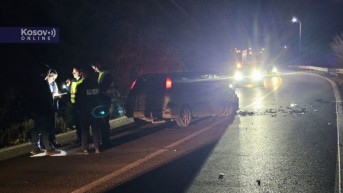
This year, the region has seen an increase in both the number of traffic accidents and fatalities. Experts point to a range of contributing factors, primarily the growing number of vehicles and overall traffic volume, infrastructure problems, tourism, weather conditions, as well as human error and a lack of traffic-safety awareness. Penalties and preventive campaigns, our interlocutors note, help improve the situation by informing the public, among other things, about vehicle equipment, alcohol consumption, and fatigue.
Serbia’s Minister of the Interior, Ivica Dacic, said that the number of traffic accidents in Serbia has again risen this year—by 3.69 percent compared to last year. According to the latest data from the Traffic Safety Agency, since the beginning of the year there have been 33,000 accidents, resulting in nearly 500 deaths and more than 18,500 injuries.
According to the European Transport Safety Council (ETSC), last year Serbia ranked first in Europe in terms of road fatalities per million inhabitants—78—representing a 2.2 percent increase compared to 2023, when the lowest number of fatalities in ten years was recorded (excluding 2020).
All EU member states in the region recorded more than 62 traffic-related deaths per million inhabitants in 2024, making the Balkans the deadliest region in Europe for road traffic. In addition to Serbia, Romania and Bulgaria also reported high numbers of fatalities.
As for Kosovo, data for the entire year of 2025 will not be available until the end of January next year, but from January to November, 101 people were killed in traffic accidents, compared to 92 fatalities in 2024.
A similar situation is observed in Albania and North Macedonia. In the first ten months of this year, 115 people were killed in North Macedonia, continuing the upward trend from 2024, when the number of accidents increased by 11 percent compared to the previous year.
In North Macedonia, the annual average number of traffic-related deaths ranges between 150 and 160. Statistics show that the most common causes of accidents are failure to comply with traffic regulations, including mobile phone use while driving, speeding, and driving under the influence of alcohol, prompting the launch of various preventive campaigns.
Serbia Significantly Above the EU Average in Fatalities
Mirko Kokovic, Assistant Director of the Traffic Safety Agency (ABS), warned about the high number of accidents and fatalities, noting that the state spends more than €4 billion annually on the consequences of traffic accidents. He also announced major changes next year aimed at improving road safety.
Commenting on the fact that Serbia had the highest number of road fatalities per million inhabitants in Europe last year, Kokovic said that 484 people have died so far this year, which is 21 fewer than in the same period last year.
“We believe that this year we will achieve a historic minimum in the number of road fatalities in our country. However, that number is still very high, and we believe that next year, based on planned measures, Serbia will manage to significantly reduce the number of fatalities,” he said.
Kokovic noted that since the beginning of the year there have been 32,992 accidents, resulting in 484 deaths and more than 18,672 injuries—about 600 fewer injuries than last year.
“The plan for next year primarily includes the adoption of a completely new Traffic Safety Law, which will be significantly stricter than the current one. In addition, according to announcements, the Ministry of the Interior will install a large number of both stationary and mobile speed cameras. The goal is to curb speeding, which is one of the leading factors in the most severe traffic accidents,” he told Kosovo Online.
He added that the ABS has prepared a draft action plan for the 2026–2028 period, containing a series of measures and activities to improve traffic safety.
Kokovic also emphasized that traffic accidents place a heavy burden on the state budget.
“In Serbia, traffic accidents cost the state and society around €4.1 billion annually, which represents a significant percentage of GDP. According to ABS data, the individual costs by accident severity are as follows: a fatal accident costs the state about €3.3 million; accidents involving serious injuries cost nearly €500,000; and accidents with minor injuries about €38,500,” Kokovic stated.
This year’s statistics, he said, show a significantly higher number of fatalities compared to the EU average of 44 deaths per million inhabitants, while in Serbia the figure is 78 per million.
He added that the state is determined to crack down on irresponsible drivers who have contributed to these figures.
Human Error the Most Common Cause of Traffic Accidents
At the same time, traffic expert Milan Bozovic said that the increase in traffic accidents in Serbia is due to a significant rise in the number of registered vehicles and traffic volume over the past ten years, assessing that the main causes of accidents are failures by road users.
“Over the past ten years, the number of registered cars in Serbia has increased by about 900,000, which generates more movement, more trips, and higher traffic density and volume. In that sense, we cannot look at traffic accident data in absolute terms alone, because one parameter has changed significantly—participation in traffic,” he said, adding that comparisons should be made based on the number of vehicles and kilometers driven in the past and today.
Bozovic said that with the increase in the number of vehicles and traffic volume, the risk of accidents and the number of injuries and fatalities also rise, but stressed that the primary cause of accidents remains human behavior.
“The most common factor is the human one—whether it’s the driver, pedestrian, cyclist, motorcyclist, road maintenance worker, or the engineer who designs or plans maintenance. In the end, it mostly comes down to human error. There is also, to a small extent, force majeure and road conditions, but ultimately it all comes down to human failure,” he told Kosovo Online.
Preventive campaigns have proven effective so far, he said, noting significant changes in traffic behavior among certain target groups.
“It has been shown that these campaigns are effective. Whenever campaigns were conducted for a specific target group, there was a drastic change in behavior, as well as a significant improvement in accident statistics and severity for that group. I believe this should continue in the future, possibly with a stronger and improved approach,” Bozovic added.
During the holidays, he expects an increase in traffic accidents.
“Given that there is no snow this year, unlike last year, it is possible that the number of accidents will increase, because poor weather conditions such as snow usually reduce traffic volume,” he said.
He noted that the exact number of traffic fatalities for this year will be known in February 2026, since accidents are recorded as the cause of death for those who die within 30 days of the incident, after which decisions on further preventive measures will be made.
Kosovo Introduces Stricter Measures
In Kosovo, from January to the end of November, 13,000 driver’s licenses were suspended, and thousands of other drivers were penalized with negative points for violating traffic rules.
According to the Law on Road Traffic Rules, reasons for license suspension include exceeding the speed limit by more than 50 percent, ignoring traffic lights, running red lights, and excessive speeding.
“In response to your request, we inform you that in the period January–November 2025, 13,446 drivers were banned from operating motor vehicles, and a total of 55,809 penalties with negative points were issued. During 2024, 11,933 drivers were banned from operating motor vehicles, and a total of 50,887 penalties with negative points were issued,” the Kosovo Police stated.
Traffic expert Faton Bunjaku assesses that these figures do not present a good picture for Kosovo, writes Kosova Press.
“This is not a good image for our country, as even before Europe we appear as a country that does not have sufficiently educated drivers in road traffic. However, the state’s focus should be more on completing road infrastructure and traffic signage, and then on imposing misdemeanor measures such as license suspension. License suspension is a measure that has been widely debated in public—whether it is right to revoke a license or not,” he said.
He added that authorities should prioritize improving and completing road infrastructure and traffic signage.
“In road traffic, the state should first focus on signage and completing roads, as we currently have very poor traffic signaling. Road maintenance is also very poor. We have entered the winter season; temperatures have taken their toll, fog has taken its toll, roads are very dirty, and as a result, we have unsafe roads,” he warned.
At the same time, traffic expert Bekim Ahmeti considers the high number of license suspensions a positive development, expecting it to raise public awareness.
“This is very good news because people need to become aware—willingly or unwillingly. That means they must become aware, because you cannot deprive someone of their rights in traffic the way it happens to us every day. We respect traffic rules to the maximum, yet our rights are taken away in the most inhumane way possible. If there is shame among Albanians, there is the least of it in traffic—or none at all. I think this is very good because people are becoming aware. In Austria, people pay €75 if they don’t use pedestrian crossings,” he said.
Infrastructure the Biggest Problem in North Macedonia
Dejan Andonovic, spokesperson for the Republican Council for Road Traffic Safety of North Macedonia, said that the increase in traffic accidents there is due to road infrastructure not expanding in line with the growing number of vehicles.
He added that more cars, faster movement, and increased migration raise the risk of incidents, but that authorities are actively implementing preventive campaigns, including raising awareness about equipment, weather conditions, and alcohol consumption.
“With the increase in the number of vehicles, which means faster movement and greater mobility, the risk of more traffic accidents also increases. Road infrastructure cannot expand as quickly as the number of vehicles and new drivers. In Macedonia, for example, where a family once had one car, now it often has three, which proves the increase in vehicle numbers. We see this in the growing parking problems. Hence the increase in traffic accidents. That is why the Republican Council for Road Traffic Safety (RSBSP) conducts campaigns throughout the year—to remind citizens to be careful, respect rules and traffic signs, behave ethically, raise public awareness and traffic culture, and remind them of what can lead to fatal consequences if ignored,” he told Kosovo Online.
Speaking about seasonal risks, Andonovic said the entire year is risky, but winter brings additional challenges such as weather conditions, icy roads, fog, and holidays, when traffic frequency increases.
“First, traffic frequency increases. Second, people travel more, including outside cities. Third, weather conditions—although today the weather may be nice, in mountainous areas you have ice, fog, low temperatures. And perhaps the biggest risk is relaxation. During holidays people relax, are less focused, there is more alcohol and celebrations, and that is where we see the greatest risk of traffic accidents. That’s why we appeal to everyone traveling during the holidays to first check weather conditions and decide whether to travel. You should not travel at all costs if conditions are bad—fog, ice, snow,” he said.
Andonovic also warned about driver fatigue and alcohol consumption.
“It is very important to be rested, because fatigue is one of the main causes of traffic accidents. We have a tradition of leaving work and immediately hitting the road. And the most dangerous factor is alcohol. On the Balkans there is a well-known phrase: ‘One, two, or three drinks are not a problem, I can drive.’ It’s either the steering wheel or alcohol—those two do not go together. Rest is essential to stay focused, because when you travel you have a responsibility to yourself, your loved ones, and others on the road at the same time,” he said.
Tourists Contribute to Higher Fatalities in Albania
Forensic engineer Sink Fadil Likaj said that Albania has recorded an increase in traffic fatalities this year compared to 2024, with most incidents occurring during the summer, largely due to foreign tourists.
“Traffic accidents in Albania usually happen because drivers are not careful with their actions on the road—when entering a main road from a side road, turning left or right, unexpectedly obstructing other vehicles. This has caused fatal accidents. Other cases involve vehicles hitting pedestrians or cyclists. These accidents are on the rise because pedestrians are irresponsible, entering main or secondary roads carelessly when vehicles have the right of way. This is not only happening in Albania. We are in the Balkans, and people are not very careful and do not properly follow road rules, believing drivers can see them and avoid hitting them. That is difficult, because drivers can see only 35–40 meters ahead, and speed prevents proper braking,” Likaj told Kosovo Online.
He noted that although road infrastructure standards have improved compared to previous years, they remain a risk factor, and that electric scooters have also contributed to traffic accidents.
The most important preventive factor, he stressed, is public awareness, followed by infrastructure and traffic police.
“Traffic police are only one element in increasing road safety parameters—their role accounts for about ten percent of the process. The most important factor is public awareness, followed by infrastructure, and finally traffic police. Police have also introduced intelligent vehicles and installed smart cameras on many roads to detect traffic violations such as speeding, failure to wear seat belts, or mobile phone use while driving. Over 200 kilometers of roads are currently under surveillance. These roads with smart cameras—similar to those in EU countries—include routes from Tirana to Durrës, Fier, and Vlorë, as well as Tirana–Elbasan. This is a test of the effectiveness of these methods. We have a monitoring center within the Police Department for detecting driver violations. Police also use vehicles equipped with automatic radar,” he explained.
Likaj said that complete accident data for this year are not yet available, but it is known that the number of fatalities has increased compared to 2024.
“In 2024, there were 1,666 traffic accidents, with 174 fatalities and a large number of injured who were rehabilitated and are in good health. This year we have over 1,400 accidents; we do not yet have complete data for the last month, but the number of fatalities has exceeded last year’s level,” he said.

0 comments