
Legal labyrinth until the election of new mayors in the north - resignations shorten the path, there is no law for a referendum?
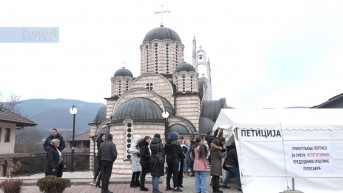
The petition for the removal of the mayor of North Mitrovica, Erden Atiq, was signed by more than 4,000 citizens in three days, approximately seven times more voters from this municipality than those who voted for him in the elections on April 23 last year, when he received 553 votes. Although the number of collected signatures within petitions in other municipalities in the north shows obvious dissatisfaction of citizens with municipal leaders, Kosovo Online interlocutors do not believe that these politicians will choose to resign.
A more likely scenario, they assess, is that there will be attempts to challenge the petitions, or, according to the administrative instruction issued by the Ministry of Local Government for the removal of mayors, a local referendum will be initiated. However, the question arises here whether there is a legal basis for a referendum, which some lawyers in Kosovo have pointed out as a problem, and whether the interim step in the whole procedure will involve the adoption of a referendum law.
Former President of the Central Election Commission of Kosovo, Valdete Daka, has repeatedly pointed out that Kosovo did not have a referendum law, and that it was not within the mandate of the CEC to organize it.
The President of the Assembly of the Municipality of North Mitrovica, Nexhat Uglanin, said a few days ago for our portal that there was no legal framework for a referendum, and that "CEC will surely submit the Law on Referendum to the Assembly of Kosovo for voting", which then went for the president's signature in Kosovo, followed by the announcement of a referendum for the removal of mayors.
If this is how the "roadmap" to the dismissal of the presidents of the four municipalities will look like, and the elections for new ones, seems to be a long shot.
Political scientist Ognjen Gogic tells Kosovo Online that Pristina entered the whole story about the dismissal of mayors in the north through local referendums without a valid legal framework in place, and there have already been voices from Kosovo suggesting that, before holding the referendum, the legal framework should be somehow filled, and a referendum law should be enacted.
"They define some things on the go, calculated to create legal gaps that allow obstruction. The fact that the Pristina side is only now thinking about the legal framework for the referendum indicates that they never wanted it to happen. At the same time, I think the whole process will be closely monitored from the Pristina side. Every signature, every comma will be checked, and there will be objections from their side. We really expect a long and arduous process until the change of power in northern Kosovo," Gogic says.
He adds that there might be some new administrative steps before continuing with this process, while the administrative instructions from the Ministry of Local Government and the solutions it implies are questionable from a legal perspective.
"It may happen that someone questions the legality of this whole process and that it is halted before reaching the end. That is also an option that is being played," Gogic emphasizes.
As he points out, the Serbs have shown, through a record-speed signature collection for the removal of illegitimate mayors in four municipalities in the north, that they not only want their removal but also want to return to the institutions of the Kosovo system. This signal, he adds, should be enough for Pristina to make a gesture, speeding up the process of holding new elections by having mayors and councilors in those municipal assemblies resign.
He notes that the Serbian side had previously left Kosovo institutions and had announced that they might return if certain conditions were met.
"The Serbs have since abandoned those conditions. It is a significant step by the Serbian side that Pristina should appreciate. What we need at this moment are de-escalatory gestures. We have had an escalatory spiral for the past two years, where a unilateral or provocative move by one side led to a reaction from the other side. So, now we should go in the opposite direction," Gogic says.
Our interlocutor says that the number of petition signatories is much higher than the number of votes those Albanian mayors received in last year's elections.
"It's truly an absurd situation that someone who got a few hundred votes refuses to resign after thousands of people in those municipalities have signed a petition for his removal. Pristina doesn't know what to do with this process because only the first step has been completed. A referendum is ahead, and we've already heard statements that the mechanism still needs to be worked out. So, it is really absurd to put the northern Kosovo community through hoops by starting with petitions, then a referendum, and later elections. Instead, this should be rewarded by resignations to expedite the entire process," Gogic believes.
He also emphasizes that the Pristina government can use the holding of referendums for "general sabotage".
"We've already heard some comments that there are doubts about there being enough turnout in the referendums. It's possible that it is actually a tactic of the Pristina side to force the holding of those referendums and then make everything difficult. If, for example, it turns out that the number of participants is insufficient, they could declare it as a victory. To say that there aren't as many Serbs in northern Kosovo as previously thought. So, I think that is a more likely scenario, that the Pristina side will be stubborn," Gogic assesses.
Our interlocutor believes that this is not a favorable option for the Serbs because the threshold is set quite high.
"In a few days, we have collected a sufficient number of signatures for a petition, which was 20% of registered voters. In the referendum, more than 50% of registered voters are needed. It is uncertain whether this can be achieved because there has been an exodus of the Serbs from the north in the last two years," Gogic says.
He also points out that the Kosovo electoral system is specific in that local elections are held every four years in all municipalities. This means that if premature elections were held now in the north for mayors, the four northern municipalities, along with all other municipalities, would participate in regular local elections in the fall of 2025.
"I think Pristina will do everything it can to prolong the whole process until then and then say, 'It is pointless now to accelerate the process and hold new elections when regular local elections are coming for the entire Kosovo anyway,'" Gogic said.
Incidentally, in the elections on April 23 last year, boycotted by the Serbs, Lulzim Hetemi from the Self-Determination Movement became the mayor of Leposavic with only 100 votes. Also, the Self-Determination candidate Erden Atiq in North Mitrovica won 553 votes, in Zubin Potok, Izmir Zeqiri, a candidate of the Democratic Party of Kosovo, received 197 votes, and the Democratic Party of Kosovo candidate in Zvecan, Ilir Peci, got 114 votes.
The Program Manager of the NGO Social Initiative, Milica Andric Rakic, believes that petitions are a sufficient expression of the citizens' will to reject the current mayors, but she also thinks that they probably will not resign. In the coming period, as she states for Kosovo Online, attempts to challenge the petitions can be expected, or there will be an insistence on a referendum.
"Unfortunately, my assessment is that it probably won't lead to the mayors' resignations, at least that's how it looks for now. They have significantly hardened their statements, especially regarding the issue of the local referendum, including mayors from the PDK, whom it was believed would be more cooperative on that matter. Unfortunately, I think they will most likely either seek ways to challenge the petition or insist on the next step, which is the referendum," Andric Rakic believes.
As she emphasizes, the turnout for signing the petition and the non-participation in last year's mayoral elections essentially show that these were not candidates who interested the citizens since the elections were massively boycotted.
"The fact that there was very low turnout in the elections was essentially an indicator from the start that citizens were not satisfied, first with those candidates, and now with those mayors. It is clear that there is a certain level of tension between the citizens in the north and the mayors and the general administration in the Kosovo system. That's simply not a secret. There have been quite unpopular moves, especially in North Mitrovica, concerning the halt of construction work on the university building, at several other locations, and other decisions that simply have not been well-received by the citizens. There is also the decision of the Municipal Assembly of North Mitrovica to allocate a larger parcel in the city to the Ministry of Internal Affairs for use, without specific explanations as to why. There are many problematic decisions creating tension between citizens and the administration," Andric Rakic points out.
Even the scientific associate at the Institute for International Politics and Economy, Aleksandar Mitic, does not expect that the Albanian mayors in the four municipalities in northern Kosovo will resign after a much larger number of signatures for a petition for their dismissal was collected in these municipalities than the number of votes they received in the elections. As he believes, Albin Kurti, through the legal entanglement involving Kosovo Serbs, wants to legitimize what has been done in the last year and a half.
"I don't expect any resignations from Albanian mayors because that would be a defeat for Kurti's policy, and he wants, through this procedure and legal confusion he introduces to Kosovo Serbs, quite the opposite, and that is to legitimize what has been done in the last year and a half, and he tries to humiliate the Serbs, making them beg him to participate in forming the government," Mitic stated.
He adds that this is not only humiliation for Kosovo Serbs but also a continuation of a very precise policy that, in his opinion, is evidently coordinated with partners from the Quint, in this case, the EU.
"That is to legalize Kurti's rule in northern Kosovo in this way. That's what he wants," Mitic emphasizes.
Regarding Kurti's alleged concessions to the EU, Mitic believes that, in essence, everything works in Kurti's favor.
"All the discussions about these legal procedures in the coming weeks and months are in function of a very precise and quite cunning policy that Kurti is implementing with the aim of integrating Serbs, primarily from northern Kosovo and Metohija, into the so-called legal system of Kosovo," Mitic states.
According to the administrative instructions of the Kosovo Ministry of Local Government, the signatures collected by citizens in the petition for the dismissal of mayors should now undergo verification at the Central Election Commission (CEC). If it is confirmed that at least 20 percent of voters in those municipalities supported the petition, CEC organizes a vote (referendum) for the dismissal of mayors, no later than 45 days from verification.
Here it remains unclear whether there is a need to enact a law on referendums, but what is specified is that for the dismissal of mayors, 50 plus one percent of registered voters in the municipality must vote.
Only after this expression of citizens, if the decision is positive, would new elections be held.



0 comments