
Misini: Kosovo far from the EU integration process, Montenegro and Albania on the verge of membership
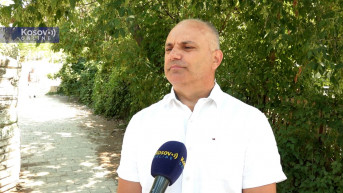
Pristina-based economics professor Shkumbin Misini has assessed that Montenegro and Albania are the closest Western Balkan countries to European Union membership, primarily owing to the reforms they have implemented, despite not being the region's strongest economies. He pointed out that Kosovo, Serbia, and Bosnia and Herzegovina are facing a standstill in the accession process, and that Kosovo remains far from EU integration because negotiations have not yet progressed to the stage of opening negotiating chapters.
"Kosovo is far from the integration process because the chapters it should have opened have not yet been addressed, particularly due to the issue of the dialogue and the lack of coordination with the European Union and the Quint countries. As a result, Kosovo has effectively been penalized by not being allowed to open negotiating chapters in the integration process," Misini told Kosovo Online.
He noted that Albania and Montenegro have made significant progress.
"Montenegro and Albania are on the threshold of EU membership, particularly Montenegro, owing to the outstanding reforms it has implemented on its path toward the European Union. Economically, neither Montenegro nor Albania is particularly strong, but both have undertaken far-reaching reforms aimed at European economic integration, which distinguish them from other Western Balkan countries such as Kosovo, Serbia, and Bosnia and Herzegovina. These three countries are confronted with different challenges," Misini said.
According to him, Montenegro and Albania could complete the negotiation chapters by 2030. However, he stressed that the pace of their accession will also depend on current geopolitical circumstances, as well as domestic and external challenges.
"Montenegro has already opened almost all of its negotiating chapters. These two countries, especially Montenegro, will be the first Western Balkan states to join the European Union. However, this also depends on today's geopolitical circumstances and on both internal and external challenges," the Pristina-based economics professor said.
Kosovo, Serbia, and Bosnia and Herzegovina, he added, remain stalled in the negotiating chapters, which has hampered their integration process and resulted in the loss of financial resources. In his assessment, their principal problems are linked to shortcomings in judicial reform.
"These three countries have been significantly affected under the Economic Growth Plan, which has had a direct impact on their economic and social well-being. This is a consequence of autocratic tendencies in these countries, particularly in judicial reform, where state interference in the judiciary exists in all three countries, and the European Union opposes such practices," Misini said.
With regard to Kosovo, he stated that its economic growth relies largely on consumption.
"The primary driver of Kosovo's economic growth is increased consumption, and in most cases the key factor behind that consumption is the diaspora, whose financial resources are transferred to Kosovo," he said.
Speaking about living standards in the region, Misini stated that Montenegro has recorded the highest level of economic prosperity and GDP over the past several years and has approached, and in certain segments even surpassed, Serbia following wage increases, while Albania continues to demonstrate stable and progressive growth.
"If we compare the countries of the Western Balkans, Montenegro has had the highest standard of living, economic prosperity, and GDP over the past five years. Last year, following wage increases resulting from protests, it almost overtook Serbia. This had a direct impact on Montenegro's position. As for social and economic well-being and living standards—taking into account public debt, inflation, unemployment, and similar indicators—Albania enjoys good stability and steady growth. This is largely due to tourism, which generated five billion euros in revenue last year. Albania's macroeconomic performance is stronger than that of the other Western Balkan countries. On a broader scale, Montenegro and Serbia have comparable standards of living," Misini concluded.


0 comments