
Is a new wave of Kosovo recognition withdrawals and new friendships with Pristina on the Horizon?
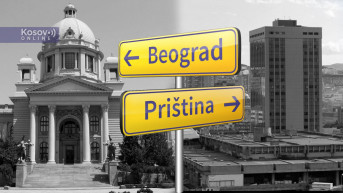
Serbia is lobbying for the withdrawal of Kosovo recognition among African, Asian, and Latin American countries, sources tell Kosovo Online, following announcements that two more countries might soon join the list of those who have shifted their position in favor of Belgrade. After these two, it is estimated that other countries might decide to follow suit, especially if the new administration in Washington sends a signal that it is indifferent to what happens in the relations between Belgrade and Pristina.
Written by: Dusica Radeka Djordjevic
Almost simultaneously with the announcement by Serbian President Aleksandar Vucic expecting the withdrawal of Kosovo's recognition by two countries "much larger than Serbia," came a message from the leader of the Alliance for a New Kosovo and former Foreign Minister of Kosovo, Bexhet Pacolli, who will secure new recognitions of Kosovo's independence through his diplomatic connections and contacts.
Since the South American country of Suriname first withdrew recognition of Kosovo in 2017, a total of 28 countries have done so to date, including Libya, Gabon, Ghana, Central African Republic, Maldives, Comoros, Palau... The latest to make this decision was the Pacific island nation of Vanuatu in 2023.
On the other hand, the last country to recognize Kosovo was Israel in 2020, but Pacolli boasted that last year he secured two letters confirming the recognition of Kosovo passports, from Zimbabwe and Kenya.
Political analyst Obrad Kesic told Kosovo Online that he does not have insight into which two countries will soon withdraw their recognition of Kosovo, but he believes that if a moment arises where it is clear that America is indifferent to what happens in the Western Balkans, especially between Belgrade and Pristina, then it would be possible for countries that felt uncomfortable when recognizing Kosovo's independence to see space for correcting that decision. Kesic notes that in countries that have recognized Kosovo's independence, some politicians are already declaring that changes on this issue are possible.
"Some politicians and members of the populist right in Austria have already talked about the possibility of not only Austria revoking its recognition of Kosovo but also of reigniting the entire issue in the EU and returning to the track where territories of internationally recognized states cannot be changed without the consent of those states," says Kesic.
He reminds us that Europe does not have a unified stance on Kosovo's independence, and a larger number of countries are very skeptical about Pristina, which is why efforts are made through negotiations to reach a new reality and indirect recognition of Kosovo.
The newly elected U.S. President Donald Trump and his administration, he says, will not focus on the Western Balkans, which is why it is important to position this and other issues in the best possible way.
"We know well that the policy from Washington has always supported Pristina, the Bosniaks in Bosnia and Herzegovina, and somehow always went against the national priorities of the Serbs. Now, I think with new people in key positions, President Trump will no longer be a hostage to the political establishment and will be able to more easily impose his foreign policy agenda. There is significant room for serious hope that within six months, it will be felt that things are moving in a different direction and that it all goes in favor of Serbia and the Republic of Srpska," Kesic states.
Researcher at the Faculty of Political Sciences in Belgrade, Sava Mitrovic, told Kosovo Online that Serbia is trying to lobby for the withdrawal of Kosovo recognition among countries of the African and Asian continents, and sometimes among Latin American countries, primarily to strengthen its negotiating position in situations when Kosovo applies or attempts to join some international organizations.
"Here I primarily mean organizations like Interpol, UNESCO, or other specialized agencies of the United Nations, as it is known that the red lines for Serbia are allowing Kosovo's membership in the United Nations and specialized agencies within the UN system. Serbia realizes its threat to never allow Kosovo's membership in the UN and related agencies in practice by ensuring that just over half of the sovereign states today do not recognize the independence of Kosovo and Metohija," says Mitrovic.
Changes in Stance on Recognizing Kosovo, According to Mitrovic, Have Most Often Occurred in Some Small Island States and Countries That Do Not Have Political Weight in Global Relations
"Serbia has mentioned that two countries that are now ready to withdraw recognition, or have already done so and it has not yet been announced, are significantly larger than Serbia, and it is questionable whether this means they are only larger in terms of population and area, or if they have greater political power than Serbia. One might speculate that these could perhaps be Peru or even Egypt as one of the leading Arab countries. Such withdrawals of recognition could have more significant effects. If Egypt were to withdraw recognition, it could lead other African countries or countries of the Arab world to consider such an option," highlights Mitrovic.
He adds that he does not believe that the withdrawal of Kosovo's recognition can come from countries that sponsor the consolidation of Kosovo's statehood, namely from countries of the global north or Western states, members of the European Union, USA, Canada, Australia...
Discussing the potential new recognitions of Kosovo that Pacolli announced, Professor of International Relations at the University of Pristina, Afrim Hoti, told Kosovo Online that they can be expected from African countries.
"Mr. Pacolli, the former foreign minister, uses his business connections to lobby, and he continuously does so to secure new recognitions from those countries that have not recognized Kosovo so far. I have no idea which countries will do it, but I think they could be third-world countries, from the African continent," says Hoti.
However, regarding the statement by the President of Serbia, Aleksandar Vucic, that he expects new withdrawals of Kosovo's recognition, Hoti says that according to international law, there are no withdrawals of recognition, but some countries can stop relations.
"From a practical and a legal perspective, it is impossible for a country that has already recognized another country to withdraw it. Countries can stop relations, can create tension in mutual political events, can even go to war with each other, but they cannot withdraw relations. This is a political measure used by certain political leaders, in this case, President of Serbia Vucic. He uses his connections, especially in third-world countries, in African countries, for example, which are specifically organized in the sense that in a certain country there are three governments - a government, a government in exile, and a government of rebels. Political leaders use these cases, but withdrawal of recognition is not possible, it is just political propaganda," believes Hoti.
Otherwise, the "scoreboard" stands as follows: Kosovo is not recognized by 107 United Nations members, and it is recognized by 83 countries. Egypt, Peru, and the Dominican Republic are considered "frozen" recognizers because they do not provide support to Kosovo on the international scene.


comments