
Kesic: Possible reversal in recognition of Kosovo by countries feeling uneasy
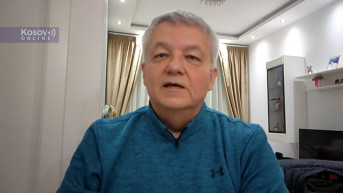
Political analyst Obrad Kesic suggests that if a moment arises where it becomes apparent that the U.S. is indifferent to the outcome in the Western Balkans, especially in relations between Belgrade and Pristina, it could be possible for countries that felt uneasy recognizing Kosovo's independence to see an opportunity to revise their decision.
Speaking to Kosovo Online, Kesic noted that in countries that have recognized Kosovo's independence, there are politicians already suggesting that changes regarding this issue are possible.
"Some politicians and members of the populist right in Austria have already discussed not only the possibility of Austria revoking its recognition of Kosovo but also of reigniting the entire issue within the EU and returning to the principle that territories of internationally recognized states cannot be changed without the consent of those states," Kesic said.
He reminds that Europe does not have a unified stance on Kosovo's independence and that a significant number of countries are very skeptical about Pristina, which is why efforts are being made through negotiations to reach a new reality and indirect recognition of Kosovo. The incoming U.S. President Donald Trump and his administration, he says, will not focus on the Western Balkans, which is why it is crucial to position this and other issues in the best possible way.
"We know well that the policy from Washington has always supported Pristina, the Bosniaks in Bosnia and Herzegovina, and somehow always went against the national priorities of the Serbs. Now, I think with new people in key positions, President Trump will no longer be a hostage to the political establishment and will be able to more easily impose his foreign policy agenda. There is a significant opportunity for serious hope that within six months, it will be felt that things are moving in a different direction, all in favor of Serbia and the Republic of Srpska," Kesic explains.
Regarding lobbying in the U.S., he points out that it was very clear during the presidential campaign whose side the Albanian community and officials from Pristina were on, who were absolutely tied to Kamala Harris, while it was also clear that the Serbian community largely supported Trump, not only during his first term but visibly engaged now during his third campaign.
The Serbian community in the U.S., he says, is better positioned to capitalize on Trump's victory than the Albanian community, which finds itself defensive and confused because it did not anticipate such a significant win for Trump.
As a businessman, he adds, Trump views the world more pragmatically and in that context also considers who would be a more significant partner for American interests, whether it's Serbia, which represents a regional power and a country with economic and thus military power.
"For him, the answer is very clear: Serbia, not Pristina, because Pristina is dependent. It represents something that needs to be sustained long-term, and without strong U.S. support, it's questionable whether they can survive as a so-called independent state. Trump has never liked situations where any country or alliance like NATO is so dependent that America bears the largest cost and responsibility for the survival of that state or organization. I think this time he will not be inclined to continue the investment by Washington in the survival of a quasi-state whose viability without strong support is questionable," Kesic assesses.



0 comments