
Non-Aligned Movement returns to Belgrade: Can the Global South strengthen Serbia’s position on Kosovo?
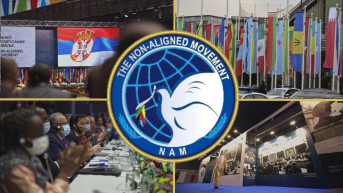
At a time when the world was sharply divided between East and West during the Cold War, a group of countries refused to choose between Moscow and Washington. Thus emerged the Non-Aligned Movement, whose historic first conference was held in Belgrade in September 1961. What was once called the “Third World” is today referred to as the “Global South,” encompassing most countries in Africa, Asia, and Latin America, whose influence in international organizations is often decisive. Their representatives are returning to Belgrade to mark the 65th anniversary of the founding of the Non-Aligned Movement. Kosovo Online’s interlocutors assess that the Movement’s influence has significantly diminished, but that the ideas and principles on which it is based remain as important as they were more than half a century ago. They point out that the issue of Kosovo will inevitably be among the topics discussed at the upcoming meeting.
Written by: Lana Vesic
Sixty-five years after the founding conference, Belgrade will once again host representatives of countries that form the historic core of the Non-Aligned Movement. The gathering, scheduled for August 31 and September 1, will also be attended by representatives of the Movement’s current Troika—Azerbaijan, Uganda, and Uzbekistan.
Official Belgrade considers the upcoming gathering particularly important, also because numerous senior officials from member and observer states are expected to attend. Four presidents, three prime ministers, and a large number of ministers have confirmed their participation.
The official announcement of the event states that, in addition to recalling the Movement’s historic contribution, discussions will focus on its enduring legacy in today’s complex international environment.
“From the first Belgrade Summit to the present day, the world has changed, but the value of the fundamental principles of the Non-Aligned Movement—peaceful coexistence, sovereignty and territorial integrity, equality of states, respect for international law, and cooperation—transcends the historical context in which these principles were formulated,” the Serbian Government stated.
Reaffirmation of principles
In an interview with Kosovo Online, diplomat Zoran Milivojevic said that the principles first established at the Bandung Conference in 1955 and subsequently reaffirmed at the First Conference of the Non-Aligned Movement in Belgrade in 1961 were once again gaining importance despite changes in international relations.
“First and foremost are sovereignty and territorial integrity, non-interference, cooperation on an equal footing, and so on. All these principles, including the primacy of international law, will be reaffirmed on Monday and Tuesday at the gathering in Belgrade. That is its essential purpose. The key point is that the world is changing, the international order is changing, and these principles are once again moving to the forefront of the activities and, I would say, the interests of the Global South, which will be represented here. Serbia will certainly make use of this. It will be at the center of attention, and consequently Kosovo and Metohija will inevitably be a topic,” Milivojevic said.
Given the differing views within the Movement, he sees bilateral meetings with countries that have not recognized Kosovo as particularly important.
“In bilateral meetings, we should expect this issue to be revisited and for countries that have not recognized Kosovo to reaffirm that position in Belgrade. And in the main declaration or communiqué, whatever document emerges from this gathering, sovereignty and territorial integrity will certainly be at the forefront,” Milivojevic said.
Speaking about the significance of the Non-Aligned Movement for Serbia under current geopolitical circumstances, Milivojevic said that its greatest value lay in the fact that, despite having less influence than during the Cold War, it had remained a presence on the international stage.
“The Movement helps by the very fact that it continues to exist. It has not disappeared from the global political stage. It does not carry the weight it once did, but the principles on which it is based—the interests of the Global South, the fight against neocolonialism, and the reaffirmation of the UN Charter and international law—are once again gaining importance,” Milivojevic stressed.
He added that current wars and crises were bringing questions of respect for international law and the principles of the UN Charter back to the center of international politics.
“As time goes by, these principles are returning to the global stage and gaining importance. In that sense, Serbia gains stronger arguments in defending its territorial integrity and its position on Kosovo and Metohija,” Milivojevic concluded.
Pristina-based political analyst Nexhmedin Spahiu assessed that the Non-Aligned Movement had lost some of its significance following the end of the post-World War II division of the world into rival blocs, but agreed that Serbia, as the successor to Yugoslavia, one of the Movement’s founders, could still use its engagement with the Movement to advance its interests.
Changed geopolitical circumstances and actual influence
Spahiu said that new blocs had emerged in the meantime, but that the Movement still retained a certain degree of political weight.
“Other blocs have been created, but in any event, the Movement still means something. It is particularly important for Serbia, so Serbia can continue to use it to advance its interests,” Spahiu told Kosovo Online.
One possible topic at the meeting could be Kosovo. Spahiu, however, believes that any discussion of the issue would not be of major significance for Belgrade.
“Many countries within the Non-Aligned Movement have recognized Kosovo’s independence. The issue can be discussed, but it will not mean anything particularly significant for Serbia,” Spahiu said.
He added that the voices of those countries could be heard in such a discussion, but assessed that they could not change anything.
Importance of Global South votes at the UN
On the other hand, journalist Zeljko Sajn told Kosovo Online that the meeting, taking place just one week before the UN General Assembly session, carried a strong political message directly relevant to Serbia’s efforts to preserve its sovereignty and territorial integrity.
“Marking the 65th anniversary of the founding of the Non-Aligned Movement in Belgrade has political significance even though Serbia does not have the status of a full member. Today, the Non-Aligned Movement has 121 full members, primarily countries from Africa, Asia, and Latin America, which have an important place in the United Nations, and their vote in the General Assembly carries the same weight as that of the United States, the United Kingdom, or France. It is very important to bear this in mind because Resolution 1244 concerning Kosovo and Metohija remains in force. If the United Nations one day again decides on sovereignty and territorial integrity and the return of Kosovo within Serbia, those votes will be extremely important. More than 80 Non-Aligned countries have not recognized Kosovo as an independent republic and instead respect Serbia’s territorial integrity and sovereignty,” Sajn stressed.
Speaking about the pressure exerted by major powers on developing countries, Sajn noted that Global South countries could not remain entirely immune to economic and political influence, but that their actions were fundamentally rooted in the UN Charter, on which Serbia also insists.
“That Charter contains precisely the principle on which Serbia is building its position, and this gathering in Belgrade, one week before the General Assembly, will send an important political message advocating territorial integrity and sovereignty—that is, the principles of the United Nations, which require respect for international law. This will also be one of the starting points in shaping the future of the United Nations under a new Secretary-General. That is why it is extremely important for us to maintain good relations with the Non-Aligned countries, because together they account for 121 votes in the UN General Assembly,” Sajn concluded.




0 comments