
Mijacic: Kosovo institutions cannot influence the work of the Specialist Chambers, and Kurti knows it

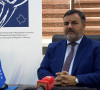
Dragisa Mijacic, president of the National Convention on Chapter 35, said that it is impossible to influence the mandate of the Specialist Chambers in The Hague within Kosovo's system, even through amendments to the law, which, he stressed, Prime Minister Albin Kurti knows. This is why Kurti supported the proposed amendments to the act, paving the way for the election of Kosovo's president.
Asked whether the amendments to the Law on the Specialist Chambers, adopted in the Kosovo Parliament several days ago, would enter into force, Mijacic told Tanjug that he did not believe they would.
“Honestly, I do not believe so. It is impossible to influence the work of that court within Kosovo's political, legal and institutional system. The court has protected itself to such an extent that Kosovo's institutions cannot do anything to change any of its positions,” Mijacic explained.
That is why he considers the effort futile.
“Albin Kurti knows this too, but it was important to him that a president be elected. Later, that law will go down the drain. I think that is what will happen,” Mijacic said.
He added that it was a big question whether the law would pass its “third reading” and whether it would be able to withstand scrutiny by the Kosovo Constitutional Court.
He also pointed out that the Specialist Chambers are an independent judicial body, even though they were established under Kosovo law, and that they have their own statute and ombudsperson.
For this reason, the ability of Kosovo's institutions to influence them is quite limited.
He added that the aim of the initiative in Pristina is to change the court's mandate so that not all events that took place during the war would be subject to trial.
He believes that the EU and representatives of the international community will not let this pass without a response. However, he said it was difficult at this point to predict whether this would be another case in which statements would be issued and later forgotten, as happened, for example, with Gazivode, or whether the international community would demonstrate determination.
Regarding the reason why the institutions in Pristina moved to amend the law, namely the verdict against four former KLA leaders, Mijacic stressed the importance of examining what the verdict against Hashim Thaci says, recalling that another court proceeding against him is underway over allegations of influencing witnesses.
“The European Union will not remain silent about what is happening, but this issue has not yet come up for consideration. The Kosovo Specialist Chambers are funded by a number of countries that support the court's work, as well as by the European Union. Kosovo will therefore not be able to change this situation so easily,” Mijacic added.
He also noted that witnesses had been well protected during the proceedings in which the verdict was delivered, something he said had been lacking in all previous proceedings.
He also said he did not believe the verdict would lead to catharsis in Kosovo society, particularly among the current generation.
Asked whether Kurti had paid a high price for the formation of the institutions by voting for the amendments to the law and electing Justina Shiroka Pula as president, Mijacic replied that time would tell. Nevertheless, he assessed that Kurti had gained more than he had lost as a result of these developments.
He recalled that Kurti had faced major difficulties in establishing the institutions and in appointing a president who was not a major political figure, given that Vjosa Osmani had been a dominant figure whom he could not control.
“Shiroka Pula is an academic and an important figure domestically, but she is not a major political figure, and she is not expected to achieve the same results as Osmani,” Mijacic observed.
He said that Shiroka Pula could play an important role because “Kosovo is in desperate need of someone who can establish dialogue between ethnic communities.”
According to him, she could initiate a process aimed at establishing dialogue between the ethnic communities.
He recalled that, in one of her statements, Vjosa Osmani had said that Serbs had committed the Holocaust.
“We were no longer being accused of committing genocide, but the Holocaust. After that, there was no longer any possibility for Serbs and Albanians to sit together. We will see whether Shiroka Pula makes the same mistake. I sincerely hope she will not,” Mijacic said.


0 comments