
Jeremic: Serbia can use Pillay's views as an argument in diplomatic discussions on Kosovo
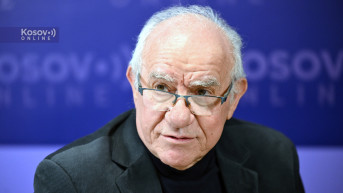
International law is increasingly being applied selectively, with major powers choosing the rules that suit their interests, diplomat Zoran Jeremic said in response to the awarding of the Nobel Peace Prize to Navi Pillay. Historian Predrag Markovic believes it is important to insist that all sides in conflicts be treated equally, while Jeremic points out that Serbia can use Pillay's views on impartial justice as an additional argument in diplomatic discussions on Kosovo, RTS reported.
South African lawyer Navi Pillay, this year's Nobel Peace Prize laureate, visited Kosovo in 2013 in her capacity as UN High Commissioner for Human Rights. At the time, she highlighted the importance of impartially establishing accountability for war crimes and warned that justice applied to only one side could prove counterproductive in the long term.
Asked whether her earlier views, in light of the Nobel Peace Prize, could provide Serbia with an additional argument in advocating the consistent application of international law and accountability for crimes committed in Kosovo and Metohija, historian Predrag Markovic told RTS that her visit to Kosovo and her work in international organizations may have enabled her to recognize the imbalance in how the parties to the conflict were treated.
“This is not a problem confined to our region, but one that exists in other conflicts as well. Favoring one side does not contribute to peace, but can make resolving a conflict more difficult,” Markovic said.
He added that the experiences of African and Asian countries with ethnic violence and complex conflicts could contribute to a better understanding of Serbia's position.
Zoran Jeremic, a former Serbian ambassador to Berlin, believes that Serbia should make use of the message conveyed by the award in its diplomatic activities, particularly in discussions on Kosovo.
“This is one of the points that should certainly be a focus of diplomatic efforts. The position that supporting only one side can be unjust represents an important argument in our policy toward Kosovo and Metohija,” Jeremic said.
According to him, Navi Pillay's experience in international institutions and her views on the equal treatment of parties to conflicts could be relevant in Serbia's dialogue with international actors.
“I do not know whether the Nobel Committee considered this a decisive factor in awarding the prize, but for Serbia it can certainly serve as an argument in talks with those involved in resolving the Kosovo issue. We can and should refer to it,” Jeremic stressed.
The interlocutors pointed out that the award itself does not guarantee a change in the policies of major powers, but that it could create an opportunity to emphasize more strongly the principles of international law, the equal application of justice and accountability for war crimes.
The Nobel Committee warns that international law is under considerable pressure today. Political power is increasingly pushing aside legal norms and the institutions that are supposed to protect them.
Jeremic also said that the award was a signal from those seeking to preserve the importance of international law, but that its practical impact remained uncertain.
“International law is being applied less and less in international relations. The first major blow to its order was the bombing of Yugoslavia in 1999, which marked a turning point in its application. Since then, the use of force has increased, while international law has increasingly been applied selectively, like a buffet, with everyone choosing whatever suits them,” Jeremic said.
According to him, international law serves the interests of major powers when it aligns with their objectives, whereas smaller states need it as a means of protection.
“This award is a signal of the direction in which the defense of international law is expected to continue. Nevertheless, I am not sure it will have a major impact in specific situations,” Jeremic said.
He added that Nobel Peace Prizes almost always carry a political message, but that their influence on the behavior of major powers is limited.
Markovic highlighted the importance of Navi Pillay's professional involvement in proceedings concerning war crimes and genocide, as well as her views on civilian suffering in Gaza.
Markovic said that the situation in Gaza was one of the factors that may have influenced the Nobel Committee's political message. In his view, civilian casualties and the scale of destruction raise serious questions about the application of international humanitarian law.
At the same time, he pointed to the gap between the views of sections of the public and the policies adopted by certain countries toward Israel's military operation.
“Benjamin Netanyahu's government, through its policies, is helping create conditions for the resurgence of antisemitism. This does not, of course, mean that Israeli society unanimously supports such policies. It is a deeply divided society, in which there are also strong voices opposing the violence in Gaza,” Markovic said.
He also recalled Navi Pillay's work on accountability “for crimes in Myanmar, as well as her contribution to a broader understanding of sexual violence in the context of mass atrocities.”
Markovic also pointed to the historical connection with Mahatma Gandhi, who spent a significant part of his life in South Africa, where he developed his ideas on nonviolent resistance. In his assessment, this year's award can also be viewed as an attempt to return to the Nobel Peace Committee's original ideals.
Jeremic believes that the award also reveals divisions within the international community.
“It reflects a section of world public opinion that views international conflicts in the way articulated by the Nobel Committee. This decision points to divisions in Europe, but also to the existence of a strong desire to preserve international law at the level of importance it once held,” Jeremic said.
Both also commented on US President Donald Trump's attitude toward the Nobel Peace Prize and his foreign policy.
Jeremic said that the award also sends a message to those who challenge international law or apply it selectively. However, he noted that it was uncertain whether such a message would lead to a change in the policies of major powers.
Markovic criticized Trump's public insistence that he deserved the Nobel Peace Prize and said that actions taken by the US administration in international affairs raise questions about the consequences of such policies.
Speaking about Venezuela and Iran, Markovic said that the outcome of US actions remained to be seen, while, in his view, developments in Iran so far did not indicate that American objectives had been achieved.


0 comments