
Is Pahor the 'new Lajcak' - what awaits the future mediator in the dialogue, and what is expected of him?
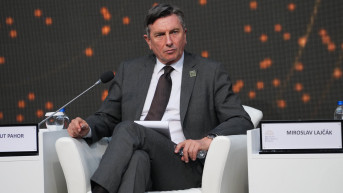
We do not know if Miroslav Lajcak, while packing his bags to leave Brussels this summer, will think about the success (or lack thereof) of his engagement in the Belgrade-Pristina dialogue, but this is already being discussed across the region. Moreover, a potential successor has appeared, none other than from Slovenia, sparking expectations that the course of the dialogue will gain new momentum with a new envoy. What will undoubtedly make the future mediator's starting position difficult—if it comes to that—is the burden of high expectations, leading many to already ask 'why does he need this?
Former Slovenian President Borut Pahor has confirmed his desire to succeed Miroslav Lajcak as the EU Special Envoy for the Belgrade-Pristina dialogue. Although there are still several months until August when Lajcak's mandate expires, the political temperature has already reached summer highs, fueled by estimates and speculations about whether Pahor could really take on this role and how it would affect further talks.
The position is inherently thankless and difficult, and the actions of any EU Special Envoy—no matter who it is—are always confined within set frameworks and conditional on the blessing of America, which, Zijad Becirovic humorously notes, is "the most important European country." He also reminds us of the unwritten rule that someone from the territory of the former SFRY cannot take this position.
Rules are, we cannot help but notice, however, being broken, and the history of the Belgrade-Pristina dialogue could also be seen through the lens of broken rules, even written ones. Therefore, many trust that Pahor could make progress, provided he continues to consistently insist on the implementation of the agreements reached and on the formation of the CSM.
'There is an agreement between Pristina and Belgrade to create a Community of Serb-majority Municipalities. I told Osmani to find a solution to achieve this agreement. I do not know if there are alternatives, but as long as there are no proposals from the parties, the previously reached agreement stands,' Pahor said during a visit to Pristina in September 2022, which he has repeated on other occasions.
There is no doubt that Pahor is well-intentioned when he says he would like to succeed Miroslav Lajcak as the mediator in the Belgrade-Pristina dialogue, says Novica Mihajlovic, a journalist for the Slovenian 'Dela', but he considers it 'a puzzle how to resolve the situation with Kosovo, much bigger and stronger than any former presidents.'
Mihajlovic points out that there is no doubt about Borut Pahor's intentions, and his goal is to maintain peace in the region.
'Certainly, that is his goal, more so than someone who does not live so close to the region and who does not have that connection to the region. Now, whether someone could be more satisfied with Pahor than with Lajcak—I do not believe so, because we all know that the puzzle of how to solve the situation with Kosovo is much bigger and stronger than all former presidents. Even if a former U.S. president were sent, it is questionable how much he could achieve,' our interlocutor emphasizes.
If he becomes the mediator, Pahor will operate within a predefined framework: 'what we agreed upon must be respected, respect for some human rights, minority rights, the European path,' and the like.
"My first reaction when I heard this was 'why does he need this?' He should engage in something easier now that he has retired from active politics, and my personal opinion is that he won’t achieve much, but I hope I'm wrong. I really don’t know how many competitors there could be for this position. Pahor is close to us, he is one of ours, and that’s why we know, but for others, we don’t know. Considering how difficult the job is, I don’t believe there would be much of a crowd," concludes Mihajlovic.
Zijad Becirovic, Director of the International Institute for Middle Eastern and Balkan Studies, tells Kosovo online that although Pahor has the support of the Prime Minister and the Ministry of Foreign Affairs of Slovenia to succeed Lajcak, there is an unwritten rule that special envoys for the area of the former Yugoslavia cannot be from the territory of the former SFRY.
"So that factor and that fact actually distance Borut Pahor from any role in the area of the former Yugoslavia, including the special envoy of the EU for leading the dialogue between official Belgrade and Pristina. As for his ambitions, he has them, even supported by the Prime Minister and the Ministry of Foreign Affairs of Slovenia, for the reason that in some way he is slowly becoming a disruptive factor, as he appears daily on the political scene in various roles—at least as a politician," emphasizes our interlocutor.
He adds that Pahor, as a former president and long-time politician, somehow threatens the position, especially the current President of the Republic of Slovenia, who, in his opinion, is very faintly present in the public, but also the ruling coalition which is very close to Pahor’s provenance, "although Pahor has traditionally good relations with right-wingers."
"However, crucially, whether someone will be appointed as the EU special envoy depends on the 'most important country in Europe,' which are the USA. Without the blessing of America, one cannot be chosen as a special envoy," Becirovic declares.
According to him, the position of a special envoy is very difficult.
"It's a very difficult and thankless position, being the EU special envoy, precisely because of the situation within the EU itself and the five member states that do not recognize Kosovo's independence. And the EU's foreign policy is not actually a unified one; there is no cohesive policy. You are a special envoy, but in reality, negotiations are conducted between the major powers, and of course, they are intertwined with the interests of both official Belgrade and official Pristina. It is a rather difficult and unsustainable position, regardless of who is chosen for the role, they will have a challenging task. But all in all, the USA plays a crucial role in this," believes Becirovic.
Vladimir Kokanovic, President of the Union of Serbs of Slovenia, assesses for Kosovo online that Pahor is a man with significant political experience and reminds us that he was a member of the European Parliament, and was the Prime Minister when Slovenia recognized Kosovo's independence in 2008.
"He is well-versed in Europe's stance on this issue, which is now becoming a burning issue not only for Serbia since it is one of our most important national issues, but also a burning issue for the entire region, and it seems, for Europe too. The circumstance that does not favor the Serbian side is that Borut Pahor comes from a party whose leader is still Tanja Fajon, we don’t know for how long she will remain, and the moves made by that political party have favored the Pristina side more," states Kokanovic.
On the other hand, as he adds, during his term as President of Slovenia, the relations between Serbia and Slovenia were very good and were on an upward trajectory.
"Serbia must continue to engage in a serious diplomatic offensive towards Slovenia, which will now certainly involve forming a more experienced Serbian diplomatic consular office in Slovenia which will have the task on one hand to achieve even better relations with Slovenia in hopes that the truth about the suffering of the Serbian people in Kosovo and Metohija is heard, and on the other hand, which will have the task of involving representatives of the very numerous diaspora in Slovenia, and according to official data, Serbs in Slovenia are the largest ethnic community," he said.
Kokanovic states that the Union, whose leader he is, has been working a lot on this issue in the past period because it is known that Slovenia had intentions to get involved in the "Kosovo issue", and they even appointed their envoy for this.
Reminding that Borut Pahor said in September 2022 that from that moment it was most necessary to respect the provision of the Brussels Agreement regarding the formation of the Community of Serb Municipalities in order to continue with the dialogue, Kokanovic says that we are all witnesses that this has not happened.
But, he expects that Pahor will remain consistent with the statement he made more than a year ago.
"I believe that this must be something that will take precedence in the negotiations, but certainly someone who is the EU envoy is also a guarantor of those negotiations. On the one hand, Miroslav Lajcak often had a habit of criticizing both sides, i.e., pointing out to both sides that they must respect all the norms from almost all legal acts concerning this issue, but almost did nothing to make the Pristina side respect a necessary norm. We expect from Borut Pahor that his contribution will be in line with the statement he made in September 2022," concludes Kokanovic.
Who is Borut Pahor?
He was born on November 2, 1963, in Postojna, Slovenia. He graduated in international relations from the University of Ljubljana in 1987, and for his thesis, he received the Preseren Award. At the age of 26, Pahor was the youngest member of the Central Committee of the League of Communists of Slovenia and a member of its presidency, and as a delegate, he participated in the last 14th Congress of the League of Communists of Yugoslavia, which the Slovenian delegation left on January 22, 1990, reminds "Vreme".
He was a member (1990-2004) and president (2000-2004) of the Slovenian Parliament, leader of the Social Democratic Party (1997-2012), and a member of the European Parliament (2004-2008). He was the Prime Minister of Slovenia from 2008 until he was elected president for two terms (2012-2022), and his electoral victory was reported by Ljubljana's "Delo" under the headline "From Barbie to President".
Pahor is the long-time leader of the Brdo-Brioni process, an initiative he established as the Slovenian president together with Croatia to serve as a driving force for political and overall development of the Western Balkans and Euro-Atlantic integrations. He is also active in the Institute of Friends of the Western Balkans, whose aim is to promote dialogue, reconciliation, peaceful resolution of open issues, economic development, and integration of the countries of the region into the European Union.
He is married to Tanja Pecar, a lawyer in Ljubljana, with whom he has a son, Luka. He speaks English, Italian, Serbian, passively French, and in his free time, he engages in sports.


0 comments