
The Political Price of Empty Migrant Camps in Albania
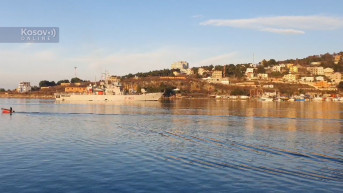
The statement of Albanian Prime Minister Edi Rama, made recently at the summit in London—that Albania will not sign new agreements with other countries on accepting migrants similar to the one concluded with Italy, describing it as a “unique case” of cooperation with Rome—has raised numerous questions, including those about the very purpose of the camps built in Shëngjin and Gjader. Although the project, launched with high expectations and hailed as a “symbol of friendship,” was meant to demonstrate close cooperation between Tirana and Rome, the camps established under the agreement remain empty.
According to sources from Rome, the Italian authorities have so far invested millions of euros in infrastructure and security for the sites, yet without tangible results. The delay has sparked not only domestic political debates in Albania but also doubts about the effectiveness and purpose of the agreement itself.
A year ago, analysts in Tirana noted that the agreement with Italy was conceived primarily as a political and diplomatic maneuver—an opportunity for Albania to display its commitment to “European solidarity” and thereby strengthen its image within the European Union. At the same time, they said, Italian Prime Minister Giorgia Meloni aimed to showcase her government’s resolve to control migration flows.
However, as time passed, it became evident that both sides were facing the limits of this arrangement. Albania sought to avoid being perceived as the “external border of the EU” or as a territory used to solve problems that are essentially European, while the Italian public began demanding answers from their prime minister.
Rama’s statement in London that “there will be no more agreements of this kind” could be read as a quiet step back—a signal that the government in Tirana recognizes the political and legal risks that further such deals could entail. The agreement with Italy, signed at the end of 2023, was supposed to serve as a symbol of European solidarity and the close partnership between Tirana and Rome. Yet, a year later, the camps are empty, the Italian public divided, and international institutions involved.
Observers for Kosovo Online argue that the agreement with Italy has brought more political points than concrete results. Italy sought to ease migration pressure on its own territory, while Albania used the opportunity to strengthen ties with a key ally in the EU. However, the legal complications, human rights concerns, and inefficiency of the project have revealed the limits of this form of cooperation—turning Rama’s statement in London into a tacit acknowledgment that the experiment has failed.
Arber Hoxha, an Albanian lawyer from the Lex Veritas law firm in Tirana, pointed to the complex legal dilemmas that have cast doubt on the project’s viability:
“The Italian authorities have appealed to the European Court of Human Rights regarding whether basic human rights and freedoms are being violated. As far as I know, the Court has not yet issued a decision, but according to the Italian authorities, it is expected that the Gjader camp will breach the European Convention on Human Rights, which could lead to its eventual closure. That’s the legal aspect,” Hoxha said.
He added that the agreement’s efficiency has been minimal, while the political and financial consequences have been enormous:
“For Italy, I believe this agreement has brought little or no benefit compared to the amounts spent. The practical gains were extremely limited relative to the substantial financial investment. Politically, it may have helped Prime Minister Giorgia Meloni somewhat, but it has certainly helped Albania politically. We should not forget how important Italy’s patronage has been for Albania. I believe Albania was the biggest winner in this agreement,” said Hoxha.
He further stressed the significance of Italy’s role for Albania, not only due to shared geopolitical interests but also geographical proximity:
“If there were a bridge, we could reach Bari from Durrës in an hour. Italy’s patronage of Albania has existed since World War II and has certainly helped the country on several occasions. Even the opening of negotiation chapters with the European Union happened partly thanks to Italy’s support. Italy is a leading EU country, both economically and politically, and it has helped our country. I believe Albania was the greatest beneficiary of this agreement,” Hoxha said.
Still, he added, no new camp is expected to be opened. The agreement on the Gjader camp has already caused controversy and political repercussions in both Italy and Albania.
Political analyst Bledian Koka said that the controversy surrounding the Gjader migrant camp revealed all the weaknesses of a concept that was “doomed to fail from the beginning.”
“The agreement establishing the Gjader camp sparked much controversy in both Italy and Albania. In Italy, the consequences were far greater for Meloni’s government, which faced various legal proceedings. Courts went so far as to deem the agreement unjust, as it conflicted with European conventions on the treatment of illegal migrants,” Koka recalled.
He added that a decision had been made specifying which illegal migrants could be sent to Albania—only men over the age of 18, excluding mothers with children or minors.
“This made Gjader a specific type of camp, which, as we know, was intended to serve as a kind of filter for the Italian government—to assess migrants arriving from Africa, verify their status, and decide which could be granted residence in Italy and which should be returned. Essentially, it was designed as a transit center,” Koka explained.
On the other hand, he noted that the Gjader center also raised sovereignty concerns, particularly among the opposition, because of its territorial status:
“The way the camp was established makes it resemble an embassy, since its internal area is under Italian jurisdiction—both for its daily operations and for any potential incidents, given that people from conflict zones could be accommodated there. As for its effectiveness, it was clear from the start that it would be low. Such enormous costs—€280 million so far, potentially reaching €1 billion in five years—make this investment a loss for the Italian government. As far as I know, there are no migrants there today—only staff, such as Italian police, psychologists, and cooks. It can therefore be considered an agreement that produced no real effect other than creating domestic and international problems, for both Rama and Meloni,” Koka concluded.
At the London summit, Albanian Prime Minister Edi Rama surprised the public by declaring that “Albania will no longer sign agreements on accepting migrants,” referring to the November 2023 accord with Italy that established the camps in Gjader and Shëngjin. The goal had been for the camps—managed by Italian authorities—to process up to 36,000 migrants per year (around 3,000 at a time) and to return or relocate those denied asylum.
However, after several attempts, only three small groups of migrants were transferred to Albania, and all were quickly returned to Italy by court order, leaving the camps virtually empty. For example, on January 28, 2025, 49 migrants were sent to Shëngjin, but five were soon repatriated, while the rest waited in a nearly non-functional facility.
After a year, the “Italian-Albanian model” for managing migration has proven to be, by all accounts, an expensive political decision. The camps in Gjader and Shëngjin—initially envisioned as security filters on the EU’s border—have turned into deserted facilities without a single refugee.
Now, the Albanian Prime Minister is trying to close that chapter, while in Italy, pressure is mounting on Prime Minister Meloni and her government to explain how millions of euros were spent—on a center that houses no migrants at all.



0 comments