
From a political signal to practical cooperation: What will the strategic dialogue with the U.S. mean for Serbia?

The launch of the Strategic Dialogue between Serbia and the United States marks a turning point that elevates bilateral relations to a higher level based on mutual respect for each other's national and foreign policy interests, according to analysts interviewed by Kosovo Online. The U.S. Department of State has described the initiative as reflecting a new era in U.S.–Serbia relations, while analysts argue that it will also create new opportunities for investment in Serbia and expand cooperation with the United States across a range of sectors, including energy, in line with Washington's broader strategy for the Western Balkans.
Written by: Jelena Novakov
The inaugural session will be held in Washington on Friday. Serbia will be represented by Foreign Minister Marko Djuric in talks with U.S. Deputy Secretary of State Christopher Landau. Djuric said that the launch of the Strategic Dialogue sends a clear message that Washington views Serbia as both a partner and a friendly country.
"What is happening on Friday is a historic political milestone in Serbia–U.S. relations, and I believe it will further strengthen Serbia's economy, improve the lives of its citizens, and enhance the country's international standing and reputation," Djuric said.
He added that the Strategic Dialogue is also important in the context of Kosovo, while Serbian President Aleksandar Vucic said it presents an opportunity to seek greater understanding for Belgrade's position and to attract increased investment to Serbia.
At the same time, politicians in Kosovo expressed concern over the launch of the dialogue between Serbia and the United States, particularly following the suspension of the planned U.S.–Kosovo Strategic Dialogue. Former Kosovo Prime Minister Avdullah Hoti warned that Kosovo risks becoming economically and politically isolated if its authorities continue their current approach.
Last September, Washington indefinitely suspended its planned Strategic Dialogue with Kosovo, stating that the actions of Prime Minister Albin Kurti had increased tensions and instability, thereby reducing the possibility of productive cooperation on shared interests.
A New Era in U.S.–Serbia Relations
In a statement to Kosovo Online, the U.S. Department of State said that the Strategic Dialogue reflects a new era in relations between the United States and Serbia, recalling that Secretary of State Marco Rubio announced on August 6 that Washington would launch its first Strategic Dialogue with Serbia.
"This Strategic Dialogue reflects a new era in U.S.–Serbia relations. It is a sign of both countries' commitment to expanding and deepening our partnership. Through this dialogue, the United States and Serbia will work toward shared goals, including regional peace and stability, stronger business and educational ties, and the building of a more prosperous future," the State Department said.
Belgrade Recognized as an Important Strategic Partner
Petar Ivic of the Pupin Initiative described the Strategic Dialogue as a political turning point in bilateral relations and confirmation that Washington recognizes Belgrade as an important strategic partner and future ally.
He explained that, diplomatically, the dialogue provides a framework for regular high-level meetings, the coordination of shared interests, and the development of concrete joint projects.
Speaking about the economic dimension of the relationship, Ivic argued that stronger political ties naturally foster stronger economic cooperation, particularly in the energy sector.
"Strong political relations lead to strong economic relations, and this will be no exception. I expect greater cooperation in the energy sector. Official U.S. State Department documents for 2026 identify the energy diversification of the Western Balkans as a U.S. national interest, and it is impossible to have a stable regional policy without Serbia as a central partner," Ivic told Kosovo Online.
He also commented on relations between Washington and Pristina, arguing that the suspension of the U.S.–Kosovo Strategic Dialogue was a consequence of the conduct of Kosovo's leadership.
"Washington's suspension of the Strategic Dialogue with Pristina represents a form of sanction because Kosovo's decision-makers have failed to prove themselves constructive partners. Through their actions, they have demonstrated the opposite, while Serbia has positioned itself as a more credible, strategically important, and reliable partner," Ivic said.
According to him, the Strategic Dialogue formally crowns a relationship that has been steadily improving for several years, particularly following Russia's invasion of Ukraine in 2022.
"The Strategic Dialogue is the formal culmination of relations that have been on an upward trajectory for several years. The relationship has been strengthening over the past decade, but the key catalyst came in 2022 after Russia's invasion of Ukraine," he said.
He added that these changes have been reflected in concrete developments in both security and economic cooperation.
"Serbia no longer conducts military exercises with Russia. We have recently held our first military exercises with NATO, joint exercises with the United States, and significantly expanded economic cooperation during 2025," Ivic concluded.
Respect for Serbia's Position
Former diplomat Zoran Milivojevic said the Strategic Dialogue represents a higher level of relations based on mutual trust and respect for the interests of both countries.
According to him, the dialogue reflects U.S. recognition of Serbia as a politically independent and militarily neutral country that seeks European Union membership while maintaining relations with both Moscow and Beijing.
"This means that the United States recognizes Serbia as a politically independent and militarily neutral country, an EU candidate that also maintains open channels of communication with Moscow and Beijing. That is very important because it validates Serbia's international position, as well as its domestic and foreign policy," Milivojevic told Kosovo Online.
He noted that, unlike some European partners, Washington has not challenged Serbia's international position because of its contacts with Moscow and Beijing.
"It should be recalled that, unlike the Europeans, the United States did not object when President Vucic attended the military parade in Moscow or visited Beijing. It has not questioned Serbia's international position, its policies, or the current government," Milivojevic said.
He argued that Washington is launching the Strategic Dialogue from the standpoint of realpolitik and its own strategic interests.
According to Milivojevic, Serbia is no longer simply a partner but is acquiring the status of a privileged partner.
"Serbia is no longer just an ordinary partner but a privileged one. That is an endorsement with global significance, not merely regional importance, because the United States remains the world's leading power. Launching the dialogue effectively recommends Serbia as a partner on the global stage," he said.
Commenting on Pristina's reaction, Milivojevic said it has little bearing on Serbia's partnership with the United States.
"The fact that Pristina has objections is of little importance to our partnership with America. On the contrary, it further demonstrates that, guided by realpolitik and its own interests, Washington sees Serbia as its key partner in this part of the region," he said.
According to him, the current U.S. administration recognizes the Serbian factor as an important regional actor.
"This administration recognizes the Serbian factor as a leading one, gives it priority, and defines it as falling within its sphere of interests. Pristina's reaction is therefore not particularly important. It merely confirms the importance and depth of this strategic partnership and indicates that the United States is changing its approach toward the Serbian factor," Milivojevic said.
He argued that this shift is also reflected in Washington's positions regarding the Republic of Srpska, the Dayton Peace Agreement, the Office of the High Representative in Bosnia and Herzegovina, and what he described as the Christian dimension of current U.S. policy.
Milivojevic further maintained that the timing of the Strategic Dialogue is particularly important for Serbia given the pressures it faces, adding that the format also confirms Serbia's ability to maintain balanced relations with different international partners.
"This is exceptionally important for Serbia, especially at a time when the United States and Europe do not share the same outlook on global affairs. It is entirely legitimate for Serbia to pursue its own interests by engaging with both Brussels and Washington while maintaining relations with Moscow and Beijing. This Strategic Dialogue is the clearest confirmation of that policy," he concluded.
Whether It Truly Transforms Relations Remains Open to Debate
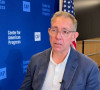
Luke Zaner, Senior Fellow in the National Security and International Policy Department at the Center for American Progress in Washington, disagreed with the view that the Strategic Dialogue alone constitutes a watershed in bilateral relations.
He argued that it is an important step toward institutionalizing relations between Serbia and the United States but does not, in itself, fundamentally transform them.
Zaner stressed that creating a regular communication channel between Belgrade and Washington is particularly valuable for preventing crises and resolving disputes, but cautioned that the dialogue should be viewed within the broader context of U.S. engagement with the Western Balkans.
"The Strategic Dialogue is important, but it is essential to understand that it is a dialogue, not a strategy. It creates opportunities, but it does not by itself transform relations between the two countries. It is an important and highly useful step, but it should be viewed in its proper context," Zaner told Kosovo Online.
According to him, such mechanisms can strengthen bilateral relations, but their ultimate value depends on the concrete results they produce.
"When you establish dialogue and create clear, effective, and structured communication, that is extremely valuable. At the same time, I do not think too much should be expected from the dialogue itself. Its usefulness depends entirely on what is achieved through it. Above all, it is an institutional framework that contributes to more stable bilateral relations," he said.
Regarding its possible impact on Belgrade–Pristina relations, Zaner argued that the dialogue is unlikely to produce direct effects but could provide an additional communication channel for de-escalating tensions.
"I do not believe it will necessarily have direct consequences for issues such as Serbia–Kosovo relations, but it has the potential to become a positive instrument that enables the United States to help defuse potential problems. It also creates another channel through which Washington can support the European Union's efforts in the region whenever it chooses to do so," he said.
Addressing claims that Washington has been placing greater emphasis on its relationship with Belgrade in recent years, Zaner said the current U.S. administration approaches all regional relationships from a transactional perspective and cautioned against interpreting the dialogue as evidence of a uniquely privileged relationship.
"The current U.S. administration views international relations through a highly transactional lens and approaches Serbia in much the same way it approaches other countries in the region. For that reason, I do not think we should conclude that Serbia now occupies a position above other regional partners," he said.
According to Zaner, the launch of the Strategic Dialogue is nevertheless a positive development because it stabilizes and institutionalizes bilateral relations.
"I do not believe it signifies the emergence of a special relationship between Serbia and the United States. This administration takes a highly transactional approach to international affairs. The key priority for Serbia should be ensuring that this mechanism becomes a long-term feature of bilateral relations," he said.
Speaking about the practical benefits of the dialogue, Zaner stressed that it may create additional opportunities for cooperation but should not be interpreted as unconditional support for Belgrade's positions.
"Serbia can expect more opportunities from this dialogue, but it is not a blank check. The United States maintains Strategic Dialogues with other countries in the region as well, so this initiative largely normalizes relations with Serbia in the same way it has done with countries such as North Macedonia," he said.
He added that structured communication between the two countries could facilitate cooperation in a number of areas of mutual interest.
U.S. Plans for the Region
Economics professor Shkumbin Misini argued that the United States has a strategic interest in encouraging the countries of the Western Balkans, including Serbia, to move toward greater regional integration.
"The United States has an interest in seeing the countries of the Western Balkans orient themselves toward integration processes, which is its primary objective. The countries of the region, including Serbia, have geostrategic interests in cooperating with the world's leading powers in order to improve their economic prospects," Misini told Kosovo Online.
He added that it remains to be seen whether a concrete long-term strategy will emerge, recalling that Jared Kushner had previously expressed interest in investing in Serbia.
Speaking about European integration, Misini argued that the Western Balkans should become part of the European Union as soon as possible.
He concluded that future developments will also depend on broader geopolitical trends but emphasized that the countries of the region should cooperate and move forward together.
"It remains to be seen how global geopolitical developments will unfold, given the many competing influences in our region. It would be beneficial if the countries of the Western Balkans advanced toward integration together—without conflict, jealousy, or hatred—and focused instead on improving the economic well-being of their citizens, rather than being led by politicians whose primary interests are power and personal enrichment," Misini concluded.


0 comments