
Politicians “splashing the cash” during the campaign – are the promises realistic?
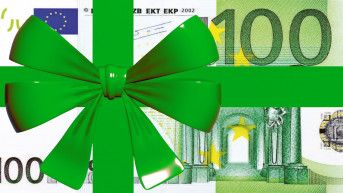
If all the promises made by political parties in Kosovo before the official start of the election campaign were fulfilled, employees after June 7 would not only receive higher salaries, but also a 14th salary, pension payments would increase, taxes would be reduced, and the air in Kosovo would be as clean as in the Swiss Alps. According to interlocutors of Kosovo Online, although economic promises may be the most important issue for Kosovo citizens, many of them lack a realistic foundation, while voters are not being told how they would actually be implemented. They also believe that, ahead of these elections, it is more apparent than before that the race is unequal, as the ruling party is using public resources in order to win over voters.
Written by: Dusica Radeka Djordjevic
The campaign officially began today and will last ten days, but voters have already been exposed to election marketing for weeks.
The caretaker government led by Self-Determination is promising to regulate the issue of a 13th salary for both the public and private sectors through legislation and plans to introduce a 14th salary as well. One-time payments of 100 euros have been earmarked for pensioners, children, students, and employees in the private sector, while increases in benefits for new mothers have also been announced.
To members of the diaspora in Switzerland, caretaker Prime Minister Albin Kurti promised that air pollution in Kosovo would be reduced in line with European Union standards, because, as he said, he knows this is something that greatly concerns them when they come to Kosovo.
The decision by his cabinet two days ago to allocate two million euros in support for airline routes serving the diaspora caused the greatest public controversy. The move was described as the “icing on the cake” in the misuse of public resources for purely electoral purposes, but also as “trampling democracy with both feet.”
The opposition has also not lagged behind in making attractive economic promises. Thus, DPK leader Bedri Hamza has most frequently spoken about increasing salaries and pensions, reducing taxes, and making major investments in the economy, healthcare, and education.
How all the promises with which parties are trying to convince voters would actually be fulfilled has not been discussed in detail. Perhaps that will happen in the next ten days.
Researcher in security studies Nikola Vujinovic says that economic promises are essentially the most important issue for Kosovo voters because the economic situation in Kosovo is poor, but that many of these promises have no realistic basis.
According to him, for the segment of voters whose livelihoods depend on Kosovo, the economy is the most significant issue, while for many voters from the diaspora, other topics matter more because they live in a different economic reality and are not particularly concerned with the situation in Kosovo.
“The economy is indeed the most important issue for voters, but the increase in ethnic and identity-based rhetoric and the insistence on anti-Serb measures show that in some way voters’ eyes need to be ‘covered over.’ Various promises have no realistic foundation and serve only to make people feel good until June 7. Then they vote, and on June 8 nothing changes,” Vujinovic told Kosovo Online.
As one example, he mentioned the assistance the caretaker government promised to students.
“They are applying for the 100 euros until June 5, and the assistance will supposedly be paid out on June 8. This shows that it is pure vote-buying and something Mr. Kurti is using. The moment you have no real economic results — and they do not exist — the moment you have no real economic foundation — and it does not exist — all your promises become fantastical,” he pointed out.
He recalled that these are already the fourth elections in a year and a half in Kosovo and that since February 2025 it had been clear that issues of the economy and quality of life were very important at the beginning of the campaign, but that as the campaign progresses, these topics move to the margins.
“In the end, it turns out that it is as if these promises were never made at all, because there are no results,” he assessed.
“Misuse of Public Finances”
Associate of the NGO New Social Initiative Aleksandar Sljuka told Kosovo Online that the costs of organizing new elections, together with allocations in the form of financial assistance for various groups of citizens in the context of the election campaign, undoubtedly represent a major blow to Kosovo’s economy, because these are expenditures that had not been planned.
“We have allocations of 100 euros each for pensioners, people employed in private businesses, certain forms of assistance for groups in the public sector, assistance for students... Now there are also these newly announced allocations amounting to as much as two million euros for so-called incentives aimed at encouraging the diaspora to come to Kosovo, again in the context of the elections. When all this is added together with previous electoral cycles and the actual organization of elections, it undoubtedly represents a major expense for Kosovo’s budget, bearing in mind that two out of the four electoral cycles were unplanned,” Sljuka stated.
As he added, similar forms of assistance existed in previous election cycles as well, but he believes they were not on this scale, which, according to him, reflects the position Self-Determination currently finds itself in and the fact that it needs votes.
“They gambled with these elections and are now somehow trying to secure the best possible result. This will certainly attract some votes because these short-term benefits will undoubtedly matter to certain groups of the population, especially socially vulnerable groups. I would not say this will be enough to create a substantial turnaround or breakthrough for Self-Determination, but they are using every possible resource to increase their support,” our interlocutor assessed.
According to Sljuka, such actions by the caretaker government represent a misuse of public funds.
“If we had a continuous strategy of assistance for these groups, something adopted as a Government program, then even regardless of the fact that the Government is now in a caretaker mandate, we could say: ‘ok, this is some long-term program, this is not something ad hoc and we can observe it outside the election campaign.’ However, given that, as in previous election cycles, the vast majority of such decisions came in the context before elections, I think it is very clear what is being attempted, namely the misuse of public finances,” he stated firmly.
Regarding opposition promises to increase salaries and pensions while also reducing taxes, Sljuka says the opposition is building its campaign on promises and that all sorts of things can be heard during election campaigns.
“Of course, this will cost them nothing if they do not come to power. And if they do come to power, we will probably see that it is not so easy to implement, but it works very well as a campaign promise. Here we have two things that negatively affect the budget in a synergistic manner. The first is tax reductions, which means less revenue for the state because the budget is filled less, while on the other hand there are promises of higher salaries and pensions, which means higher expenditures for the state. In other words, less money for the state, while no one explains how the state would obtain the money necessary to provide these benefits. That is why these are populist measures,” he added.
In conclusion, he says the opposition can only make promises and hope citizens will recognize them, while on the other hand the government has all the levers at its disposal to use public resources in the context of the campaign, resources which other political actors do not possess.
A Technical Government as a Solution?
Former diplomat Silje Uksini told Kosovo Online that if there is a genuine desire for fair and democratic elections, the opposition should seek a technical government, similar to the one North Macedonia and many other countries had, which would organize elections in such a way that the caretaker government would not have the possibility to use public resources, the budget, and public funds, thereby ensuring equal conditions for all during the elections.
“If institutions are not formed after the elections, then for future elections a technical government should be chosen with people who do not participate in politics, who are neutral and proposed by all political parties. Such a government would serve only to conduct the electoral process and we would have equal competition. The current government has the advantage because if it is able to distribute 200 million, that harms opposition parties and gives the government an advantage,” Uksini pointed out.
Commenting on promises by opposition DPK leader Bedri Hamza regarding increases in salaries and pensions, as well as tax reductions, without explaining how this would be carried out, Uksini says that Hamza was finance minister and has both experience and ideas, but that these ideas should be explained more concretely to citizens.
“Instead of sporadic assistance, it would be better to regulate and increase salaries through legislation, while additional money during the campaign should be prohibited. This existed in the past as well. That means there should be no tenders or anything that could lead to favoritism,” the diplomat said.
He also suggested that nationalist slogans should be avoided during the election campaign.
“Young people want jobs and a better quality of life, education, healthcare — these are the issues that should be addressed. Croatia, Montenegro, Kosovo, Albania, Macedonia — all face migration problems. We should discuss how to stop this trend and make life more attractive,” Uksini stated.
According to him, the younger generations have different interests and expectations.
“A European Kosovo is beautiful when Albanians feel good, but also when Serbs, Turks, and Roma feel good. Nationalist slogans should be avoided. Nationalist slogans in the Balkans are like sweets — they seem sweet, but if consumed in large quantities they lead to diabetes,” he concluded.

0 comments