
Poor election result of ppposition parties: date, diaspora, and political calculations
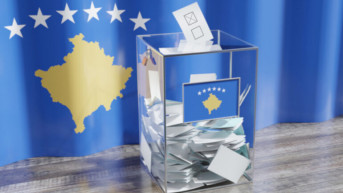
It was not so much Self-Determination and Albin Kurti who won, as it was the opposition parties that lost—this was the initial reaction of Kosovo analysts following the preliminary results of the snap elections held on 28 December. Several factors contributed to the opposition’s poor electoral showing, interlocutors for Kosovo Online assess. The election date, the arrival of the diaspora, and party calculations were among them.
Written by: Milena Miladinovic
Expectations among civil society and many analysts were that voters, after three election cycles in a single year, would be too fatigued for a fourth, and that turnout on 28 December would therefore be lower. In this case, however, the diaspora—arriving in large numbers in Kosovo ahead of the New Year and Christmas holidays—decided the fate of Kosovo’s citizens for the next four years, according to observers, or perhaps only until March, when the new Kosovo government will need 80 votes in the Assembly of Kosovo to elect the president.
Based on the votes counted so far, Self-Determination won 49 percent of the vote—seven percentage points more than in the February elections—and, counting the votes of non-majority non-Serb parties, secured a majority to form both the assembly and the government.
In these elections, the Democratic Party of Kosovo (DPK), under its new leader Bedri Hamza, won 21 percent, a result similar to that of the 9 February elections, while the biggest drop was recorded by the Democratic League of Kosovo (DLK), which won only 13 percent—five percentage points less than in the previous elections.
A poor result was also recorded by the Alliance for the Future of Kosovo (AAK) of Ramush Haradinaj—five percent, compared to seven percent in the previous elections when it ran in coalition with Nisma.
DLK leader Lumir Abdixhiku said that the party assembly would determine whether he bears responsibility for the result, while Hamza stated that the DPK had expected more.
The opposition’s campaign messages stressed that it was time for a change of government in Kosovo, but following the elections, Self-Determination will remain in power for at least some time. Kosovo Online interlocutors note that the election date and the large turnout of the diaspora contributed to the opposition’s poor result, but that the opposition itself bears the greatest responsibility, as it failed to assume responsibility and attempt to form a government when it had the opportunity to do so.
Diaspora and Calculations
Political scientist Ognjen Gogic pointed out that Kosovo’s caretaker prime minister and Self-Determination leader Albin Kurti recorded a decline in support among the local population, but that he received backing from the diaspora, which, he adds, does not live with the consequences of his policies.
“Two factors influenced the opposition’s poor result. The first is the arrival of the Albanian diaspora. This was entirely expected, as this is the time of year when a large number of members of the Albanian diaspora come to Kosovo. It was known that they favor Kurti, and that proved to be the case. Had the elections been held at any other time, Kurti would have fared worse. He actually recorded a decline in support among the local population, that is, among Albanians living in Kosovo, but the diaspora views politics differently and granted him their trust, regardless of the fact that they do not live with the consequences of policies and decisions implemented in Kosovo,” Gogic told Kosovo Online.
He added that the second factor was the opposition’s calculations in the preceding period.
Gogic noted that the opposition did not want to assume responsibility and attempt to form a government.
“The second thing that affected the opposition’s poor results was their calculations and tactical maneuvering, which proved to be wrong. From the February elections onward, the opposition did not even try to form a government. At no point did it show a desire to reach an agreement among itself, even though, mathematically speaking, it had the possibility to form a government. Taken together, they had more MPs than Kurti and, with the support of the Serb List and other communities, could have formed a government—at least a transitional or technical one. However, they continuously avoided responsibility and effectively sent the message that they did not want to take responsibility for the functioning of institutions,” Gogic said.
As a result, he added, voters punished them.
“People simply did not want to support those who do not want to assume responsibility. That raises the question of the point of their participation in elections. Also, had the opposition wanted to—and been more effective—it could have ensured that the elections were held at a different time. They themselves allowed Kurti and Vjosa Osmani to set the election date for 28 December. They could have done so earlier had they taken on the mandate to form a government,” he said.
Gogic concluded that the opposition had chances and opportunities it failed to use, while Kurti capitalized on his.
Facing Defeat and Making Changes
Analyst Artan Muhaxhiri believes that, after the poor results in the snap elections, opposition parties must confront defeat and change their policies. According to him, if the opposition continues with the same strategy, Kosovo’s caretaker prime minister and Self-Determination leader Albin Kurti will win every future election.
As Muhaxhiri told Kosovo Online, the first thing the opposition must do is be realistic and face defeat.
“The opposition must change its political actions by 180 degrees,” Muhaxhiri said.
According to him, if opposition parties continue with the same approach, Kurti will prevail in every election. New people and new messages are needed to convince voters that they are a better option than Kurti’s Self-Determination.
“They must do everything differently, because this approach does not work against Kurti. Kurti will always win if the opposition continues with this strategy. The opposition must bring in new people, have a new program and new messages to convince people that they are a better option than Kurti, if they want better results,” Muhaxhiri added.
Limited Room for Maneuver for the Opposition
Dušan Radakovic of the NGO Democracy in Action assessed that the date of the snap parliamentary elections and the arrival of the Kosovo diaspora during that period most strongly affected the opposition’s poor election results.
“I think the election date had the greatest impact, because 28 December is two days after Christmas. Between 300,000 and 500,000 Albanians came during that period, and that accounts for an additional 100,000 voters in these elections. In February, we had 800,000 voters; now there are more than 900,000, and that explains the seven to eight percentage points that Kurti gained compared to the February elections,” Radakovic told Kosovo Online.
Noting that both the Serb List and other parties also received more votes on 28 December than on 9 February, Radakovic said this was surprising, as expectations had been that turnout in the fourth election cycle this year would be ten percent lower.
According to him, 28 December highlighted the difference between local and parliamentary elections.
“As for the opposition parties, the DPK lost two percentage points, which was somewhat expected, but the biggest losers of these elections are the DLK and Haradinaj’s party. That was anticipated, but not to such an extent for the DLK, which had won municipalities such as Pec and Pristina. Now the parliamentary elections have shown how much less support they actually have in those municipalities,” he said.
The opposition’s room for maneuver is currently very limited, Radakovic said, adding that the only remaining option would be new snap elections if the president of Kosovo is not elected in March.
“A significant difference between local and parliamentary elections has been demonstrated, as well as differences among voters. The opposition has very little room for maneuver. The only thing it can do is fight and, regarding new parliamentary elections, seek them through the presidential election process—because without the support of the DPK or the DLK, or perhaps the AAK together with the Serb List, Kosovo will not have a president and new parliamentary elections will follow,” Radakovic concluded.



0 comments