
Nikolic: Opening the Ibar Bridge is not a matter of traffic—it reflects all the fears of Serbs
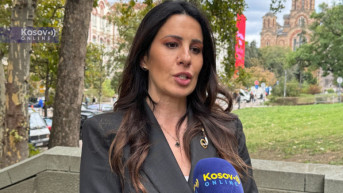
President of the Serbian Parliament's Committee on Kosovo and Metohija Danijela Nikolic said today that the main Ibar Bridge in North Mitrovica symbolized nothing positive for the Serbian people in Kosovo, stressing that opening the bridge was not merely a matter of traffic because, as she said, the bridge reflected all the fears and anxieties of Serbs, RTV reported.
Commenting on the European Union's assessment that the conditions had been met for opening the bridge to traffic, Nikolic said that the EU's decision to side with caretaker Kosovo Prime Minister Albin Kurti on the issue, by transferring responsibilities to the Kosovo Police, demonstrated that they too, as she put it, wanted to further dismantle a bulwark of Serbian defense.
"Our people fleeing Albanian terror crossed that bridge. I crossed that bridge myself when I fled my native Pristina. We have always regarded it as a barrier and a kind of red line for us. There are clear agreements that the EU is ignoring, including commitments it undertook itself—namely, the 2014 agreement, which sets out clear rules governing how that bridge may be opened to traffic, specifically that this must be agreed through the Dialogue," Nikolic stressed, Tanjug reported.
She recalled that it had been agreed within the Belgrade-Pristina Dialogue that there must be an administrative demarcation of Suvi Do, something that, she said, no one in the EU or EULEX was mentioning despite their obligation to implement it.
She explained that the administrative demarcation of Suvi Do first had to be completed and all relevant security parameters established before the bridge could be opened.
Nikolic recalled that Director of the Office for Kosovo and Metohija Petar Petkovic had sent a letter to EU Special Representative for the Dialogue Peter Sorensen regarding the intention to open the bridge, raising the key question of which security risks had been eliminated to make it possible to open the bridge to traffic.
"They have taken a clear position, and that shows that Albin Kurti is not acting alone, because if anyone in the international community wanted to stop this, they could. All the reports they receive come from Kosovo services. Not a single Serb can write any of those reports because no Serbs work there, so they simply write whatever suits them and submit it as an official report," Nikolic said.
She stressed that the authorities in Pristina were ignoring the administrative demarcation of Suvi Do because their objective was to merge the northern and southern parts of Mitrovica, thereby rendering the Brussels Agreement and the Dialogue meaningless.
"The Ibar Bridge goes far beyond a decision by a local assembly, which they now want to implement by claiming that all security conditions are favorable," Nikolic said.
In her view, the case once again demonstrated that Pristina's objective was to destroy everything Serbian in Kosovo, including the Church and tradition.
Regarding the opening of the Ibar Bridge, the EU has said that decisions must take into account the interests and concerns of all communities, while interlocutors in a Kosovo Online analysis have highlighted a number of contentious issues—from security assessments and the responsibility of international actors to political conditions, consultations with the local community, and the potential consequences.


0 comments