
From the “Presevo Valley” to Washington – Framing the issue of Albanian rights as political pressure on Serbia

In the efforts of political representatives of Albanians from Presevo, Bujanovac, and Medvedja to impose the issue of alleged endangerment and discrimination of the Albanian community in that part of Serbia, there is nothing new. For a long time, attempts have been underway to make this issue part of the Belgrade–Pristina dialogue in Brussels, and the latest move—though not a surprising one—was recently made by U.S. Congressman Keith Self, who introduced to the U.S. Congress a bill calling for a report on the position of the Albanian minority in the “Presevo Valley.” Reactions regarding the justification of such a document soon followed—recognition came from Albania, while Belgrade sent the message that there is no discrimination against Albanians in Serbia and that their issues are not resolved in Washington but in Belgrade. Analysts from Belgrade and Pristina take different positions, and somewhere amid this noise, it seems that Serbs in Albania—who have been practically assimilated in that country—remain completely forgotten.
Written by: Darko Savanovic
Among other things, the bill calls for a review of the practice of address “passivization,” which, according to allegations, is used to remove Albanians from civil registries, thereby, as claimed, depriving them of voting rights and access to basic public services. It also calls for an examination of alleged restrictions on the use of the Albanian language in public institutions, as well as alleged discrimination in the field of education.
This is only the first step, and the path to the potential enactment of the bill is long. The draft bill must first be submitted for consideration and a vote at a plenary session of the U.S. House of Representatives. If adopted, it would then require approval by the Senate and, finally, the signature of U.S. President Donald Trump. Nevertheless, the very introduction of the act has already sparked enthusiasm among Albanians.
Support came from Tirana. Albania’s Ministry for Europe and Foreign Affairs assessed the act as “an important step toward serious consideration of these issues at the international level” and “a strong signal of support for the rights of Albanians in the ‘Presevo Valley,’” as well as an important contribution to strengthening peace and stability in the Western Balkans, expressing gratitude to the United States for its engagement. No parallel was drawn with the rights of Serbs in Albania by Minister Elisa Spiropali—perhaps precisely because Serbs in her country have none.
Regarding the proposed bill, Serbia’s Commissioner for the Protection of Equality, Milan Antonijevic, pointed out that it is certainly a signal for dialogue, while noting that reports prepared by the institution he heads show the state’s particular commitment to southern Serbia—Presevo, Bujanovac, and Medvedja—and to dialogue. He added that he had received complaints related to discrimination, which were resolved.
Meanwhile, the only Albanian member of the Serbian Parliament, Shaip Kamberi, who also thanked Congressman Keith Self for his initiative, traveled to Washington. He also expressed gratitude to the Albanian American Civic League, the organization “Albanians for America,” Gjin Muçi, Albanians of Texas, the Albanian National Council, and the Government of Kosovo, which, as he stated, enable joint advocacy for Albanian rights.
“I am traveling to Washington at a crucial moment for Albanians of the Presevo Valley. After the adoption of the Law on the Assessment of Discrimination proposed by Congressman Keith Self, the Presevo Valley has finally entered the institutional focus of the United States,” Kamberi wrote yesterday on Facebook.
The Future of Albanian Rights Is Not Decided in Washington, but Through Dialogue in Belgrade
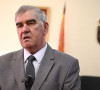
That there are no violations of Albanian rights in Serbia and that the proposed bill represents an attempt to politicize the issue is the clear position of Serbia’s Minister for Human and Minority Rights and Social Dialogue, Demo Berisha, who stresses that the future of Albanian rights in Presevo, Bujanovac, and Medvedja is not decided in Washington, but through dialogue in Belgrade.
“As the head of the Ministry for Human and Minority Rights and Social Dialogue, I can state with full responsibility that there are no violations of either human or minority rights in Serbia. There are certain elements that should be raised to a higher level. But when you look at the issues emphasized in that proposal, it is clear that this is an attempt at politicization,” Berisha told Kosovo Online. He explained that address passivization is a procedure applied to all citizens of Serbia, not exclusively to Albanians.
“Address passivization does not imply the loss of the right to residence. It implies a temporary interruption, because the legislator has provided that within a certain period of eight or twenty days, when you appear before the competent state authority—the Ministry of the Interior—you can regulate your status. However, at this moment we are facing a lack of interest among citizens of Serbia living in the areas of Presevo and Bujanovac. That is why this has been elevated to the level of a political issue,” Berisha explained.
Regarding the recognition of diplomas issued by the University of Pristina, he recalled that this issue falls under the jurisdiction of Serbia’s Ministry of Education and has been regulated through dialogue.
“For those diplomas, the Office for Kosovo and Metohija and the negotiating team, in talks with Pristina and Brussels, reached certain solutions that were acceptable to Serbia. This means that if you hold a diploma from that university, you submit it to Brussels, which verifies it and forwards it to Belgrade for recognition. It is not true that we do not recognize those diplomas at all. What we do not recognize is the direct relationship insisted upon by the Pristina authorities and those currently holding political positions in Presevo, Bujanovac, and Medvedja,” Berisha underscored.
An Albanian himself, he emphasizes that he has no problems due to his origin, and that the fact he heads a ministry proves how democratic Serbia is.
In a conversation last week with the Head of the OSCE Mission in Serbia, Marcel Peško, the Minister pointed to the absence of dialogue with representatives of the Albanian minority and asked him to mediate and persuade the Albanian National Council and political structures to respond to the invitation for talks.
He stressed that the time has come to enter into dialogue and identify issues that can be resolved, while leaving those on which there is no agreement for later.
Drawing a parallel with the position of Serbs in Albania, Berisha noted that there were two waves of assimilation in that country—one in 1933 during the reign of King Zog and another in the 1950s under Enver Hoxha.
“We know the problems facing the Serbian community in Albania. We are in contact with the Serbian association ‘Moraca–Rozafa’ in Shkodër. We are aware of Ecrem Suljevic in Fier. We will launch an initiative to propose to Albania the establishment of a mixed commission dealing with minority issues, similar to those we have with Croatia, Hungary, Romania, and North Macedonia,” Minister Berisha announced.
The Rights of Albanians in the Presevo Valley Are Incomparably Greater Than the Rights of Serbs in Kosovo and Albania
Historian Petar Ristanovic pointed out that the rights of Albanians in the “Presevo Valley” and those that Serbs today “enjoy” in Kosovo, and especially in Albania, cannot even be compared.
“If we look at everyday life, their rights and opportunities are incomparably greater than those of Serbs today in Kosovo or in Albania. They have very developed cooperation with institutions in Albania and their support, and they also receive extensive support from Serbia, particularly in terms of funding and educational institutions, especially when their numbers are taken into account,” Ristanovic told Kosovo Online.
On the other hand, he points to the assimilation of Serbs in Albania.
“For decades, the existence of Serbs in Albania has not been recognized. Primarily during the communist period, and later as well, they were effectively assimilated. Today there are associations that bring together small Serbian communities, but the majority have been assimilated through various programs implemented by the Albanian state—Serbian names were banned, the right to religious practice was denied, association on a national basis was prohibited, and cultural heritage could not be nurtured. After decades of such policies, Serbs were assimilated. It is hypocritical for Albania to support such a demand, but it is a practice we have seen on many occasions,” Ristanovic noted.
He therefore believes that the proposal of a law calling for a report on Albanian rights is a political move driven by reasons unrelated to any actual endangerment.
For Albanians – Good News and Only the Beginning
In Albania, however, the proposed bill is interpreted differently.
“This is not only good news for Albanians in the ‘Presevo Valley,’ but good news for Albanians everywhere in the world,” said analyst and Radio Television of Albania journalist Roland Çafoku. He is convinced that the United States and American diplomacy are thereby sending a message to Serbia: “Not only do you have a problem with a neighboring country and make demands toward that country that are unfounded, but you also continue to have major and serious problems within your own country, with Albanians in the ‘Presevo Valley.’”
It seems to him, he adds, that the U.S. wants to say: “How can you make demands when you do not respect human rights in Presevo?”
“And not only because there is only one MP from Presevo in the Serbian Parliament, but because we have witnessed many actions that are contrary to the human rights of national minorities living in the ‘Presevo Valley,’” Çafoku claims.
Viewed from a diplomatic perspective, he has no doubt that this represents pressure on Serbia.
“This is also a warning not to make demands that should not be made, while on the other hand violating the rights of Albanians in the ‘Presevo Valley.’ I believe this is only the beginning. We expect that once the law is considered and adopted by the Senate, sanctions could follow, because we know how American diplomacy operates,” Çafoku concluded.
0 comments