
Self-Determination critic with extensive international experience: Can Vlora Citaku reach the presidency?
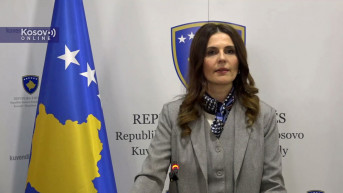
Vlora Citaku—Secretary General of the Democratic Party of Kosovo (PDK), former Ambassador of Kosovo to the United States, and a vocal critic of Self-Determination and Kosovo Prime Minister Albin Kurti—is being mentioned as a potential candidate for President of Kosovo should the ruling party decide to reach an agreement with the PDK on this matter. However, interlocutors of Kosovo Online note that it is unlikely Citaku would receive the support of Self-Determination and Kurti for several reasons. One of them, analysts say, is that such a move would contradict the party’s two-decade-long political stance.
Written by: Milena Miladinovic
Following the Constitutional Court’s deadline requiring Kosovo MPs to elect a new president by April 28, discussions about a consensual agreement have once again gained momentum. The only party with a sufficient number of MPs to help Self-
Determination secure a quorum for electing a president is the Democratic Party of Kosovo.
Although new inter-party talks have not yet begun, previous meetings between Kurti and PDK President Bedri Hamza indicate that the PDK is seeking the presidency.
Political analyst Shemsi Jashari stated that there is a possibility the next president could be a woman from the ranks of the PDK, highlighting Vlora Citaku as a potential candidate and emphasizing that her international experience would be a significant advantage for performing presidential duties.
Nevertheless, Kosovo Online’s interlocutors believe that Kurti and his Self-Determination movement would not support Citaku due to her sharp criticism in recent years, as well as her strong ties with the U.S. administration. They further assess that supporting Citaku would amount to “political suicide” for Self-Determination.
No Support for Anyone Outside Self-Determination
Political scientist Ognjen Gogic emphasized that it is unlikely Citaku will become Kosovo’s next president, as Kurti would not support anyone outside his party.
Gogic told Kosovo Online that no one can be elected president without Kurti’s backing, which Citaku would almost certainly not receive due to her strong criticism of him in recent years.
“Vlora Citaku is a competent lawyer and would likely avoid certain mistakes that, for example, Osmani made as president in terms of misinterpretations of the Constitution, legislation, and her competences. However, it is highly unlikely that she could even be considered for the position, let alone elected, for several reasons. First, no one can be elected President of Kosovo in this parliamentary composition without Kurti’s support, and it is unlikely that he would support anyone outside his party—especially not Vlora Citaku, given her strong criticism of him over the past few years. The PDK itself does not have enough MPs to support her candidacy, meaning it would need backing from other parties, which it is not currently pursuing,” Gogic stated.
He added that the opposition is waiting for Kurti to propose his candidate, after which it will take a position. For the PDK, Gogic noted, the strategic question is whether it is more beneficial to secure the presidency or to push for new elections and gain more seats.
“It appears that the opposition wants to place the ball in Kurti’s court. They expect him to propose one or possibly two candidates for president, and then respond accordingly. The PDK will certainly wait for Kurti to put forward at least one candidate before deciding whether to nominate someone themselves. It is highly unlikely that Self-Determination would support Citaku’s candidacy, let alone vote for her. For the PDK, the key strategic dilemma is whether it is worth striking a deal with Kurti solely for the presidency—a largely symbolic position with limited influence on operational politics—or whether it would be more advantageous to go to new elections, where they could potentially achieve better results,” he added.
Should Citaku nonetheless become president, Gogic believes she would use the position to strengthen her political influence.
“The President of Kosovo, by constitutional design, should be a non-partisan and supra-partisan figure who refrains from engaging in day-to-day politics, allowing governance to take place in parliament and the government, and, when necessary, assisting in resolving constitutional issues. While the mandate implies neutrality, in practice this does not fully limit political ambition. It is quite possible that Citaku, as a younger political figure, would use the position to build a platform for future roles and expand her political power.
However, this would also depend on internal party dynamics, particularly given the presence of Bedri Hamza as PDK leader, who would likely not welcome any unilateral consolidation of power within the party,” Gogic concluded.
“Political Suicide”
Analyst Armend Demaku also believes that the Self-Determination Movement would not support Citaku as president.
Speaking to Kosovo Online, Demaku stated that such a move would undermine the party’s two-decade-long political platform.
“I do not believe that the Self-Determination Movement would accept Vlora Citaku as president. On the other hand, I have no information indicating that the PDK has formally proposed her candidacy. However, I believe Self-Determination is more inclined toward early elections, potentially positioning itself as a political victim to shift blame onto opposition parties. Accepting Citaku’s candidacy would effectively dismantle the party’s political narrative of the past 20 years,” he said.
According to him, this stems from the fact that Prime Minister and Self-Determination leader Albin Kurti has built his political career on confronting and polarizing against the PDK.
“It would amount to political suicide for Self-Determination. Still, it would not be entirely surprising if concessions were made. However, Kurti typically avoids such moves due to the populism that characterizes his leadership,” Demaku added.
Regarding the presidential election, Demaku considers it a major issue for Kosovo.
“If Albin Kurti wished, he could ensure the election of a president within ten minutes, without the need to go to the polls. It remains to be seen how this process will unfold,” Demaku concluded.
Citaku Would Not Be a Poor Candidate
Aleksandar Rapajic, Program Director of the NGO Center for Advocacy of Democratic Culture from North Mitrovica, stated that even if a political agreement is reached, Self-Determination is unlikely to accept a strong opposition figure as president.
He emphasized that the outcome remains uncertain, as no political agreement has yet been achieved.
“Previously, Self-Determination rejected the PDK’s proposal to jointly elect a president. The PDK had offered to provide the necessary majority in exchange for the presidency being assigned to its ranks. This was not accepted, and alternative approaches were pursued. Even if a political agreement is reached, I do not believe Self-Determination would accept a strong opposition figure in that role,” Rapajic said.
He added that Citaku would nevertheless be a solid candidate due to her diplomatic experience in the United States.
“I believe Citaku would not be a poor candidate, given her previous role as ambassador to the U.S. and her strong connections within the American administration,” Rapajic concluded.



0 comments