
Serbia and Moldova: How territorial disputes affect the path toward the European Union
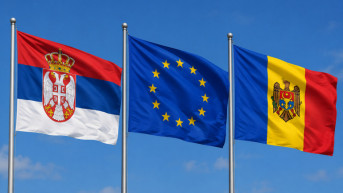
As candidates for membership in the European Union, Serbia and Moldova are both faced with unresolved territorial issues, but there are significant differences in the international status of Kosovo and Transnistria, as well as in Brussels’ approach toward Belgrade and Chișinău from a geopolitical perspective. Sources interviewed by Kosovo Online point out that Kosovo’s independence has been recognized by 22 EU member states, while Transnistria is not recognized by any country in the world. They also emphasize that within the EU there are concerns regarding possible Russian ambitions toward that Moldovan region, whereas the issue of relations between Serbia and Kosovo is considered resolved in much of Europe’s political circles.
Written by: Jelena Novakov
Deputy Speaker of the Serbian Parliament and Chairwoman of the parliamentary committee for European integration Elvira Kovač recently stated that she believes remarks by EU High Representative for Foreign Affairs and Security Policy Kaja Kallas, according to which the issue of Transnistria will not be an obstacle to Moldova’s European path, could also represent a positive signal for Serbia.
“It is good to see that unresolved territorial issues do not necessarily have to halt European integration, although there are differences between the case of Moldova and the issue of Kosovo and Metohija. In our case, the most important thing is that the dialogue progresses, and it seems to me that at this moment there is an understanding that Serbia is a constructive partner,” Kovač said.
Transnistria has been outside the de facto control of Chișinău since the 1992 conflict between separatists and Moldovan forces. Although ethnic Moldovans make up the majority of the population in that territory, the conflict erupted because of resistance by local pro-Russian authorities and part of the population to Moldova’s rapprochement with Romania and the abandonment of its Soviet identity following the collapse of the USSR.
Russia has maintained a military presence in the region ever since, but despite that, it has never recognized Transnistria’s independence.
Conflicts and the Ethnic Question
Moldovan journalist Andrei Curăraru told Kosovo Online that, when it comes to European integration, the case of Moldova and Transnistria differs from relations between Serbia and Kosovo because of Kosovo’s international recognition, as well as the ethnic nature of the 1999 war in Kosovo.
He noted that not even Russia, which maintains a military presence there, recognizes Transnistria’s independence, while support for the independence of that Moldovan territory has only come from South Ossetia and Abkhazia, territories whose independence is likewise not internationally recognized.
“There is no international precedent when it comes to recognizing Transnistria. I think the situation differs from Kosovo because of the nature of the conflict. It was an artificial conflict that was not based on ethnic or religious reasons. Moldovans make up the majority population of Transnistria, more than 40 percent,” Curăraru said, adding that more than 90 percent of Transnistria’s citizens hold Moldovan passports.
He assessed that the Cypriot precedent is more similar to the case of Transnistria than Kosovo, pointing to problems concerning economic control over the separatist territories of Cyprus and Moldova.
“Generally speaking, I would say that the cases of Kosovo and Transnistria cannot be compared because of Kosovo’s international recognition, the special relations Kosovo has with the EU, but also because of the nature of the disagreement between Kosovo and Serbia, which established, if not a precedent, then at least a case in which Kosovo’s statehood is widely recognized within the international community,” Curăraru stated.
A Question for the EU
Former diplomat Zoran Milivojevic told Kosovo Online that if Moldova were integrated into the Union with the issue of Transnistria unresolved, Serbia’s case would inevitably come next.
Milivojevic pointed out that Ukraine and Moldova do not represent ordinary cases, since neither country controls part of its own territory, where Russian forces are present in both cases.
“If accession negotiations were to be opened, then Serbia would inevitably come onto the agenda as well, simply because Serbia’s case is treated as a sui generis case,” he said, adding that the 22 EU member states that recognized Kosovo’s independence consider that issue resolved.
Based on the Stabilisation and Association Agreement between the European Commission and Pristina, the accession process is being conducted independently from Serbia, Milivojevic said, adding that this mechanism satisfies the interests of those EU members that recognized Kosovo’s independence.
“However, Serbia is a full-fledged member of the United Nations within its internationally recognized borders. Therefore, if the issue of Moldova and Ukraine were to be opened in any way, then Serbia would also have to be treated in the same manner,” Milivojevic said.
Nevertheless, he stressed that, unlike Kosovo, no EU member state has recognized the independence of the Luhansk People's Republic, the Donetsk People's Republic, or Transnistria.
“Twenty-two EU member states recognized Kosovo, and we know how and under what circumstances. There is a certain kind of pressure to verify that through accession negotiations, through Chapter 35 and, I would say, through the treatment of Kosovo within the Ohrid Agreement, as well as attempts to achieve this through de facto recognition, which is unacceptable for Serbia. In that sense, there is a difference compared to Moldova and Ukraine,” he stated.
Milivojevic emphasized that there is no difference in the sense of international law, but that there is one politically. As he explained, Brussels is giving priority to the European integration of Ukraine and
Moldova for geopolitical reasons.
“That is the essence and basis for viewing Moldova as a special subject, or a special case, with the intention of nevertheless entering a certain process, even though it deviates from principles and standards. I do not think that will be possible, simply because the European Union would thereby call into question both its own position, its international legal subjectivity, and its constitution – the Treaty of Lisbon,” he noted.
Conditions from Brussels
Associate of the Novi Third Way think tank Mijat Kostic told Kosovo Online that the European Union is not imposing the same conditions on Moldova and Serbia regarding membership because, as he explained, there is a government in Pristina recognized by international actors.
Kostic pointed out that not even Russia recognizes Transnistria’s independence, despite assumptions that Moscow may have territorial ambitions there.
“In that sense, there is no legal dispute, unlike Kosovo, whose independence is supported by more than 100 UN member states. Particularly when it comes to EU and NATO countries, only four do not recognize Kosovo’s independence. The context is therefore different, and the overall attitude is consequently different as well. Moldova is not being subjected to the kind of condition imposed on Serbia precisely because Kosovo has a government that de facto exercises authority and is recognized by international actors,” he said.
Kostic also mentioned the case of Cyprus, which joined the EU in 2004 even though the government in Nicosia does not control part of the territory populated by a Turkish majority.
“We can see that such a model exists in practice and that it probably depends solely on political will and the actors involved, that is, on whether they want to make that issue a priority or not,” he assessed.
He added that Brussels may consider Moldova’s European integration more urgent than Serbia’s because of the risk of potential actions by pro-Russian parties in Moldova, as well as the possibility of the country’s population turning toward Moscow.
“The reason why Moldova may currently be much more important than other states for EU integration is its geopolitical position. Since the beginning of the war in Ukraine, we have seen fears that Russia has additional territorial ambitions, and therefore Europeans want to consolidate their geopolitical space – for Moldova and Ukraine eventually to enter the EU and become part of the common foreign, security, and defense policy.
When it comes to the Balkans, they consider that issue to be resolved in a certain way and that Serbia does not represent such a major threat, in the sense that it could completely turn toward Russia or seriously disrupt the current structure in the Balkans,” Kostic concluded.



0 comments