
Milivojevic: If Moldova joins the EU, Serbia will insist on equal treatment
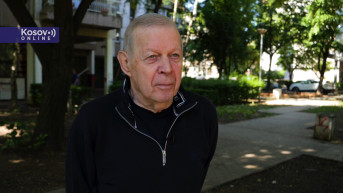
Former diplomat Zoran Milivojevic told Kosovo Online that, in the context of European integration, there are no legal differences between Serbia and Moldova, both of which have unresolved territorial issues, but that the political differences are significant, pointing to the fact that most EU member states have recognized Kosovo, as well as to the geopolitical circumstances that give Moldova an advantage in Brussels. Nevertheless, Milivojevic stressed that if Moldova were integrated into the EU despite the unresolved issue of Transnistria, Serbia’s case would inevitably come next, thereby calling into question the European Union’s own international legal subjectivity.
Milivojevic pointed out that Ukraine and Moldova do not represent ordinary cases, because neither country controls part of its own territory, where, in both instances, Russian forces are present.
“If accession negotiations were to begin, then Serbia would inevitably come onto the agenda as well, for the simple reason that Serbia’s case is treated as a sui generis case,” he said, adding that the 22 EU member states that recognized Kosovo’s independence consider that issue resolved.
Milivojevic said that, on the basis of the Stabilisation and Association Agreement between the European Commission and Pristina, the accession negotiation process is being conducted independently of Serbia, adding that this mechanism satisfies the interests of those EU member states that recognized Kosovo’s independence.
“However, Serbia is a full-fledged UN member state within its internationally recognized borders. Therefore, if the issue of Moldova and Ukraine were to be opened in any way, then Serbia would also have to be treated in the same manner,” Milivojevic said.
He nevertheless emphasized that, unlike Kosovo, no EU member state has recognized the independence of Transnistria, the so-called Luhansk People’s Republic (LPR), or the so-called Donetsk People’s Republic (DPR).
“Twenty-two EU member states recognized Kosovo — we know how and under what conditions. There is a certain kind of pressure to verify that through the accession negotiations, through Chapter 35 and, I would say, through the treatment of Kosovo under the Ohrid Agreement, as well as attempts to achieve this through de facto recognition, which is unacceptable for Serbia. In that sense, there is a difference compared to Moldova and Ukraine,” he said.
Milivojevic stressed that there is no difference in terms of international law, but that there is a difference politically. As he explained, Brussels is prioritizing the European integration of Ukraine and Moldova for geopolitical reasons.
“That is the essence and the basis for viewing Moldova as a special subject, that is, a special case, with the intention of entering into a certain process even though it deviates from principles and standards. I do not think that will be possible, for the simple reason that the European Union would thereby call into question its own position, its own international legal subjectivity, and its constitution — the Lisbon Treaty,” he noted.
Even so, Milivojevic stated that there is pressure to resolve the issues of Moldova’s and Ukraine’s European integration in favor of Western interests and against Russian interests, regardless of the international legal framework, emphasizing Moldova’s advantage over Ukraine because it is not at war, which prevents Kyiv from implementing the EU acquis.
Commenting on the statement by European Commissioner for Enlargement Marta Kos that Moldova could join the EU despite the issue of Transnistria, Milivojevic said it would be encouraging for Serbia if Brussels were to treat it as an integral state.
“If they want to treat Serbia and Moldova in the same way, as sovereign states with international legal subjectivity over their entire territories — meaning that both Transnistria in Moldova’s case and Kosovo in Serbia’s case are considered parts of their territories, and Serbia is viewed as an integral state — then that could be encouraging, although I do not think that is the case,” he assessed.
Milivojevic expressed skepticism toward Marta Kos’s statements, recalling that she recently said there had been encouraging progress regarding Kosovo’s recognition among the five EU member states that do not recognize it, after which several countries issued denials, stating that they remain committed to their position of non-recognition of Kosovo’s independence.
“There are no indications that they could abandon their principled positions. Therefore, in that case, Mrs. Marta Kos was contradicted,” Milivojevic said.



0 comments