
Kovacs: EU position on Moldova’s integration despite the Transnistria issue a positive signal for Serbia
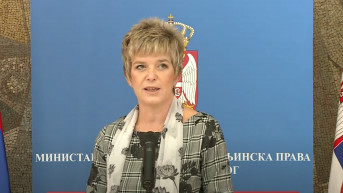
Deputy Speaker of the Serbian Parliament and Chair of the Parliamentary Committee on European Integration Elvira Kovacs said that Serbia must continue its reform process, but that it still faces specific political issues, including Kosovo, the non-introduction of sanctions against Russia, and double standards.
Kovacs assessed that enlargement is once again among the priorities of the European Union, primarily due to geopolitical circumstances and the war in Ukraine.
“The country with the greatest chances of becoming a member soon is currently Montenegro, while progress is also expected in the case of Albania, Moldova, and Ukraine. All of this should serve as an additional incentive for Serbia to implement reforms,” Kovacs told RTS.
Kovacs believes that EU foreign policy chief Kaja Kallas’s statement that the Transnistria issue will not be an obstacle to Moldova’s European path may represent a positive signal for Serbia as well.
“It is good that it is being shown that unresolved territorial issues do not necessarily have to block European integration, although there are differences between the case of Moldova and the issue of Kosovo and Metohija. In our case, the most important thing is that the dialogue progresses, and it seems to me that at this moment it is still understood that Serbia is a constructive partner,” Kovacs said.
Speaking about the specific circumstances related to Kosovo and sanctions against Russia, Kovacs noted that Serbia should not give up.
“But we must by no means give up; instead, all of this should give us wind in our sails for our reforms,” Kovacs said.
According to her, the proposal by Foreign Minister Marko Djuric for Serbia and the region to become part of the Schengen area would bring concrete benefits for citizens and the economy.
She said that Schengen would facilitate the movement of people and goods, reduce costs, and allow citizens to directly feel the benefits of European integration, recalling that the highest support for Serbia’s EU membership was recorded after visa liberalization. She added that there have been no official reactions from Brussels so far, but that some member states consider the initiative interesting and worth considering.
Commenting on EU Commissioner for Enlargement Marta Kos’s statement on integrating candidate countries into parts of the EU single market, energy, and digital networks, Kovacs said this is a mechanism of gradual approximation of the region to the European Union even before formal membership.
As an example, she cited Serbia’s accession to SEPA, the Single Euro Payments Area, which should contribute to faster and cheaper transactions.
Speaking about EU demands for alignment of foreign policy with Brussels, Kovacs assessed that this primarily relates to the issue of sanctions against Russia.
“Serbia has a lower level of alignment with the EU’s common foreign and security policy compared to other candidate countries, but the goal is to gradually increase that percentage,” she said.
She added that due to energy dependence and political reasons, Serbia remains committed to its decision not to impose sanctions on Russia.
0 comments