
Is there a connection between the usurpation of Serbian property in Kosovo and the competencies that the CSM should have?
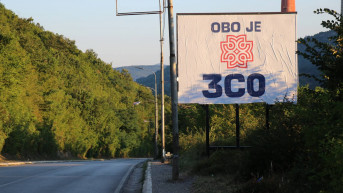
The Community of Serb-majority Municipalities, according to the 2015 agreement between Belgrade and Pristina and the version of its statute draft prepared by European officials, will have the right to own movable and immovable property. The time frame for the formation of the CSM is unknown, but what is evident is that the Kosovo authorities systematically transfer Serbian property, whether private or communal, including businesses or private land, to the central level.
The Agreement on General Principles for the Formation of the CSM from 2015 states that the Community will have the right to own movable and immovable property and be a co-owner of companies providing local services within the scope of the Community. At that time, there was a public outcry in Kosovo about what could be in the hands of the CSM and whether it could dispose of public property, especially whether it could manage natural resources.
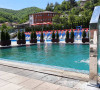
For a decade and a half, the Kosovo Privatization Agency has interfered with many Serbian companies, with the latest example being the takeover of Rajska Banja on December 19, described as "the property of the social enterprise of Kosovo", leased to the Ministry of Internal Affairs. Ten days later, the Municipal Assembly of North Mitrovica (elected in last year's elections boycotted by the Serbs) decided to allocate a 27,400 square meter plot in this municipality to the Kosovo Police at the request of the Ministry of Internal Affairs.
Kosovo Online interlocutors point out that such actions by the Kosovo authorities are just the tip of the iceberg of what is happening with Serbian property in Kosovo. They believe that the goal of the Kosovo authorities is to reduce the CSM to a shell without any competencies, economic strength, or resources.
Professor Dusko Celic from the Law Faculty of the University of Pristina with a temporary seat in Kosovska Mitrovica tells Kosovo Online that the usurpation of the Rajska Banja complex has shown that Pristina is clearly acting with a long-term strategy that has a property and legal component.
"When we talk about this long-term strategy, it is evident that someone had in mind to further render the CSM, which was supposed to be established according to the Brussels Agreement of 2013, meaningless by taking away its economic resources, aiming to make its existence pointless, and making it a mere shell without any authority, economic power, or resources", Celic says.
He adds that this strategy involves the permanent destabilization and change of the ethnic structure of the population that has been living compactly in this territory for a long historical period.
"These things are prohibited in international legal frameworks. I want to remind you that, even if the Serbian people were treated as a minority, which legally is not and cannot be the case in Kosovo and Metohija, public authorities are obliged to refrain from measures that would aim to change the ethnic structure where a certain ethnic community lives compactly in a specific territory", he notes.
Celic adds that this is a classic example of violating Article 16 of the European Convention on Minority Rights and a concrete violation of the European Convention on Human Rights, Article 1 of the protocol.
Our interlocutor believes that it is very difficult at the moment to talk about the law when everything coming from Pristina to the Serbs is politics.
"Of course, as a lawyer, I want to believe that it is possible to use all possible legal means within the quasi-legal system of Pristina, but what I doubt is the effectiveness of these means. I think it is more important to turn on all the lights at this moment and to sound all the alarms. This should not happen in the dark, neither to the scientific nor the professional community, nor to the general public, nor to the international public. It is necessary to alert the international community, the actors who play a crucial role in making various decisions in Pristina, to simply reason with these public authorities in Pristina. They behave as if they are the owners of human rights and not citizens as if they are not limited in restricting human rights; they do so completely unrestricted. There are completely unbridled legal norms in this regard and the way they are implemented", Celic says.
He says that what is happening in Kosovo, in the heart of Europe, is unprecedented anywhere in the world.
Analyst and member of the Scientific Society of Economists of Serbia, Branislav Gulan, believes that the appropriation of facilities in the "Rajska Banja" complex in Banjska by the Kosovo Privatization Agency is just a drop in the ocean compared to what is happening with Serbian property in Kosovo.
Gulan provides data indicating that the property of 1,358 Serbian companies in Kosovo has already been privatized, and he emphasizes that Serbia has invested $17.6 billion in Kosovo over three decades.
"Millions of cadastral parcels have been usurped, and a million hectares of arable land in Kosovo, 80% of which has been privatized. This was not legally allowed to be done, but it has already been done, 80 to 90% has already been privatized. Obviously, the privatization is illegal, it legalizes the ethnic cleansing of 150,000 expelled Serbs and other non-Albanians from Kosovo", Gulan stated.
He also notes that privatization in Kosovo is disguised as a 99-year lease, which, he says, is not legal and should not produce any legal consequences for Serbia and its authorities.
"Those whose property has been privatized for 99 years will be able to file lawsuits, and the question is whether it will be resolved. This can only be settled through bilateral talks, and those who are resolving this issue for us must be our friends. Serbia may win everything in court when our friends decide based on justice and rights", Gulan said.


0 comments