
Turkey takes command of KFOR in October; what does Ankara want by arming the KSF?

Armored vehicles, OMTAS anti-armor systems, "Bayraktar" drones, infantry weapons...Turkey provided the KSF with equipment worth over 100 million euros in the previous period, and intensive work is also being done on the training of personnel from Pristina.
We should not forget that at this moment the contingent of Turkish soldiers within KFOR is the most numerous (780 out of a total of 4,511), followed by soldiers from the USA (679).
In October, a general from Turkey will take over the command of KFOR, and it is expected that at that moment, Ankara will have more than 1,000 soldiers in Kosovo, most of them will be stationed in the "Sultan Murat" barracks near Prizren, and recently an agreement was signed between Ankara and Pristina on cooperation in the military field.
It should also be recalled that in 2018, the Kosovo government adopted a plan according to which the transformation of the KSF into the Kosovo Army is foreseen within ten years (in 2028), and Turkey is currently the country that invests the most in the mentioned project.
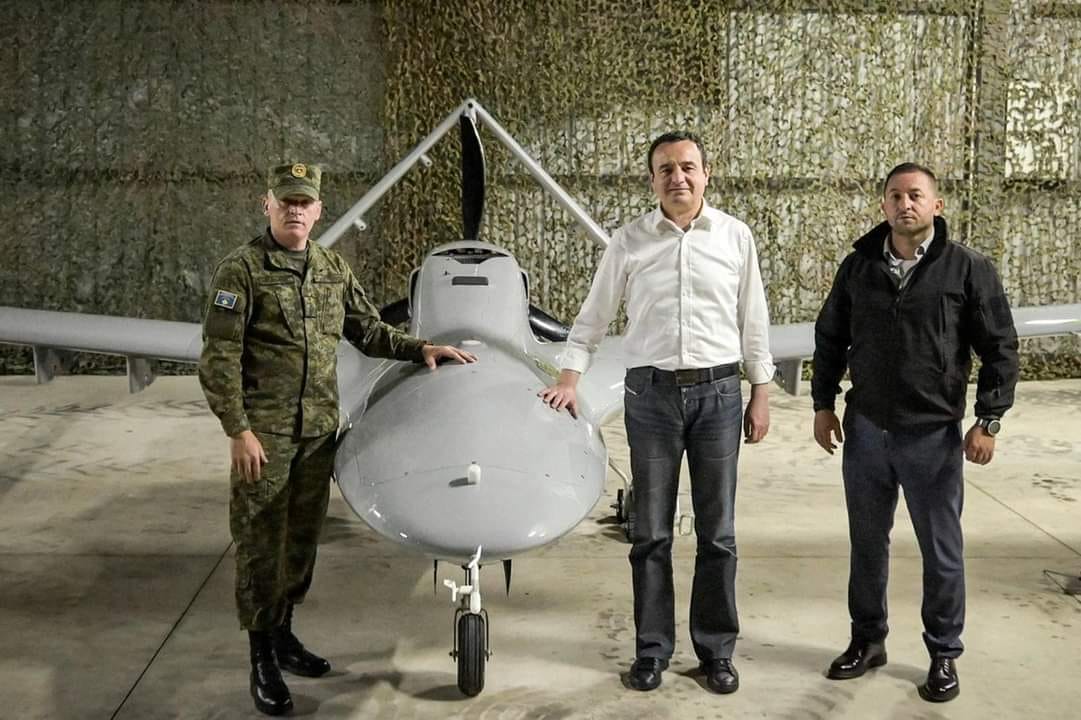
Retired colonel Bosko Zoric states for Kosovo Online that Turkey is playing a double game.
"On the one hand, they say that they are a partner and a friend of Serbia and that they are advocating for peace in Bosnia and Herzegovina, and here they donate weapons to the KSF. When this crisis escalated, they sent more than 500 soldiers to Koisova, and I personally think that the presence of Turkish soldiers is not good for the security of our people in Kosovo. When it comes to the acquisition of drones, KFOR is the only armed force according to Resolution 12 44 that has the right to use the equipment and approve flights. Now, it is indicative that the arrival of the Turkish general and at the head of KFOR, where so far the American, German, and Italian commanders have alternated, recently also a general from Hungary, coinciding with the procurement of drones from Turkey," Zoric says.
Defense Minister Milos Vucevic told "Pink" that Turkey delivered serious systems to Pristina.
"We talked to the Turkish ambassador, the state's interest is to have the best possible relations with Turkey, it is a strong player. It is a geopolitical player. Its influence in the Balkans must not be ignored. Just listen to how Erdogan talks about the commemoration of the anniversary of Srebrenica. It is more dangerous than these technologies. Until now, the Kosovo Security Forces could not fly a kite on a string, and now they are raising some drones. They offered us "Bayraktar", but the president refused. We will take something else, better. They don't have money to buy it, it's a donation. All Albanian political parties have the same goal, it's just a matter of implementing or reaching that goal. And that is for Kosovo to be completely independent and to go for unification with Albania. Kurti is transparent, radical," Vucevic says.
Researcher of the Center for Strategic Analysis Darko Obradovic states that Ankara considers Kosovo as its sphere of influence.
"The wider conception of Turkish foreign policy is also broken in terms of the delivery of offensive military equipment. Instead of sending those Bayraktars to Ukraine, they are delivering them to Kosovo at a time when it is neither productive nor expedient. Security will be within the strict framework of NATO in accordance with resolution 1244. No armed clashes are possible while provocations at the tactical level are on a daily basis. The delivery is a direct message to Kurti's narrative. It seems that Serbia should apply the so-called Greek model of lobbying in Washington as a form of countermeasure," Obradovic believes.


comments