
Two years since EU sanctions on Kosovo: Who has suffered and were they effective?
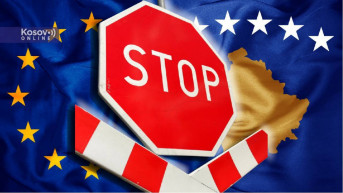
The punitive measures imposed by the European Union on Kosovo two years ago have, according to economic experts, caused significant financial losses due to the suspension of many projects. However, they have not succeeded in changing the approach of Kosovo’s authorities toward the north. Instead of de-escalation—demanded by Brussels—observers point out that the last two years have brought a series of new unilateral actions. Moreover, elements of the sanctions such as suspending bilateral meetings and excluding Kosovo from high-level events were, in practice, never fully implemented.
Written by: Dusica Radeka Djordjevic
Kosovo was officially informed of the EU’s restrictive measures on 28 June 2023. Two years on, Kosovo finds itself under what could be described as a phase of monitored easing of sanctions.
During her May visit to Kosovo, Kaja Kallas, the EU High Representative for Foreign Affairs and Security Policy, stated that the Union was gradually lifting the measures and that full removal would require de-escalation in the north.
“Closing institutions undermines de-escalation efforts,” Kallas said—referring to the closure of institutions in northern Kosovo supported by Serbia, which continued even after this warning from the EU official.
The original sanctions, announced in June 2023, came with specific conditions: the immediate cessation of police operations near municipal buildings in the north, that mayors elected in boycotted elections temporarily perform duties outside municipal buildings, and the urgent organization of early elections in all four northern municipalities.
The EU had also stated: “Kosovo will not be invited to high-level events, bilateral visits will be suspended—except those directly aimed at resolving the northern crisis within the EU-facilitated dialogue. Programming of IPA funds for 2024 is on hold.”
So, Who Was Affected and Were the Goals Met?
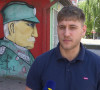
According to Aleksandar Sljuka of the NGO New Social Initiative, the EU clearly did not achieve its intended goals.
“By imposing sanctions, the EU sought to signal that Kosovo’s government must stop unilateral actions and commit to de-escalation. But in reality, we saw the opposite—numerous new unilateral actions and further on-the-ground escalations. The fact that EU officials are now discussing the lifting of measures, as Kosovo officials have repeatedly demanded, seems more like a farce, given that the situation on the ground is deteriorating daily,” Sljuka told Kosovo Online.
He believes the EU is now stuck in a dead-end, lacking internal consensus on lifting the sanctions while also seeing no improvement in the situation.
Sljuka adds that Kosovo’s citizens have borne the brunt of the sanctions.
“We’re talking about hundreds of millions of euros lost from various EU funds. However, the public doesn’t link this to Kurti’s policies, which triggered the sanctions. Instead, the economic hardship is likely perceived as part of a broader global crisis,” he explains.
He notes that the sanctions also impacted Albin Kurti, whose support declined in the February elections compared to 2021—though this, he says, is not the only factor.
“The problem is that many Kosovars, especially Kosovo Albanians who form Kurti’s support base, still don’t recognize how harmful his policies have been to them. Kosovo Serbs have felt it acutely and know these policies are detrimental. We’ll see whether voters will eventually realize, especially if the sanctions persist, and whether they will penalize Kurti at the ballot box—or continue to be misled by nationalist rhetoric instead of demanding real socioeconomic progress,” Sljuka adds.
He also claims that EU member states didn’t consistently adhere to the sanctions: “Despite the suspension of high-level meetings, some EU representatives continued to meet with Kosovo officials. The measures were never fully treated seriously. A year ago, EU’s former High Representative Josep Borrell even recommended lifting them before his mandate ended. But again, there is no consensus within the EU on this.”
Latinovic: Political Sanctions Largely Symbolic
According to Branka Latinovic, former ambassador and member of the Forum for International Relations, the most tangible impact of the sanctions was felt in the suspension of negotiations on the Stabilization and Association Agreement (SAA) and in the freezing of financial projects.
“There have been no commission meetings or discussions regarding the SAA since the sanctions were introduced. Projects planned for EU funding have been halted—and Kosovo is a major recipient of EU funds. These include road and railway rehabilitation, heating systems, sewage networks, and more. Although we don’t have exact figures, the impact is evident,” she told Kosovo Online.
In contrast, Latinovic notes that the political aspect of the sanctions—excluding Kosovo from high-level forums—had little to no effect.
“Kosovo representatives continued to attend major regional meetings, except in Ukraine (Odesa), and that was due to a decision by the Ukrainian authorities—not the EU,” she said. She added that Kurti's recent absence from regional events likely stems from his government now being in a caretaker role.
Regarding Kaja Kallas’s remarks about gradually lifting the sanctions, Latinovic points out an inconsistency:
“Her justification was quite interesting—saying the EU is easing sanctions as a reward for peacefully conducted local elections and meeting certain standards. But these are not the original reasons why the sanctions were imposed. So we now see sanctions being lifted for different reasons than those for which they were introduced,” she said.
However, she acknowledges that Brussels is maintaining leverage over Pristina:
“The EU retains coercive power—sanctions could be reinstated if Pristina doesn’t behave as expected, especially in the north. It’s a balancing act, though I don’t believe it’s producing meaningful results. What’s truly needed is for all parties to return to the negotiating table and resolve the urgent issues affecting the Serb population in the north,” Latinovic emphasized.
She concludes that the EU will closely monitor developments and warns that further unilateral moves by Pristina could prompt renewed sanctions.
Grxhaliu: Over €750 Million Lost
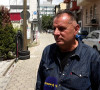
Former head of Kosovo’s Chamber of Commerce, Safet Grxhaliu, estimates that Kosovo has lost over €750 million due to the EU sanctions.
“For a small country, that’s an enormous amount,” he said.
He added that Kosovo has been excluded from several politically and geostrategically important EU activities.
“The fact that Montenegro and Albania have made major progress toward EU integration while Kosovo remains at a standstill says a lot. It’s a clear sign of who’s losing and how damaging these sanctions have been for Kosovo,” Grxhaliu told Kosovo Online.
On the topic of easing sanctions, he clarified:
“There has been no formal decision by the EU Council of Ministers. Kaja Kallas may have said they are being lifted gradually, but without a formal resolution, these are just political statements meant to soothe rather than effect real change. Either sanctions are lifted or they are not. Until we receive an official decision, everything else is symbolic,” Grxhaliu concluded.

0 comments