
US sanctions and reinforcement of KFOR with 700 soldiers: Will Kurti have to withdraw from the north?
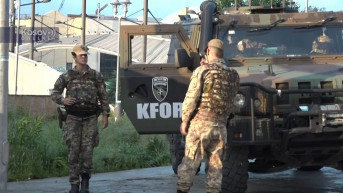
Punitive measures imposed by Washington on the Kosovo government for provoking conflicts by using special police and forcible entry into Serb-majority municipalities in the north of Kosovo, followed by NATO's decision to reinforce the KFOR Mission with an additional 700 soldiers, opened the question of whether Albin Kurti overplayed his hand in spite the US and what follows in the development of the current very dramatic situation.
That Kosovo's independence is not a fait accompli was "announced" to Kurti by the imposition of punitive measures for the first time by the US's biggest allies. KFOR refers to the mandate from Resolution 1244 of the United Nations Security Council, so some are wondering what will happen next after Pristina is faced with the fact that Kosovo is only a protectorate under the administration of the UN.
As stated by the American Ambassador to Kosovo, Jeffrey Hovenier, at this moment, "the US is not very enthusiastic about engaging with countries that do not recognize Kosovo", the ramp had been lowered for visits by Pristina officials to Washington, and it should not be expected that any of the more important political figures from the US will visit Kosovo in the near future.
The US is asking Kurti to urgently de-escalate the situation in the north, to withdraw the members of the Kosovo Police from the municipal buildings in Leposavic, Zvecan, and Zubin Potok, and not to insist that the newly elected mayors, who won their mandate in elections where the turnout was only three percent and which the Serbs boycotted, perform their functions from these facilities.
These harsh messages were followed by NATO's decision that, due to the latest events in the north, KFOR will be a buffer zone between disaffected citizens who are peacefully walking around and Kosovo Police units that fire tear gas and stun grenades with them.
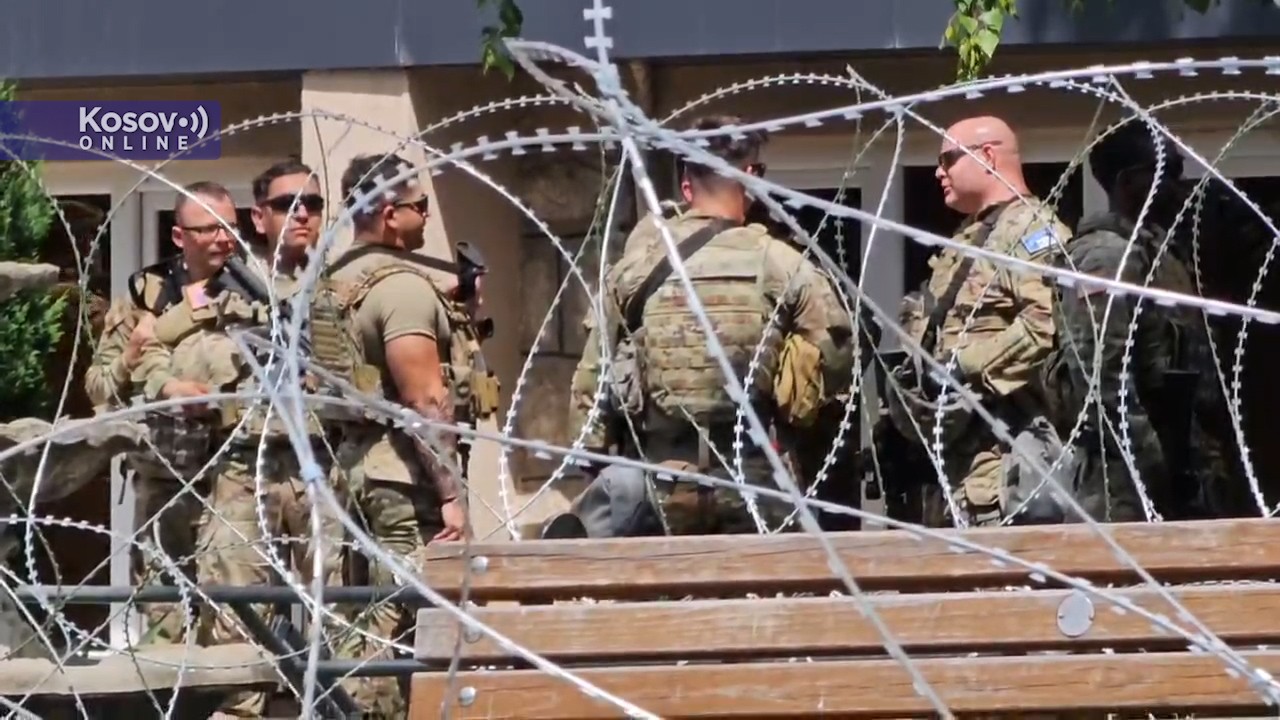
The former head of diplomacy, Vladislav Jovanovic, tells Kosovo Online that it is now clear to the Americans that the Albanians in Kosovo may have the right to a state, but not an independent one.
"That state must only be in Serbia, and this is something that I personally expect could be the result of a quiet evolution of this issue. Over time, they realize that they have a 'hot potato' in their hands and that it is better to let it cool down a bit. Since they recognized Kosovo, the list of priorities for the US has changed. America is focused on the situation in Ukraine, with the aim of weakening Russia as a great power and if possible dissolving it as a state. That priority of the US does not allow some minor conflicts to appear in her background, especially if it is without the knowledge and interest of Washington," Jovanovic says.
He adds that Pristina, which "America has assigned the role of an agent-provocateur to continuously annoy and provoke Serbia", is pulling the US out of safe and established positions into a clear space where it could be exposed to risks it does not want, even war risks.
"At this moment, America does not like Kurti's playing tricks and the fact that he is provoking Serbia and the Serbs. The US wants Serbia to recognize Kosovo and to end the issue, but not to lead to an armed conflict, because that would be against American interests in relations with Russia and China that would certainly use it against Washington. That is why America must act on orders. Kurti has been sent demands, if he does not do it, other orders will come, including telling them – “we helped you, you got a country, you misused it against us and our interests, that country will remain but cannot be independent”. And to return them to a political solution with Serbia," our interlocutor points out.
He says that the strengthening of KFOR forces with 700 additional soldiers is a precautionary measure against possible unpredictable, undisciplined, and stubborn attacks by Albanians who, he indicates, are in a hurry to clear Kosovo of any physical presence of the Serbs.
"This sends them a message that Kosovo's independence is not a finished and completed matter. They hint that nothing is final until it becomes final. Their independence is not final, and in order to become so, they need to align themselves with America's interests. Strengthening KFOR is returning to the game of the Resolution 1244 of the Security Council because it is KFOR's obligation to preserve peace and security in the southern Serbian province. KFOR is not only in Kosovo to protect the authority of the Resolution, which, to be honest, it has pushed under the carpet for years, but also to protect American geopolitical interests in the Balkans. In this, at the moment the US interest is not to provoke an armed conflict because that would automatically delay America's interests elsewhere. It would also renew the image of America as a country that intervenes armed in other countries. But Kurti and the Albanians who think they can bite into the apple of the paradise of independence as soon as possible, risk that the case of Adam and Eve will happen to them - that they will be expelled from the paradise of independence," Jovanovic concludes.
Slobodan Zecevic from the Institute for European Studies assessed that the US had the main say in determining the direction of everything that happened in Europe, especially in the Balkans, and pointed out that it was high time for Washington to let the Albanian authorities in Kosovo know that they could not carry out violence against the Serbs.
"When it comes to the US decision to punish Kosovo, it is a decision in the right direction, in order to let the Albanian authorities know that they cannot commit violence against the Serbs, commit violence against their rights and commit violence against democracy, in the sense that they want to impose that three percent of the Albanian population govern Serbian municipalities," Zecevic told Kosovo Online.
He believes that although this US step is positive for Serbia, it will still not be enough and they will have to take some more radical steps, specifically, to ask the government in Pristina to withdraw special units from that part of Kosovo.
At some point, according to Zedevid, economic sanctions against the authorities in Pristina will also be necessary, given that Albin Kurti will certainly not just give up his current policy.
Zecevic emphasized that Kosovo was a UN protectorate, reminding that KFOR troops were in charge of maintaining order and peace in that territory.
"The biggest problem here is because the Western countries recognized the independence of Kosovo and therefore stepped out of the framework set by the UN. I think that the Western policy towards the region was completely wrong and, in my opinion, the surrounding countries should have been integrated with Serbia, and Serbia integrates into the Euro-Atlantic processes. I think it was much better and more useful for Western interests in the Balkans than what they did - the war against Serbia, the splitting of the Serbs, and the reduction of Serbia's influence in the region, because Serbia is essentially the main factor of development and stability in the Balkans," Zecevic believes.
America, he points out, has always had the main say in Kosovo because that country is at the head of the Western alliance, while, as he adds, other countries and ambassadors have only followed their policy.
Therefore, he concluded, America absolutely had the main say in determining the direction of everything that happened in Europe, especially in the Balkans.
"We saw in Bosnia and Herzegovina that if there was no Dayton, there would be no peace in those areas. America decides on peace and war in the Balkans, therefore America is the main factor. The others are only there to play their own role until America intervenes. The US is the leader, they are the leader and all other countries practically listen to them," Zecevic said.
Aleksandar Mitic, a research associate at the Institute for International Politics and Economy, said that the fact that the US had punished Pristina was a kind of warning and admonishment that Washington had control over the security situation in Kosovo, but that essentially the US did not give up its position on the issue of Kosovo's independence.
"It is a purely tactical "knock-banging" of Pristina, which has a role in the play in which Washington wants to show that it is concerned about the security situation in Kosovo and Metohija, but also in the wider Balkans. It is not about any serious sanctions, nor is the US changing its policy towards the Kosovo issue even by a millimeter," Mitic said.
When asked to comment on the fact that NATO would deploy 700 additional soldiers to Kosovo and whether this meant that Resolution 1244, according to which Kosovo was a protectorate, was coming back into play, Mitic assesses that the West is not comfortable with the escalation in Kosovo, given the other geopolitical circumstances and that uses all means to calm the situation, thus instrumentalizing UN Resolution 1244.
Belgrade, he recalls, has been warning NATO for years that it should not reduce KFOR forces and strongly opposed the process of creating a "Kosovo army" which, he adds, was worked on bilaterally by certain members, primarily the US.
"Especially since NATO simultaneously rejected the return of Serbian forces to Kosovo and Metohija in accordance with UN Security Council Resolution 1244, those appeals did not receive an echo because the goal of the leading Western countries is the legitimization of "independent Kosovo". Considering the difficult situation on the Ukrainian front, NATO doesn’t want the escalation in Kosovo and Metohija at the moment, which it cannot fully control," Mitic said.
However, he points out that he does not expect further confirmation of Resolution 1244 of the UN Security Council, but the continuation of its tactical instrumentalization with the aim of achieving the goals of the leading NATO members who recognized the "unilateral declaration of independence of Kosovo".
0 comments