
Where does the crisis in the north lead: What is KFOR doing and can a larger-scale conflict be avoided?
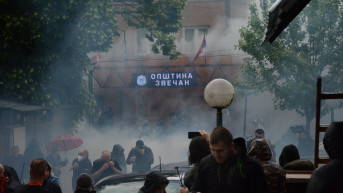
The violent incursion of Kosovo Special Forces into the municipal buildings in Leposavic, Zvecan, and Zubin Potok in order to provide access to the Albanian mayors elected without the participation of the Serbs and with only three percent of the voters, has culminated in a crisis that threatens to lead to a larger-scale conflict, and Kosovo Online interlocutors warn that things can get completely out of control like never before.
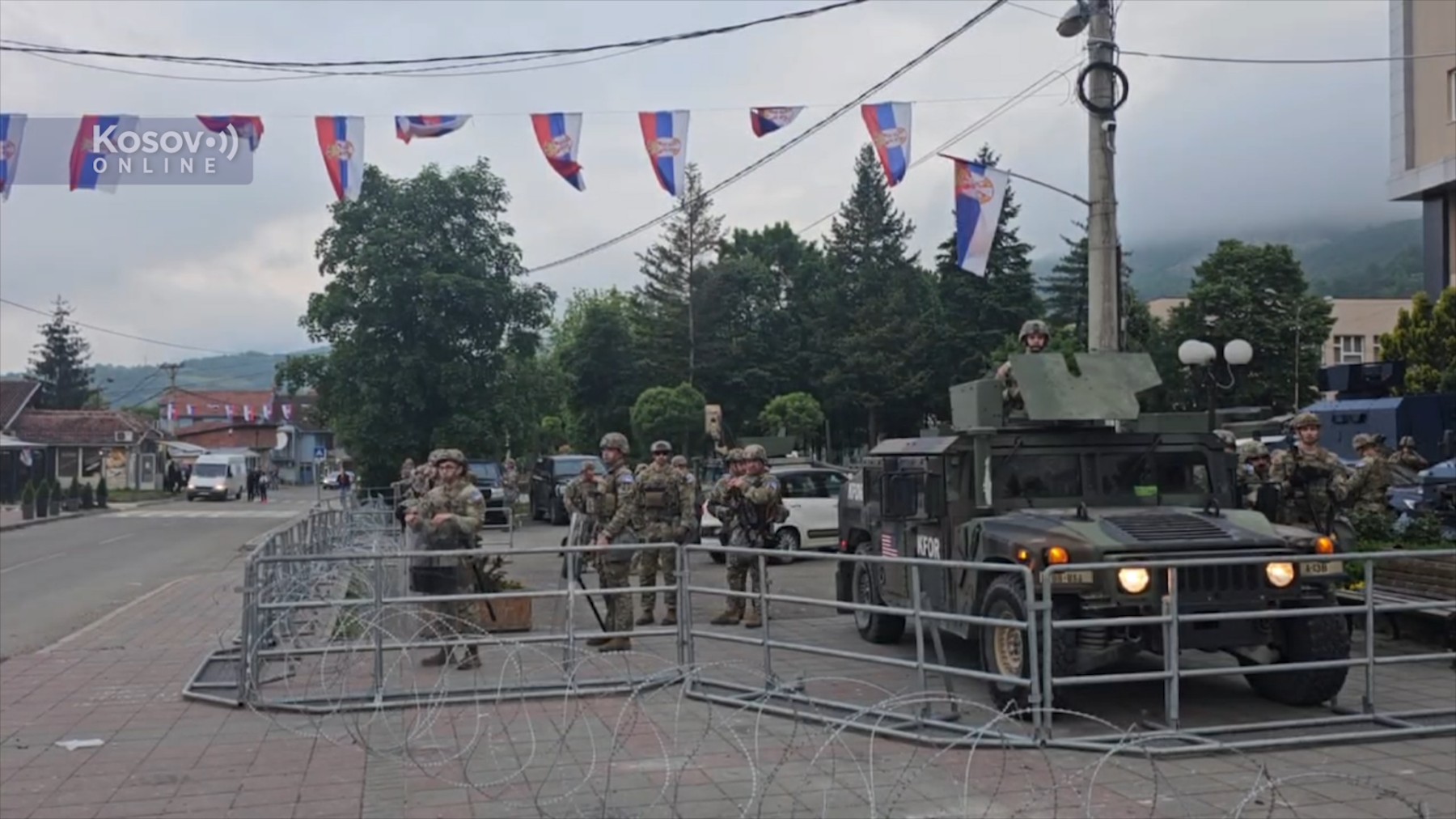
The "landing" of armored vehicles and policemen armed with rifles, along with tear gas and shock bombs, which Kosovo Prime Minister Albin Kurti calls "a normal post-election process", received the assistance of KFOR members in the north of Kosovo in the previous two days, which further complicated the whole situation.
The Serbian Army was raised to the highest level of combat readiness due to the "brutal use of force by Kurti and his forces against the Serbs in Kosovo and Metohija" and this decision remains in force until further notice. Belgrade was forced to take this measure because KFOR did not perform its work in accordance with Resolution 1244 of the UN Security Council and the Military-Technical Agreement from Kumanovo during the dramatic events during the occupation of municipalities in the north.
From the Serb List, they requested that Belgrade suspended the dialogue with Pristina until "Kurti's fictitious mayors" withdrew and until the ROSU special units left from the north.
Although the EU, US, and the Quint strongly condemned the violent action that Pristina carried out in the north, and US Secretary of State Antony Blinken even threatened serious consequences for US-Kosovo relations, Kurti retorts that he has the support of the international community for his actions.
That things can very easily get out of control due to Pristina's unilateral moves and violence has apparently become clear even to those who until now have almost unconditionally supported Kurti's policy. That is how the rapporteur of the European Parliament for Kosovo, Viola von Cramon, during yesterday's tour of the municipal buildings in the north, which were occupied by the Kosovo Special Forces without diplomatic gloves, asked the policemen - "What in God's name brought you here". This was followed by her comment in which the essence of the political and security senselessness of the elections held in the north was, "If the mayors you are protecting were elected by the citizens in the elections, there would be no need to protect them".
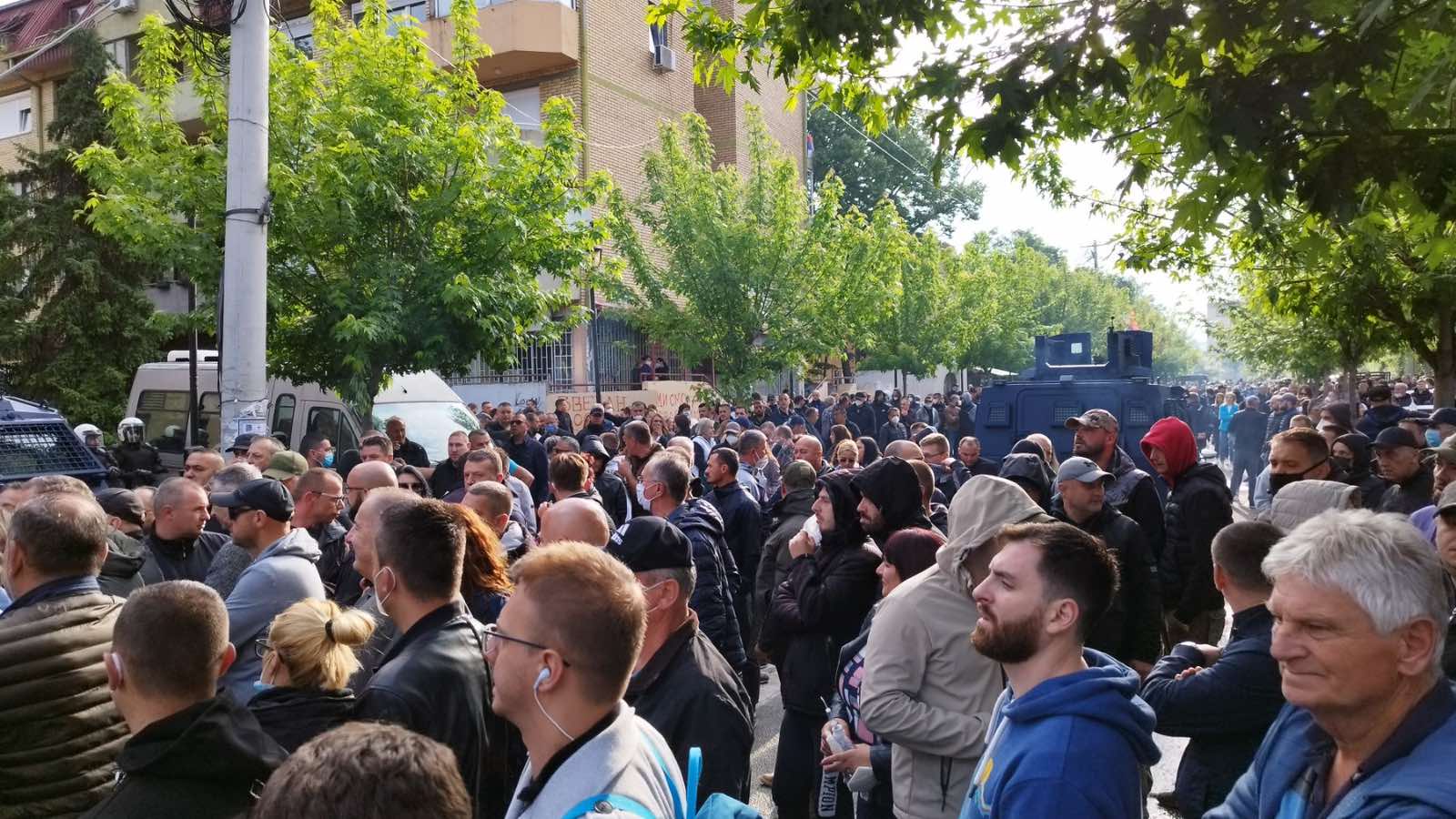
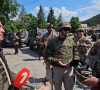
Since Monday, the situation in the north has become even more complicated, municipal buildings in the north are surrounded by a large number of members of the KFOR and the Kosovo Police, and citizens are protesting every day, demanding that the occupied buildings be freed, that the illegitimate mayors leave, as well as the Kosovo Special Forces.
The former president of the Executive Council of Kosovo and Metohija, Zoran Andjelkovic, tells Kosovo Online that whether the situation in the north will escalate or not depends on the international community, which should decide whether to reason with Kurti.
"The Quint and Kurti's sponsors didn't stop him, and that led to violence in Zvecan. If KFOR had reacted as it should according to its mandate, if they had prevented the invasion of the Kosovo police and the forcible introduction of the mayor, all of this would not have happened. KFOR allowed the Kosovo police to deal with the citizens and thus became an accomplice in the attack on the Serbs. If God forbid, some more serious incidents occur and someone gets hurt, it will be difficult to avoid larger-scale conflicts. I am sure that two-thirds of Serbia would not allow the suffering of Kosovo Serbs; some new cruelty to be repeated. Neither the Serbs from Kosovo nor Belgrade would watch such a thing with 'crossed arms'. The country and the people must defend themselves. Whether the conflict will be avoided will depend on Kurti's move and how the countries of the Quint will behave," Andjelkovic states.
Regarding the harsh condemnation of Kosovo's Western allies for the activities carried out in the north, which "rebuffed" Kurti like a wall, because he says that the elected Albanian mayors will work from stolen municipal buildings, Andjelkovic says that what he is doing now is the result of that that he was not punished for any previous unilateral move and violent policy towards Kosovo Serbs.
"When you have support for the creation of a fake state for 15 years, then you think that it is given blankly and that you can do whatever you want. When a child does whatever he wants for 15 years, his parents allow him everything, then he no longer has to ask but takes for granted that this support exists," he says.
He adds that it is right that the EU, the US, and the Quint have condemned Kurti's violent actions, but he adds that he is so predictable that it was clear that he was going to carry this out in the north.
"They had to give him a stern warning and restrain him before the police broke into the municipal buildings. And KFOR had to react sooner because Kurti is not an unpredictable man. It was also known what he would do with the elections and with the inauguration of the mayor and with the occupation of buildings. Therefore, the task was to warn him before that and for KFOR to react before breaking into the buildings. What is KFOR actually doing in Kosovo? It waits for the Serbs to be killed and the churches to be set on fire before reacting. I understood that they were there to prevent that, and now I see that they are calmly watching the Kosovo police attack the Serbs with their bare hands," Andjelkovic states.
He adds that KFOR and EULEX have the function of an important security factor in Kosovo, but, unfortunately, "only on paper".
"In practice, during the last few actions taken by Kurti, I did not see any serious action taken by them to prevent it. The task of the security forces is to prevent something and not run after the consequences. And they did not even react to the consequences, except that they were forced to condemn. Because the whole world would have laughed at them if they hadn't done it," our interlocutor says.
If Kurti continues with his destructive policy and insists that the newly elected mayors in the municipal buildings in the north, surrounded by armed Kosovo Special Forces, try to work, Andjelkovic says he hopes that the Serbs will completely ignore them.
"The best thing would be for them to continue to lead their lives relying on Serbia and Belgrade, and not to notice those Albanian mayors at all, like any plague that appears in society."
The retired general and former head of the Military Security Agency of Serbia, Mitar Kovac, points out that Pristina is persistently abusing Serbia's insistence that problems be solved exclusively by peaceful means, and that the Albanian authorities are step by step endangering the Serbs in the north of Kosovo, taking measures of classic occupation, bypassing the basic democratic procedures.
And he believes that the key to calming the situation lies in the hands of the US, the EU, and KFOR.
"If they continue not to react to the fact that Pristina is trying to impose an occupation system on the Serbs, they should know that it will not pass without resistance. Kurti may have a plan to draw the Serbs into a conflict with NATO, but if there was reasonable behavior by KFOR, we would not found themselves in that position in the first place to defend the Albanian police against the local population. Any alignment of them on that side is extremely dangerous. The use of force by KFOR makes meaningless the role of this mission, which is there not to silence the Serbs but to protect them. What is most painful is the fact that the institutions deployed there with the mandate of the UN do nothing to prevent the Albanian authorities from behaving in that way, from bringing their police forces to the north, building bases, setting up checkpoints like an occupying power, to harassing and shooting at the Serbs. All of that is somehow accepted by the forces of KFOR and EULEX, they simply tolerate this behavior of the Albanians in terms of local elections and accepting and applying the results of that vote, which would never and anywhere in the world be accepted if the minority part of the people, three percent of them, be in a position to exercise power and terrorize the Serbian majority," Kovac says.
Democratic means are available to the Serbs in Kosovo and it would be legitimate, he says, to prevent the establishment of power in four municipalities without them.
"The demands of the representatives of the Serbs from Kosovo to withdraw the Kosovo police units with rifles, to not install Albanian mayors, are correct. We should be persistent in these demands, if Serbia gives in now, this imposed situation will very quickly be forgotten and accepted by the West as something normal, that the minority terrorizes the majority," he emphasizes.
Preparing for the continuation of violence in the north, according to Kovac, could be Pristina's scenario.
"We see how they behave arrogantly towards the people for any conversation, that they removed the symbols of the majority people from the municipal buildings in that area and that, if the Serbs resist, I believe that they are ready to use force, and that is the risk that is floating in the air. In the situation of the use of means of coercion by the armed formations and the police and the so-called 'Kosovo army', Serbia will not have much choice. Regardless of the fact that KFOR undertakes activities according to the administrative line and that this Mission allowed exercises to be carried out in Kosovo in violation of the UN mandate recently," Kovac says.
The further development of the situation, according to him, depends on the further moves of Pristina, but also on the moves of the Serbs and Serbia.
"If we accept this occupation as a finished state and do not take any measures, then Pristina will continue the occupation process of building bases, deploying their security forces. If there is civil democratic resistance and they demand the rights of the Serbs in the north of Kosovo, I believe that they will be willing to use force. And this is what can lead to a conflict between the police forces of the so-called state of Kosovo and the Serbs. KFOR has a very important role in all of this, but until now it has been biased. I don't believe that it will be objective now either and stand up for the protection of the Serbs, the general points out.
He adds that, unfortunately, the previous condemnations of Pristina's moves are not implemented on the ground.
He expects that the newly elected mayors will try in the coming days to come to the occupied municipal buildings to allegedly do their work.
"That is one of the scenarios of the conflict. The Serbs should not allow the legitimization and legalization of their rule in the north, because they neither represent the people nor are they the majority of the people," he concludes.

0 comments