
What can be expected from KFOR if the Kosovo government orders the opening of the bridge over the Ibar?
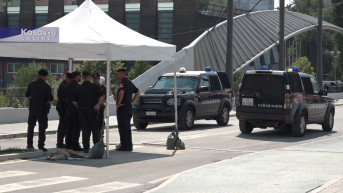
The KFOR mission has increased its presence at the main bridge over the Ibar, which connects North and South Mitrovica, starting from Monday. Today, KFOR soldiers, accompanied by two armored vehicles and dogs, conducted what they described as a routine patrol. If the Kosovo government were to decide to open the bridge for road traffic despite numerous calls from the European Union and Washington to address this issue within the Belgrade-Pristina dialogue, how would KFOR respond? Interviewees for Kosovo Online expect that members of this mission would not withdraw from the bridge in that case.
Written by: Dusica Radeka Djordjevic
In recent days, KFOR has reiterated that any decision to open the Ibar bridge must be made within the framework of the dialogue and that they would not hesitate to intervene against any developments that could impact safety and regional stability. However, they have not specifically stated what such an intervention would entail.
At the same time, KFOR emphasizes in its statements that they act as the "third security responder," following the Kosovo Police and EULEX, who are the first and second responsible for security in Kosovo.
Would KFOR only react if there were unrest on the bridge, or if the Kosovo government officially gave the green light for its opening, would their members remain on the bridge and prevent vehicles from crossing from the southern side to North Mitrovica?
On Sunday, Serbian President Aleksandar Vučic stated that new provocations in Kosovo are expected and that the Kosovo authorities are preparing to forcibly open the Ibar bridge. He also expressed hope that KFOR would react and prevent the opening of the bridge.
"I call on KFOR to react and not allow the bridge to be opened unilaterally because we respect KFOR and believe that they will do their job," Vučic emphasized.
An appeal to KFOR to keep the bridge closed was also made by 415 women from northern Kosovo, who signed a letter delivered yesterday to the Carabinieri on the bridge, addressed to KFOR Commander Ozkan Ulutaş. The letter also highlights the generally difficult situation of women in northern Kosovo due to recent measures by the Kosovo government, and as noted, the signatories are women from all walks of life who do not represent any initiative or political party.
Dragan Sutanovac, President of the Council for Strategic Policies and former Minister of Defense of Serbia, told Kosovo Online that he expects KFOR forces not to move from the bridge without an agreement in the dialogue and that they will not allow it to be opened in the way that Albin Kurti desires.
"For who knows how many times, Kurti is trying to provoke a negative reaction from the Serbian side through his conflict-driven policy and to create conflicts in which the Serbs, primarily, would clash with KFOR. However, what is interesting this time is that both the Quint ambassadors and the United States have very precisely and clearly stated that the issue of opening the bridge over the Ibar is a matter for the dialogue in Brussels. What I expect from KFOR is the status quo in the current situation. KFOR is currently present on the bridge, and I think their forces will not move from the bridge and will not allow the bridge to be opened in the way Kurti desires. My conviction is that Kurti knows this and that he has information that things will remain as they are," says Sutanovac.
Sutanovac adds that through his conflict-driven policy, Kurti continuously stirs up nationalistic fervor among Albanians in Kosovo, which evidently strengthens his position and fuels his energy to continue implementing anti-Serb policies.
Regarding the chances of finding a solution to the bridge issue at the negotiating table, Sutanovac states that while Kurti is being urged to resolve this issue through dialogue in Brussels, he does not want to participate in the dialogue. On one hand, the status quo benefits him by justifying all his failures in governing Kosovo, while on the other hand, it raises nationalistic expectations, fuels nationalism, and feeds the public with messages that are clearly unrealistic, even for those who consider themselves allies of Kosovo.
For the Democratic Party of Kosovo MP Xhavit Haliti, there is even a possible scenario in which a conflict could arise between the Kosovo Police and KFOR if the Kosovo government continues to insist on opening the Ibar bridge. However, Sutanovac does not believe that Albin Kurti would dare to confront the international community, especially not KFOR.
"Considering that the Kosovo Police are equipped by Quint countries and supported in training by KFOR, I think the possibility of a conflict between the Pristina police and KFOR units is out of the question. No one in their right mind would dare to do that," Sutanovac states.
Marko Milenkovic from the NGO "New Social Initiative" says he expects KFOR to stop the opening of the main bridge over the Ibar if the Kosovo government unilaterally makes such a decision and that this will not happen in the coming weeks. If the bridge is opened, Milenkovic emphasizes that it will happen with clear opposition from the citizens living in northern Kosovo, not only from Serbs but also from other nationalities, and with opposition from the international community.
"So far, we haven't seen concrete reactions from the international community when unilateral moves were made, and KFOR's response on the ground was lacking. This time, I expect a more concrete reaction from KFOR to ensure that the bridge remains closed, which is primarily guaranteed by the dialogue. We've heard that the international community is calling for the dialogue to continue and for the bridge to be opened through dialogue. I expect KFOR to protect both the dialogue and the positions of international partners, to stand on the bridge and ensure that it is not opened. It is encouraging that KFOR is still on the bridge, that they were there even on the day the tests were conducted, and that the number of their vehicles has increased," Milenkovic tells Kosovo Online.
He recalls the appeals from citizens on this issue, including the protest held by Serbs, and the letter from over 400 women clearly opposing the opening of the bridge, which was handed over to KFOR representatives.
"Therefore, the Serbs and communities living in the north have clearly stated that they do not want the bridge to be opened at this moment, as it raises additional concerns, primarily regarding security, and that this issue is primarily viewed through that security aspect. From Pristina’s perspective, this is a political act connected to the campaign ahead of the upcoming elections. We still do not have a clear stance from the mayor of South Mitrovica regarding the opening of the bridge, but Vetëvendosje (Self-Determination Movement) is persistent in pushing for it to happen in order to gain additional points in the elections," Milenkovic assesses.
Vuk Velebit, the Executive Director of the Pupin Initiative, also told Kosovo Online that he expects KFOR to act in accordance with its mandate if the government in Pristina decides to open the main bridge over the Ibar without a prior agreement within the framework of the dialogue.
"We have seen that the Carabinieri have increased their presence on the bridge, almost blocking it with the number of vehicles. It seems to me that this is also a message to Albin Kurti that KFOR might not allow the bridge to be opened. I think that in this situation, we don't even need to speculate about what the reactions would be if this were to happen. The stance of the international community, primarily the stance of the West, has been clear that there is no support for such an action and that Pristina’s unilateral moves will not be tolerated, meaning that Pristina would need to consult with the international community before taking any action," Velebit says.
He reminds us that the bridge over the Ibar holds great symbolic significance for the people living in North Mitrovica and notes that its opening might even lead to the dissolution of North Mitrovica as a municipality.
"The sensitivity of this issue is evident from the number of incidents that have occurred on that bridge over the past 25 years and the fact that it has been closed and guarded by KFOR personnel since 1999. Kurti's announcement that something like this might happen is yet another escalation of tensions. I would like to see a much clearer and more concrete policy from the West that goes beyond just saying, 'we are concerned,' to actually taking action. I believe that Serbia and the Serbs living in Kosovo and Metohija should view KFOR as an ally because KFOR is the only institution that can protect the Serbs living there," Velebit says.
He emphasizes that there is currently a clear stance within the international community that Kurti and the Pristina administration are the problem. However, the challenge for the Serbian community living in Kosovo is that despite statements and condemnations from the international community, expressing concern about this, there is no follow-up action, and it has rarely been seen that the Pristina administration has faced any serious consequences for its actions.
Meanwhile, the U.S. State Department has stated that it does not support any changes to the current status of the bridge, warning Prime Minister Albin Kurti not to proceed with unilateral actions, as reported by the Pavlovic Today portal. On the other hand, Kurti stated today that the opening of the bridge is not directed against anyone, least of all against Kosovo's partners, and that he will continue discussions and coordination with them.



0 comments