
What does diplomatic presence or absence in Kosovo say about relations with Pristina?
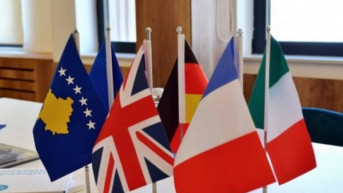
Slovakia, one of the five European Union countries that do not recognize Kosovo, will close its Liaison Office in Pristina by the end of the year. Poland and Ireland, which were among the first to recognize Kosovo, have never opened embassies in Pristina. Warsaw covers Kosovo from Skopje, and Dublin from Budapest. What does the diplomatic presence in Pristina say about the level of relations between Kosovo and its recognizers and non-recognizers?
Written by: Dusica Radeka Djordjevic
Kosovo is recognized by a little over 80 countries, but according to data from Kosovo's Ministry of Foreign Affairs website, only 22 of them have embassies in Pristina. Among them is Turkey, which also has a consulate in Prizren. Belgium, also a recognizer, does not have an embassy but a Diplomatic Office. Among the non-recognizers, according to the website of Kosovo’s Ministry of Foreign Affairs, Greece, Romania, Russia, China, and Slovakia have Liaison Offices. However, Slovakia’s office is set to close due to what their Ministry of Foreign Affairs explained as a "reorganization of the diplomatic network and budget cuts."
This move by Bratislava, analysts interpret, is a bad sign for Kosovo, sending a message that Slovakia is not ready to recognize Kosovo.
Three years ago, media in Pristina speculated that Spain would open a Liaison Office following the example of Russia’s office, which has been present through UNMIK since 2005, before Kosovo declared independence. However, official Madrid denied that opening an office in Kosovo was in their plans.
What interests dictate whether a country decides to have a representation in Pristina, and in what form?
According to Aleksandra Joksimovic, former Serbian ambassador to the United Kingdom and director of the Center for Foreign Policy, the world's biggest powers have diplomatic representations in all parts of the world, and from there, "it goes downward," with various countries deciding by different criteria whether to open a representation somewhere or not.
"If we look at who is present in Pristina, it's mostly countries that are the biggest promoters of independence, followed by recognizers from the region, but also non-recognizers not only from the European Union. We also have Russia, which has its Liaison Office in Pristina," Joksimovic told Kosovo Online.
She notes that a large number of EU countries do not have a representation in Pristina and says that one of the reasons for this could be economic in nature.
At the same time, she gives the example of Norway as a wealthy country, but with an extremely reduced diplomatic network.
"The Baltic countries, for financial reasons, do not open diplomatic representations everywhere in the world. So, there is that internal financial reason, and then the topic of developed relations, primarily in the economic sphere. The economic component contributes to the decision on whether to open a representation somewhere or not. I'll give the example of Ireland, which didn’t have an embassy in our region and covered it from several European countries, but has now made the decision to open an embassy in Belgrade. This will be the first embassy in the region, driven by the desire and need to enhance economic development. These are some of the factors that influence such decisions, and, of course, politics is another important aspect," our interlocutor pointed out.
When it comes to Slovakia specifically and the announcement of the closure of its Liaison Office in Pristina, Joksimovic believes that this is a gesture by Slovakia to put an end to speculation and rumors about whether it is the next potential recognizer of Kosovo.
"Of course, in diplomacy, due to the reorganization of the diplomatic service, which requires financial resources, certain offices, representations, or consulates can be closed, but this is the most common explanation, even when it's a political decision. Given that for EU non-recognizers, there is always the question of whether one of them will 'cave' and recognize [Kosovo], and Slovakia is often mentioned as one of the 'suspect' countries that could change its decision, it seems to me that this is a gesture by Slovakia to stop those suspicions due to positive steps in bilateral relations between Serbia and Slovakia," Joksimovic stated.
The professor of European law from Pristina, Avni Mazreku, told Kosovo Online that despite Slovakia's claims, the real reason for the closure of their Liaison Office is actually unknown, and in his opinion, it is related to the political changes that have occurred in that country.
"There is a pro-Russian government there that does not support NATO and EU policies. The Slovak government is not in favor of transatlantic integration, so you can expect such changes. Prime Minister Fico, who won the elections, has an openly pro-Russian and pro-Chinese orientation," he stated.
He points out, however, that many countries, although they recognize each other, do not have embassies in each other's countries.
"Therefore, it is the states themselves that determine the scope, possibility, and character of their diplomatic representation. Greece, for example, does not recognize Kosovo's independence but recognizes Kosovo passports, has economic relations, and is a step ahead compared to other EU countries that do not recognize Kosovo," Mazreku highlights.
At the same time, Mazreku explains that the level of diplomatic representation also depends on the size of a country and its strategic, economic, and political interests. He mentions that Kosovo has an embassy in Berlin, as well as two consulates in Germany.
"And this is justified because there is a large number of Kosovo citizens in Germany, close to 600,000, so consular services have been opened in Stuttgart and Frankfurt, where many of our citizens live. Therefore, the reasons why states open their diplomatic representations or liaison offices depend on the interests of each country," Mazreku states.
Political analyst from Belgrade, Predrag Rajic, told Kosovo Online that there is a mixture of reasons why countries that recognize Kosovo do not have diplomatic representations in Pristina.
"First of all, Kosovo is a provisional entity, and those who have recognized the so-called Kosovo are aware of that. Even many of the states that have recognized so-called Kosovo have neither the desire nor the interest to develop relations at some quasi-diplomatic level. On the other hand, it is quite clear that Pristina lacks administrative capacities and prestige, even in contact with those countries that formally see them as equal partners. Many countries have found some kind of compromise solution—they officially recognized Kosovo but decided not to develop diplomatic relations, such as Egypt or, for a long time, the Czech Republic. These were situations where Kosovo was recognized under some pressure, but those countries did not want to go further and elevate relations, primarily out of respect for official Belgrade," Rajic assesses.
He calls the announcement of the closure of Slovakia's Liaison Office in Pristina, which was opened during the previous government’s mandate, "a nice gesture by Bratislava." He sees it as a result of the serious efforts of the Serbian government and the respect that the President of Serbia enjoys in Slovakia, even considering it a small diplomatic victory for Belgrade.
As for Greece and Romania, which also do not recognize Kosovo but have offices in Pristina, Rajic believes they will likely keep them open, although, he says, both the Greeks and the Romanians officially claim that this does not change their policy and position on Kosovo's status. They maintain these offices "for practical reasons."
"The fact is that among the non-recognizers, there have been varying degrees of relations, and not every country has had an equally firm stance regarding Kosovo and Metohija. Not in terms of recognition or non-recognition, but in terms of relations with the self-governing authorities in Pristina. However, I think that, from what we can now analyze, nothing will change in the foreseeable future concerning the official positions of these countries or their refusal to recognize the so-called Kosovo, despite various pressures," Rajic says.



0 comments