
What is the goal of the daily presence of special police in northern Kosovo?
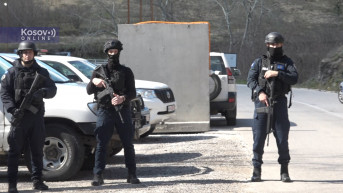
The daily presence of heavily armed units of the Kosovo Special Police in predominantly Serbian municipalities in the north has been the cause of many incidents over the past several months, some of which have fortunately resulted in no casualties. Serbs have expressed their frustration multiple times due to the besieged conditions and fear in which they live, and according to Kosovo Online interlocutors, there is no real security justification for the presence of special forces in the north; rather, it is seen as an abuse of power.
Darko Obradovic, Program Director at the Center for Strategic Analysis, states for Kosovo Online that there is no security rationale for the presence of special units in the north, nor does it seem to make sense, except for provoking incidents.
"The violence that arises in northern Kosovo is a product of selective, ethnically motivated, and pervasive terror that creates long-term uncertainty. The presence of Kosovo special forces is also a means of communication with mediators in the dialogue on normalizing relations. Through the excessive engagement of heavily armed special forces, the authorities in Pristina seek to send a message about 'crime among Serbs.' Whenever the question of carrying out terror is raised, it is justified by some investigative tactic or necessity," Obradovic says.
According to him, the Kosovo police themselves are generating tensions in this way.
"In essence, artificial instability is being produced in the form of a complex spiral of political and security crises that obscure the essence. In the midst of attempts to move the normalization process forward, there is a process that obstructs it and reveals clear destructive intentions. The international community is obliged to put an end to the misuse of the police for the purpose of terrorizing and to eliminate all factors and causes of instability. The spiral of conflict is escalating, and everyone needs to understand the historical moment," Obradovic concludes.
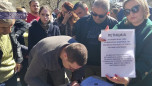
Citizens launched a petition for the withdrawal of Kosovo Police special forces from the north of Kosovo
Former President of the Executive Council of Kosovo and Metohija, Zoran Andjelkovic, stated that the goal of police actions is the takeover of the north and ethnic cleansing.
"Kurti's goal is to ethnically cleanse Kosovo, whether through provocations or various acts of terrorism. It's not just about whether someone is injured but also the fact that people, when being sought by the police, do not know the reason and are forced to flee," Andjelkovic stated.
Zijad Becirovic, Director of the International Institute for Middle Eastern and Balkan Studies in Ljubljana, believes that anyone who attempts to use force or resorts to violence to achieve political goals must be removed from the political scene.
"There is no real need for the presence of special forces in the north. It is about the instrumentalization of the armed forces for political purposes. Unfortunately, in this case, KFOR has not fulfilled its task," Becirovic says.
After the shooting of Milan Jovanovic from Zvecan at the checkpoint near the Bistrica Bridge, the Kosovo police initially denied involvement but suspended four policemen the following day, one of whom was charged with attempted murder.
After that, there were protests by Serbs in northern Kosovo and the launch of a petition demanding the withdrawal of special forces located north of the Ibar River. However, the Kosovo government does not currently indicate any plans to withdraw the special units from this area.

0 comments