
Elections in Spain and Kosovo – Will the Existing Wall Become Even More Impenetrable?
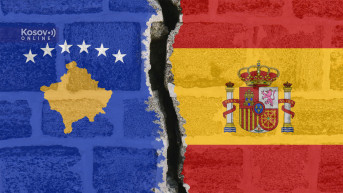
According to current opinion polls, Spain is likely to have a new government after November 29, and its stance towards Kosovo could become more rigid, particularly if the far-right Vox party joins the new government. In that case, Madrid would not only maintain its refusal to recognize Kosovo but could also adopt an uncompromising position on Kosovo's further European integration and membership in international organizations, Kosovo Online's interlocutors point out. They believe that relations between Madrid and Washington will also very likely influence Spain's approach towards Pristina.
Written by: Dusica Radeka Djordjevic
Unlike some other European Union member states that also do not recognize Kosovo, Spain does not have a Liaison Office in Pristina.
Nevertheless, under the government of Socialist Prime Minister Pedro Sánchez, Spain recognized Kosovo passports in 2024.
Earlier this week, Spanish Foreign Minister José Manuel Albares said that Spain would never stand in the way of Kosovo's progress towards the European Union, despite continuing to refuse to recognize the territory's independence. As evidence of this commitment, he cited Spain's decision to accept Kosovo passports as valid travel documents.
However, Albares, a member of Sánchez's Spanish Socialist Workers' Party (PSOE), may find himself in opposition after November 29.
If the forecasts prove accurate, the new government will be formed by the People's Party (PP), which currently leads the PSOE in the polls, while Vox, which polls place third, may also become part of the governing coalition.
In 2020, both parties submitted several parliamentary initiatives demanding explanations for Prime Minister Pedro Sánchez's decision to attend the EU–Western Balkans Summit, which was also attended by then Kosovo President Hashim Thaçi. They argued that his participation implied recognition of Kosovo's unilateral declaration of independence, even though the summit was held online due to the COVID-19 pandemic.
Vox also strongly opposed the decision to hold the 2022 FIFA World Cup qualifying match between Spain and Kosovo in Seville, demanding that the match be played at a neutral venue.
Nikola Ilic, a researcher at the Faculty of Political Sciences, says that if Vox becomes part of the future government, the party will seek to prevent any further progress on Kosovo's European integration path.
"This should be understood in the context of the fact that they care very little about what other EU member states might think, because they operate in the style of the MAGA movement and Trump. This is evident among their supporters, who have a positive opinion of Trump, whereas the majority of the population views him negatively," Ilic told Kosovo Online.
He notes, however, that a major question remains as to whether the conservative People's Party will be able to form a government on its own after the elections or whether Vox will be needed as a coalition partner. He also points out that the two parties differ on certain domestic issues.
"The conservatives advocate preserving the existing system of regional autonomy in Spain, whereas Vox takes a much harder line on this issue. It would seek a centralized model and the return of powers to Madrid. In foreign policy, the conservatives are certainly not inclined to deviate drastically from European Union policy. In that sense, although they may be somewhat less accommodating than the Socialists, this should not lead to a drastic reduction in the cooperation already established with Pristina, such as the acceptance of Kosovo passports within the Schengen Area," Ilic says.
He points out that although Pedro Sánchez's Socialist government opened the door to a certain degree of cooperation with Pristina, Spain's red line remains unchanged: such cooperation does not imply recognition of Kosovo. Spain continues to grapple with the issues of the Basque Country and Catalonia, which it sees as potentially comparable to the Kosovo case.
According to Ilic, a more significant change in the tone of communication between Madrid and Pristina could occur if Vox proves indispensable to the formation of a government.
"Vox is a party that positions itself as a more confrontational political force and advocates broader changes in a somewhat more radical and extreme manner. We could potentially see a shift in the narrative and position towards Pristina, although there would probably be no abrupt policy reversals, given the desire not to deviate too far from the broader policy of the European Union," he believes.
Ilic notes that the position of José Manuel Albares, Spain's foreign minister in the current government, has changed significantly over the past three or four years.
"We can see some rather unusual messages and outcomes: further progress towards European integration and the acceptance of passports within the Schengen Area are considered acceptable, but the answer to an independent state remains 'no.' It will be interesting to see how Vox approaches this issue, because conservatives are already criticizing Pedro Sánchez and his government, portraying any agreement, concession or further deepening of cooperation with Pristina as a form of betrayal and a secret deal, in the context of domestic developments and the parallels drawn with Catalonia," Ilic explains.
Mijat Kostic, from the New Third Way organization, believes that if the People's Party and Vox form Spain's new government, it could adopt a somewhat firmer stance towards Pristina than the current Socialist administration. This could mean not only continuing to refuse recognition of Kosovo but also blocking its admission to certain international institutions.
Kostic says that more than 40 percent of polls indicate that Spain will undergo a change of government following the November 29 elections, with projections suggesting that the People's Party and Vox will jointly secure 190 seats, more than enough for a parliamentary majority.
Regarding Spain's position on Kosovo, Kostic tells Kosovo Online that there is a broad consensus in Spanish society against supporting any form of secession, primarily because of Spain's own problems with separatism, particularly in Catalonia.
"The current government has stated that it will not recognize Kosovo but will not obstruct its membership in certain international institutions either. It is quite possible that a new government formed by the People's Party and Vox would take a somewhat firmer stance, especially considering Vox's policies, which are highly critical of separatism and immigration in general and advocate a tough approach. Therefore, under the influence of Vox politicians, Spain's position towards Pristina could become even firmer, potentially resulting in the blocking of Kosovo's admission to certain international institutions. This would represent a departure from the Socialist government's approach. However, the general consensus among all parties in Spain is that they will not recognize Kosovo," he emphasizes.
The "Trump Factor"
According to Kostic, relations between Spain and the United States will also influence how a potential new government in Madrid approaches Pristina.
He notes that the parties likely to take power in Madrid have announced their intention to pursue closer cooperation with Washington, including cooperation within NATO. This would mark a departure from the previous government's approach, as Sánchez opposed Trump, particularly over the attacks on Iran, and also blocked the possibility of the United States using military bases in Spain.
At the same time, Kostic points out that despite Trump's apparent departure from the Democratic Party's policies, he continues to maintain good relations with Kosovo, particularly through his direct ties with former Kosovo President Vjosa Osmani. Trump also wanted Kosovo to participate in the International Stabilization Force in Gaza.
"Relations between the United States and Kosovo have been strained over the past year, primarily because of the suspension of the strategic dialogue with Kurti. However, if Trump's policy proves conducive to cooperation with Kosovo, it is possible that Spain, too, will cooperate directly with the authorities in Pristina, naturally with the caveat that it will never recognize Kosovo's independence. The dynamics between Spain's new government and Pristina will depend to a large extent on its relations with Donald Trump or whichever administration is in power in the United States. Spain may shape its other international relations under the influence of its bilateral relations with the US," Kostic says.
Analyst Nexhmedin Spahiu believes that a potential change of government in Spain following next week's elections will not bring about any significant change in relations between Kosovo and Spain, which does not recognize it.
"Despite the communication Albin Kurti has had with Pedro Sánchez, Spain has still not recognized Kosovo. Therefore, the arrival of other political forces that also do not have a positive attitude towards Kosovo may make the situation more difficult, but it will not fundamentally change relations between Kosovo and Spain," Spahiu told Kosovo Online.
The Key Lies in Belgrade
In his view, the most important thing for Kosovo is to reach an agreement with Serbia.
"Only an agreement with Serbia can resolve the problems with the European Community and the countries that have not recognized Kosovo. Kosovo should not waste its energy on other matters but should focus on reaching an agreement with Belgrade and resolving the issue there, because that would make it much easier to resolve other problems as well. I think Albin Kurti missed an opportunity to work something out with Aleksandar Vučic. It will be much more difficult for him with the Student List, and that will benefit neither Kosovo nor Serbia," he says.
Party Ties
Although Albin Kurti and Pedro Sánchez lead parties that belong to the Socialist International, through which they have maintained a certain degree of communication, Ilic says he does not believe this has made Spain's position towards Pristina any more favorable in recent years.
"On the contrary, considering that they belong to the same family of political parties, if Kurti continues to treat what is now a minority in Kosovo, namely the Serbs, in the way he has been treating them, and continues to disregard the rules he has committed to observing, I believe there could even be repercussions within that family of parties, because the Serbian minority in Kosovo is treated as a minority whose rights are not sufficiently respected," Ilic says.
In the hypothetical scenario in which Sánchez somehow manages to reverse the situation and remain in power, Ilic believes that this could even have negative consequences for Albin Kurti and Pristina's position in the longer term.
If Sánchez's Socialists move into opposition after the elections, Kostic says the authorities in Pristina will lose one avenue for conducting diplomatic activities through international party organizations, particularly the Socialist International.
"They will still be able to meet with representatives of the Spanish Socialist Party, who would then be in opposition, and thus lobby through the opposition, but they will no longer have that direct channel to Spain's new government," Kostic notes.



0 comments