
What is needed for the next meeting in Brussels: Dialogue "in the red"; first calming of the tensions, then talks
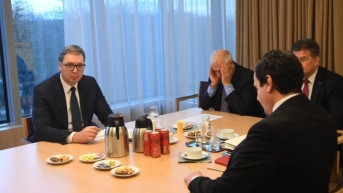
The optimism of the European emissary for dialogue, Miroslav Lajcak, that there will be a crisis meeting in Brussels, which was initiated by the High EU Representative, Josep Borrell, although there is no confirmation from Belgrade and Pristina that they will respond to this call, is not shared by the interlocutors of Kosovo Online, who indicate that first, there must be a calming of the tensions, for the talks to have any meaning.
That the dialogue is "in the red" and that it will be difficult for the two sides to sit down at the negotiating table was clear a few weeks ago, when Pristina decided to forcefully "introduce" the mayors, elected in elections where the turnout was around 3.5%, into the municipal buildings in the north of Kosovo, which is why the Serbs have been peacefully protesting for three weeks.
Meanwhile, several Serbs have been arrested on charges of alleged attacks on journalists, Kosovo Police have mistreated two Serb children, and after Serbian police arrested three Kosovo policemen in what was reported to be central Serbia, Kosovo Prime Minister Albin Kurti is not backing down from claims that they were "kidnapped" from the territory of Kosovo and makes all moves conditional on their release.
Serbian President Aleksandar Vucic said today that he would not go to Brussels until Pristina released the arrested Serbs and until the Albanian mayors and Kosovo Special Forces withdrew from the north.
The situation is thus additionally aggravated compared to the one ten days ago, when it was clear that first there must be a calming of the tensions, and only then a conversation.
Political scientist Ognjen Gogic told Kosovo Online that the conflict resolution theory taught that first there had to be a truce and a calming of the tensions, to stop all violent activities, in order to negotiate.
"When discussing conditions of institutional violence or the threat of violence, no one is cold-blooded to reach a solution. That is why the main thing is to first de-escalate the situation on the ground and then discuss the problems. Borrell's call would only make sense if first the EU and the US, as the main mediators, use its influence on the Pristina authorities to get them to give up some of their actions," Gogic says.
He explains that it would be beneficial for all parties when it comes to negotiations if Pristina abandons the intention to deploy mayors in municipal buildings in the north of Kosovo and to withdraw the Special Police at least from those buildings, if not from the entire north of Kosovo.
"That is the basic condition for talks to be possible, otherwise such moves by Pristina will only be revanchism and cause reactions among the Serbs in the north and lead to a situation where things get out of control. A positive signal towards the Serbs would be for the police to withdraw at least from the buildings of the municipalities in the north. That is the basic prerequisite for the conversation. There are our people in those municipalities and it is necessary for something like this to be done in order to calm the situation on the ground. It may be too ambitious to ask that the police withdraw completely from the north at this moment, but from the municipalities, it would be very significant for the Serbs," Gogic said.
If it comes to that, the negotiations will be scheduled and the negotiators will be called to Brussels before the tensions on the ground calm down, Gogic believes that this would be counterproductive.
"Negotiations in those conditions are doomed to failure. It usually happens that during such situations something happens on the ground, some incident that leads to the collapse of negotiations. There is a great risk that even someone will do something intentionally, create an incident and then lead to failure. Negotiations in such conditions are guaranteed to fail, and there have been such examples before. In those situations, negotiations are interrupted, negotiators cannot talk, and demands are tightened... That would be a textbook error," Gogic points out.
He adds that something like that can still be expected, because until now, "textbook errors" of mediators could be seen in some situations when negotiations between Belgrade and Pristina are in question.
Journalist and political analyst Bosko Jaksic believes that political dialogue is the only solution to the emerging crisis in the north of Kosovo.
"But it should not be a dialogue between Vucic and Kurti, because it would be pointless, but the European Union and the US must use political pressure to resolve the resulting crisis, to open space to remove the danger of violence, and then Belgrade should accept that the Serbs return to Pristina institutions and that new elections be called immediately in the north," Jaksic says.
He adds that this would mean that there is a foundation for new political assumptions for dialogue, which is frozen in this situation.
"The dialogue is not frozen at this moment, it is “in the red” compared to what was agreed in Brussels and Ohrid," Jaksic says.
He believes that both Serbian and Kosovo politicians "profited from this situation".
"The fact is a bit sad, it seems that both Vucic and Kurti profited somewhat from this situation. Their political rating is increasing, because they present themselves as protectors of their own nations, as patriots on the sidelines, while the real victims are the real Serbs in Kosovo, first and foremost, but also the Albanians who cannot have a peaceful and normal life," Jaksic believes.
He assesses that it suits politicians to "buy time", but adds that the key is in the hands of Europeans and Americans.
"If the Europeans, and especially the Americans, are determined to fulfill what they asked for in the European plan, then they must be much more energetic than they have been so far. The responsibility for this current situation in Kosovo lies with the international negotiators who had enough time to see with what stubbornness Kurti rejects the formation of the CSM, and they could also see that, instead of the return of the Serbs to Pristina institutions, Vucic is organizing a boycott," Jaksic believes.
He points out that the international mediators had enough signals to see that the politicians from both sides do not respect what they agreed to.
"I'm sorry that they didn't react more energetically, because if they had, maybe this escalation in the north could have been avoided," Jaksic concluded.

0 comments