
What outcome of the political crisis in Kosovo do its allies hope for?
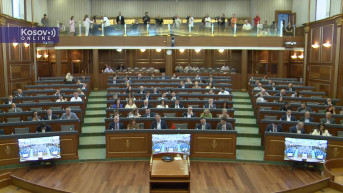
Even with the new extension granted by the Constitutional Court for the formation of the Assembly, there is no end in sight to the political crisis in Kosovo. Kosovo’s allies are appealing to political leaders to reach an agreement, but as interlocutors of Kosovo Online point out, they lack the leverage to pressure either Self-Determination or the opposition. Their interest lies in having a stable new government that will be cooperative in dialogue with Belgrade, and there are views that they would prefer to see in power those political options that have so far been in the opposition.
Written by: Dusica Radeka Djordjevic
The blockade of the Assembly not only delays progress in Pristina’s future aspirations, but also undermines the trust that has been built, the German Embassy in Pristina recently stated. Two days ago, in a new statement, it expressed the expectation that the formation of the Kosovo Assembly would be completed within the prescribed deadlines, and called on all political actors to be ready for compromise.
The Embassy of the United States also emphasized that the parliamentary blockade slows Kosovo’s progress toward its goals and undermines the integrity of institutions. The Americans, too, urged Kosovo’s political leaders to take their responsibility seriously and to work together to reach an agreement on the formation of the Assembly.
The Italian Embassy likewise appealed to MPs to respect the latest decision of the Constitutional Court regarding the Assembly’s formation, stressing that Kosovo is losing many opportunities due to institutional paralysis.
So, who would Kosovo’s allies and partners prefer to see leading the new government – Self-Determination or the opposition parties?
Stefan Surlic, assistant professor at the Faculty of Political Science in Belgrade, is unequivocal. The main interest of international actors, he says, is for Self-Determination not to be in power.
“Kosovo’s allies would like the opposition options to come to power, but at this moment, their influence is very limited. They lack any drastic instruments of coercion or pressure on either Self-Determination or the opposition parties,” Surlic told Kosovo Online.
He points out that international actors currently see the Democratic Party of Kosovo as the pivotal party that, in the event of repeat elections, would likely lead the new government.
“They are also aware that Kurti is increasingly concentrating power in his own hands and that it is very likely he will once again be at the head of the government if elections are repeated. For that reason, they are very cautious. They communicate, they discuss, they talk about different options, but you will never hear them openly declare themselves against a Self-Determination government or wholeheartedly support a coalition of opposition and minority parties,” Surlic said.
For Kosovo’s allies, he adds, it is important that there be some form of stability and a government they can rely on as a trustworthy partner.
“What matters most to them is that through a new government and new political actors, the dialogue between Belgrade and Pristina—which is clinically dead—be revived, and that Pristina be a cooperative party,” Surlic said.
The problem with the scenario in which Self-Determination goes into opposition, he adds, is that it would be a very strong opposition.
“None of the political actors is willing to accept that hot potato at the very beginning, to soften the current policy of systemic discrimination against the Serbian community in northern Kosovo, or to simply revive the dialogue with Belgrade. They know this would be politically costly and that they would immediately be branded as traitors of national interests for the sake of some agreement with international actors,” he noted.
Surlic believes foreign actors will lobby for the crisis to be resolved without new elections, through an agreement on the formation of institutions, but he says they see very little chance of that, since even opposition actors are individually negotiating with Self-Determination.
“In the end, they also see that the imposed narrative makes it difficult to envisage any normalization of relations or dialogue with Belgrade, regardless of who is in power in Pristina,” he concluded.
Avni Mazreku, professor of European law from Pristina, believes that Kosovo’s friendly and sponsoring countries want to see a stable government that understands the need for Kosovo’s EU and NATO membership and for increasing the number of countries that recognize Kosovo. For them, he says, the specific question of who becomes Prime Minister of Kosovo carries little weight.
“Friends of Kosovo, coming as they do from democratic and highly developed countries, do not impose specific conditions as was the case 15 years ago when democracy in Kosovo was fragile. I think they want a stable and capable government that can resolve Kosovo’s outstanding political issues,” Mazreku told Kosovo Online.
He recalls that the Constitutional Court set a deadline for the formation of the Assembly, and says political actors on Kosovo’s scene must find a formula to answer the question of whether the winning party should form the government or whether that should fall to the opposition.
“I believe the entire political spectrum in Kosovo must, within the legal deadline, form Kosovo’s institutions: first the Assembly, then the government, and then other institutions. We are now talking about a constitutional deadline that should not be breached. If it is not respected, we will move from a political crisis to a legal one. I do not think Kosovo’s political actors are so immature as to breach this deadline,” Mazreku said optimistically.
Marko Milenkovic of the NGO “New Social Initiative” from North Mitrovica observes that there are no concrete activities or pressures from the international community aimed at resolving the political crisis in Pristina.
“What we have are occasional statements mainly calling on political entities to address the situation and reach a compromise, but nothing concrete. There are also calls from the international community that pressure on the Constitutional Court is inappropriate, and that tensions should be reduced and institutions unblocked,” he told Kosovo Online.
He says there are views that a change of government would improve Kosovo’s cooperation with the international community, but notes that at present it is difficult to assess what exactly Kosovo’s allies want.
He considers it important to recognize that Self-Determination’s government has somewhat undermined relations with the international community, and that Kosovo’s status in the international arena may now be at its most critical since 2008.
“The relationship between the international community and Kosovo faces challenges because the previous government undertook many unilateral moves and refused to make compromises,” he said.
If Self-Determination remains a key actor, he does not expect many changes.
“We have seen that they do not regard cooperation with the international community as a key factor in advancing Kosovo’s international standing. We know Kosovo still lacks progress on membership in international organizations and on gaining new recognitions. Self-Determination has contributed to the fact that the international community is no longer so actively engaged in advocating for Kosovo. Even allies who were previously active in this regard have not been so in recent years. Above all, the U.S. administration, which has changed in the meantime,” Milenkovic said.
At present, he adds, it seems everyone is waiting to see whether the new U.S. administration will engage more actively on Kosovo, mindful of the example of the Washington Agreement during Donald Trump’s previous term, when an initiative appeared suddenly, without much space for negotiation, and imposed a certain agreement or solution that political actors had to accept.
As for the EU, he says it no longer has the strength of a stabilizing factor that could influence political decisions in Pristina.
“The relationship between Self-Determination’s government and the EU has not exactly been rosy. There were disagreements, and there still are,” he noted.
For the opposition to get the chance to take the initiative, he explains, Self-Determination would need to unblock the process, since it still holds the situation in its hands. He believes institutions would be unblocked if the Constitutional Court proposed that the Assembly’s speaker come from the opposition ranks.
“With some changes in conditions, we would probably see a situation in which the opposition plays a more active role in resolving the problem,” he said.
The PDK, as the party that won the most votes after Self-Determination, as well as the LDK, he thinks, might be able to reach a compromise and change the situation in the institutions.
“However, I think we are still closer to new elections than to any political compromises,” Milenkovic concluded.



0 comments