
What will accepting Danish prisoners bring to Kosovo?
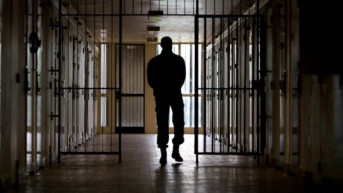
The Kosovo Assembly ratified an agreement to lease a prison in Gnjilane to Denmark, where about 300 prisoners sentenced by Danish courts will serve their sentences, and similar ambitions have been shown by Belgium and Austria. While this decision has sparked reactions from numerous organizations concerned about the human rights of Danish prisoners, the question remains open as to what this form of "prison tourism" will bring to Kosovo.
The Kosovo Assembly adopted the draft law on the agreement with Denmark by an expedited procedure with 86 votes in favor and seven against. Previously, the Government of Kosovo had adopted the Draft Law on the Ratification of the Treaty between Kosovo and Denmark, which provides for the use of the correctional facility in Gnjilane for the execution of sentences of Danish citizens, for which Denmark will allocate 200 million euros.
Economy Minister Artane Rizvanoli said that Kosovo would earn an annual fixed income of 15 million euros from this agreement.
According to the Treaty, Denmark will not send prisoners convicted of terrorist acts, war crimes, or prisoners with diagnosed severe mental disorders requiring medical care outside the prison to Kosovo. The treaty stipulates that the sentence is served according to Danish rules and in accordance with Denmark's international obligations.
This Danish initiative has inspired other countries. Belgian MP Theo Franken, a member of the conservative nationalist party New Flemish Alliance, promised that after the elections in his country, a prison would be rented in Kosovo for all illegal immigrants currently in Belgium.
"After the elections, we will make or rent a prison in Kosovo where all this illegal trash will be placed. It costs a penny, but will make our country safer. Good idea?", Franken wrote on the social network "X".
His proposal is also to transfer all prisoners without Belgian papers to Kosovo, regardless of whether they are his citizens.
"All people without papers would be sent to Kosovo. If Danish socialists can do it, so can we, as we are both European countries," Franken explained his tweet to RTL.
The Austrians have gone a step further. At the beginning of May, Interior Minister Gerhard Karner discussed this with Denmark's Justice Minister Peter Humelgaard.
"Prison facilities, such as those planned by Denmark in Kosovo, are also part of Austrian Chancellor Karl Nehammer's plan," emphasized Karner.
Nehammer, in January, presented the "Plan for Austria," which, under the security item, includes "the transfer of convicted criminals from third countries to serve their sentences in third countries."
While European countries plan to solve their pressing migrant problems through Kosovo, a series of human rights organizations and legal experts, however, believe that it is not possible to adhere to and implement laws in Kosovo as they are applied in Denmark. Among them is the UN Committee Against Torture (CAT), which has urged the Danish government to cancel its plans.
The World Organization Against Torture has also harshly criticized the agreement.
"Denmark is a key player internationally when it comes to leading the fight for human rights and the fundamental right to protection. They have the opportunity to set a good example for the rest of the world, but right now they are leading by the worst example," says Helena Sola Martin, a political advisor at the organization.
However, security expert from Pristina, Nuredin Ibishi, believes that Kosovo meets all the European Union conditions for accepting prisoners from Denmark and rates the agreement for Kosovo online as a form of recognition.
"Surely Kosovo will benefit from this. This was preceded by a long process of demands by Danish authorities to transfer prisoners here to serve their sentences. This is also a form of recognition for Kosovo because it has the capacities, both staffing and accommodation capacities in Gnjilane, which are done according to European Union standards," says Ibishi.
He dismisses criticisms that conditions in Kosovo's prisons are not adequate and states that Kosovo meets all the European Union conditions in this regard.
"This is the European Union's prison regulation and it has been under the supervision of the European Union until recently. I think we have the capacities, both staffing and accommodation, but also in terms of prosecution and judiciary, so I think we meet all those conditions that are made according to the European Union regulation for prisons in Europe," states Ibishi.
Miloš Jankovic, a lawyer and former Ombudsman who has rich experience as the director of the Administration for the Execution of Institutional Sanctions, and as a member of the UN Subcommittee for the Prevention of Torture explains for Kosovo online that the objections that Kosovo is not part of the UN and the Council of Europe and that accordingly the provisions of international conventions do not apply to it - are not entirely accurate.
"There are international conventions that are universal and where the jurisdiction of international bodies exists regardless of whether a certain state is a member of an international organization. The Committee for the Prevention of Torture, which is a body of the Council of Europe, has concluded an agreement with UNMIK and they have already visited Kosovo several times, giving their recommendations and Kosovo authorities cooperate with international bodies in this context. The bigger problem is how Denmark will exercise its jurisdiction in the territory of Kosovo. That is a matter that will be very problematic and very complex legally," says Jankovic.
In response to whether the mere transfer of prisoners from Denmark to Kosovo constitutes a violation of their rights, Jankovic draws a parallel with individuals who were convicted by the International Criminal Tribunal for the former Yugoslavia (ICTY).
"What is really contrary to international regulations is that individuals from the territories of Serbia or Bosnia and Herzegovina were sent to serve sentences in distant countries, thereby infringing upon their rights. For example, I visited Milan Martic who is in Estonia, and not in the capital, but in a remote place, and we changed three planes to get there. It was very costly and exhausting. There are other problems as well. For example, where another language is in use, there is an issue of communication. The right of that person also includes access to press, to television. He could not follow the program in Serbian in Estonia. Furthermore, there are issues of participation in cultural activities, religious rights... Thus, serving a sentence far from one's place of residence is contentious," he states.
Regarding the Kosovo-Denmark agreement, he believes that the rights of Danish citizens, i.e., individuals residing in Denmark, would be violated if they were transferred to Kosovo. If it concerns individuals being deported, migrants who reside in a country in Africa or Asia, then there arises a question whether there is a difference if they are imprisoned in Kosovo instead of Denmark.
"What if his family is in Denmark, but he is in Kosovo? It is quite a complex issue that provokes controversy, and it is a fact that international bodies will take a stance on this matter, as it has now become a practice for certain countries which reason wisely, and I think this is a smart move by the Danish authorities, to subtly eliminate a problem by offering some money," says Jankovic.
Jankovic also emphasizes that the problem does not end with the served sentence because it remains open what will happen to these people once their sentences expire.
"They will certainly not be returned to Danish territory, so the Danes won't have to worry about what to do with them. They will probably stay in Kosovo, and then the Kosovo authorities will likely negotiate, seek money for their deportation. Many will benefit, lawyers will have a lot of gains, health services..., everything that is done will be charged, so there are benefits for many entities," he says.
On the other hand, he stresses, it is not just a matter of money, but the agreement also has certain political connotations, as well as a cultural aspect.
"This is an agreement that is treated by the Danish co-negotiators as an agreement between two states, which means a lot to Kosovo in entering such interactive international bilateral agreements. This agreement indicates, again from a political perspective, that Kosovo is part of a system to which a Scandinavian country like Denmark belongs. Moreover, this agreement can help the Kosovo community to accept not only the culture of executing criminal sanctions as in Denmark, which leads by a system that respects the rights of detained persons, but also to shape their prison system at a much higher level, which will have a consequence on a much wider scale," says Jankovic.


comments